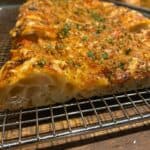

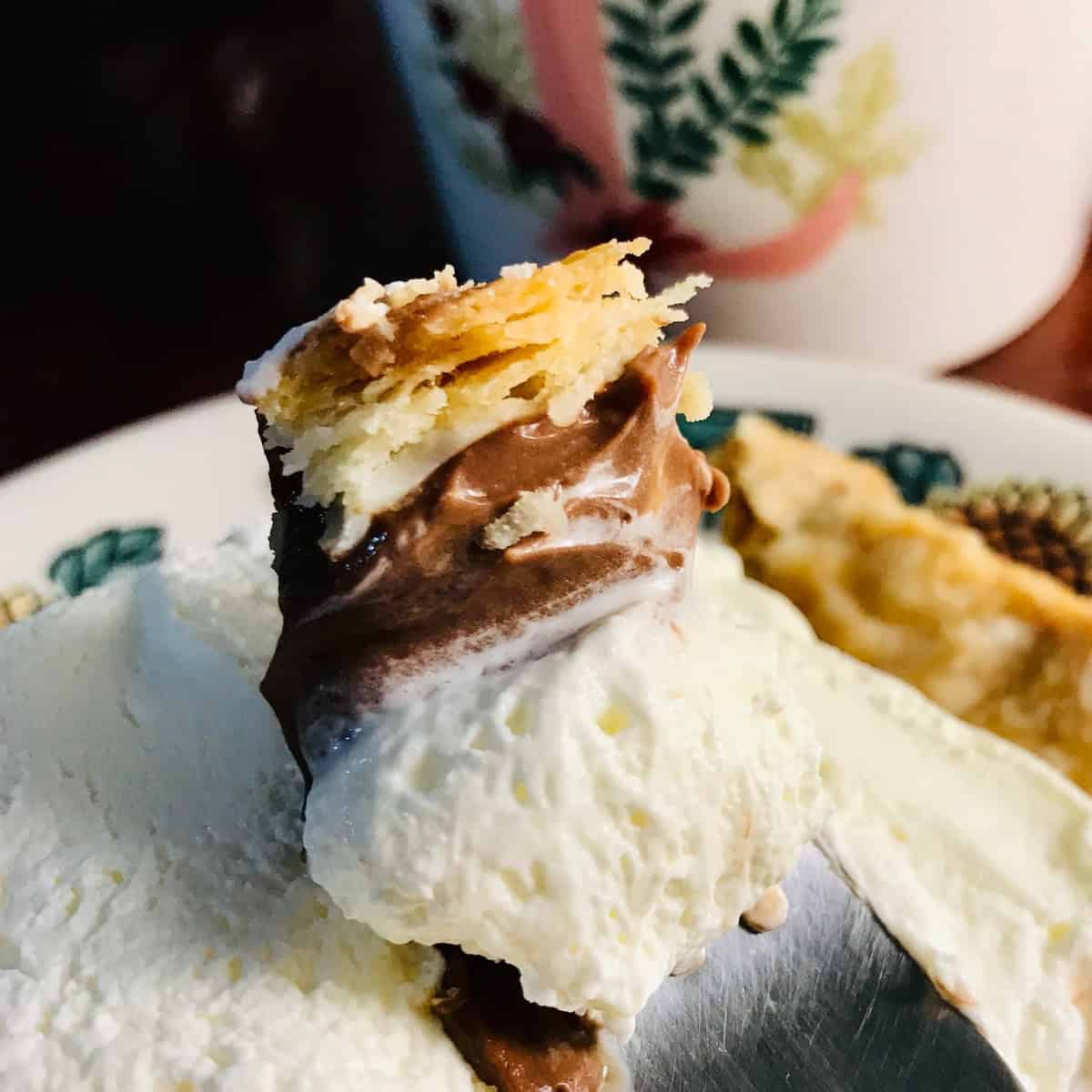
Sturdy enough to hold a filling, tender enough to cut with a fork and so flaky that shards of crust fall to the plate as you take your first bite. How do you transform the simplest ingredients into a tender, buttery, flaky pie crust? Follow along and I'll show you how.
Jump to:
Introduction
Pie dough is generally made up of three main ingredients: flour, fat and water. Salt is for flavor and sugar for color/caramelization. Skillfully combine these simple ingredients and you will be rewarded with tender, flaky results.
In baking and pastry there is a method for just about everything; a set of guidelines that you can apply to almost any recipe that uses the same technique. The method for making pie dough is referred to as the cut-in or rubbing method, because you're quite literally cutting or rubbing cold fat into flour. The idea is to minimize gluten formation by coating fat with flour which shortens the gluten strands (hence the name shortcake and short dough).
Gluten is formed when liquid is added to flour and the proteins in the flour (gluten and gliadin) link together. Kneading the dough strengthens the bond between these two proteins. Gluten formation is essential in bread baking (which requires the doughs to have strength to rise), but not ideal for pies. In order to achieve a tender, flaky, pie crust it's important to gently handle the dough after the liquid is added to minimize the amount of gluten formed (too much gluten formation = tough dough).
Baker's Assistant:
For more in-depth information about topics covered on this page, follow the links:
Mise en place for pie dough
The following items require advance preparation:
- Flour - pastry flour or all purpose (better if cold)
- Fat of choice (butter, lard, shortening or a combination) very cold, but not frozen
- Water, very cold
Tip: if it's a warm day, it helps if your equipment is cold as well.
The method for this recipe will be to make by hand, but the easiest and fastest way to make pie dough is with a KitchenAid mixer + paddle attachment or food processor. Another way is to use a rolling pin - this method is slightly messier but produces excellent results. I'll share this method in another post.
Ingredient Properties
- Flour - Pastry flour, due to it's low protein content, produces the flakiest, most tender crust and is my top choice. All purpose flour will also make a good crust.
- Fat - Butter has the best flavor and contributes to a flaky crust
- Fat - Lard has no flavor and contributes to a tender crust. Not vegetarian.
- Fat - Shortening has no flavor and contributes to a tender crust. Vegetarian or vegan
- For a flaky and tender crust, I prefer to use butter and lard. You can also get good results by using butter + shortening or all butter. All lard or shortening will result in a tender, cookie-like crust with little to no flake.
Technique - Cut-In/Rubbing Method
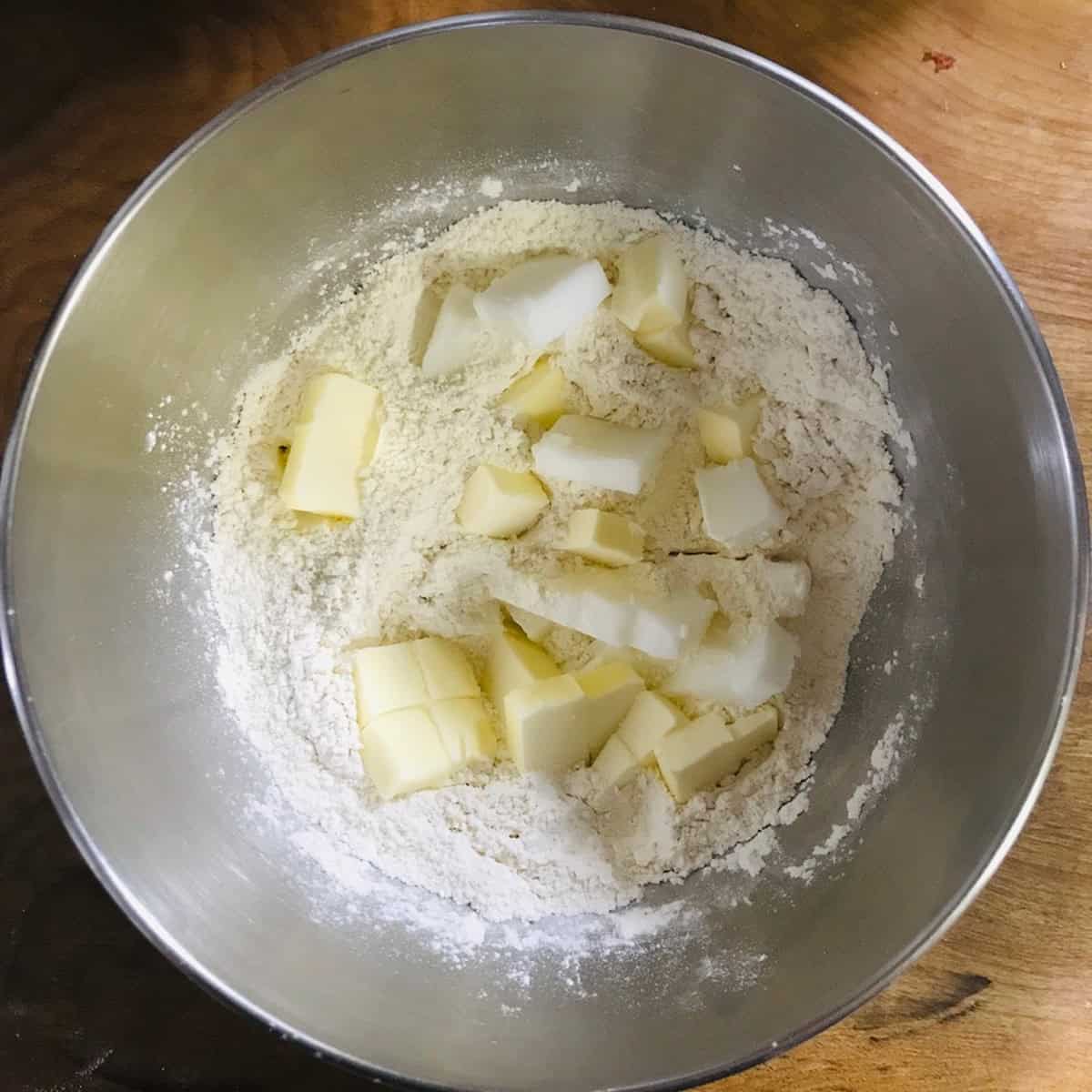
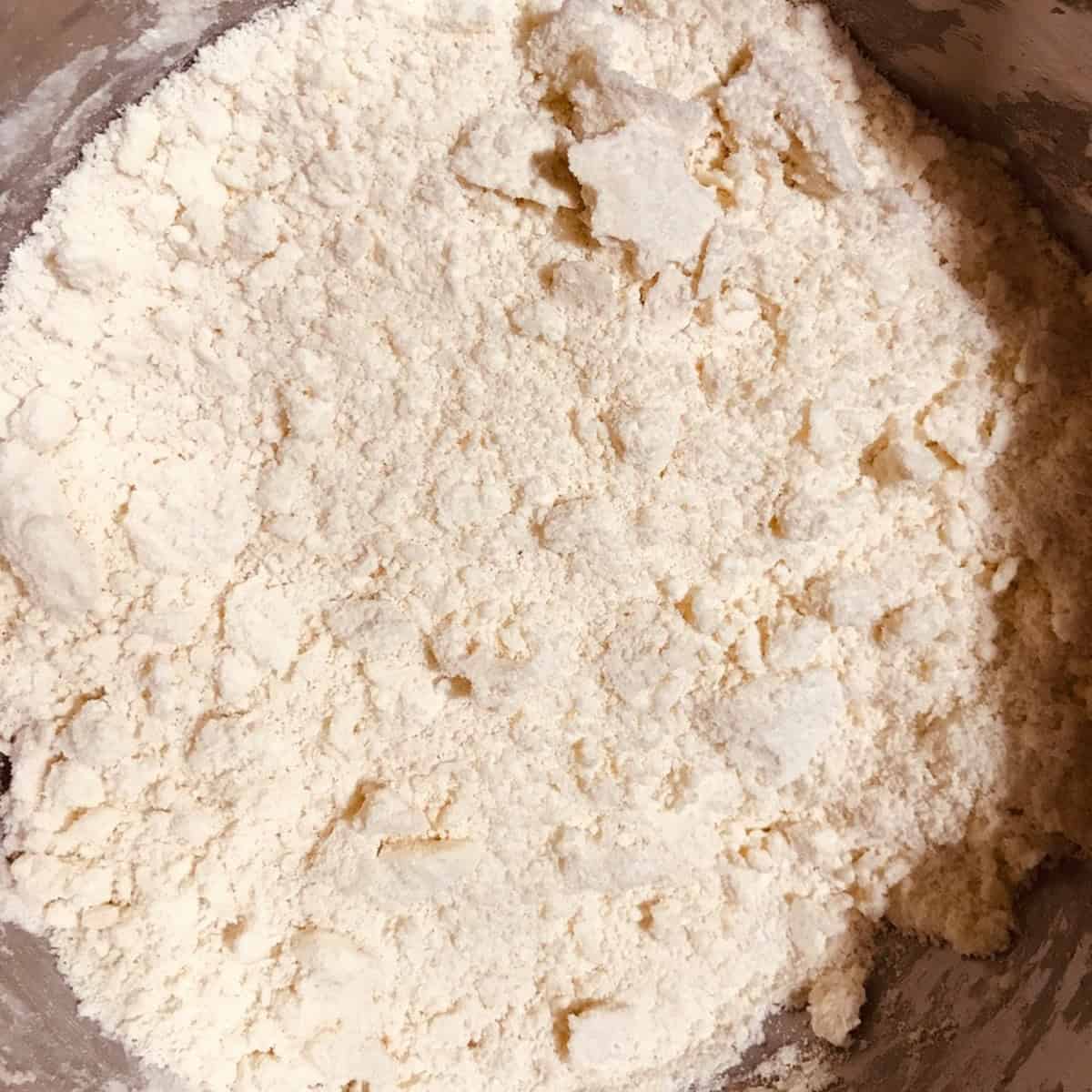
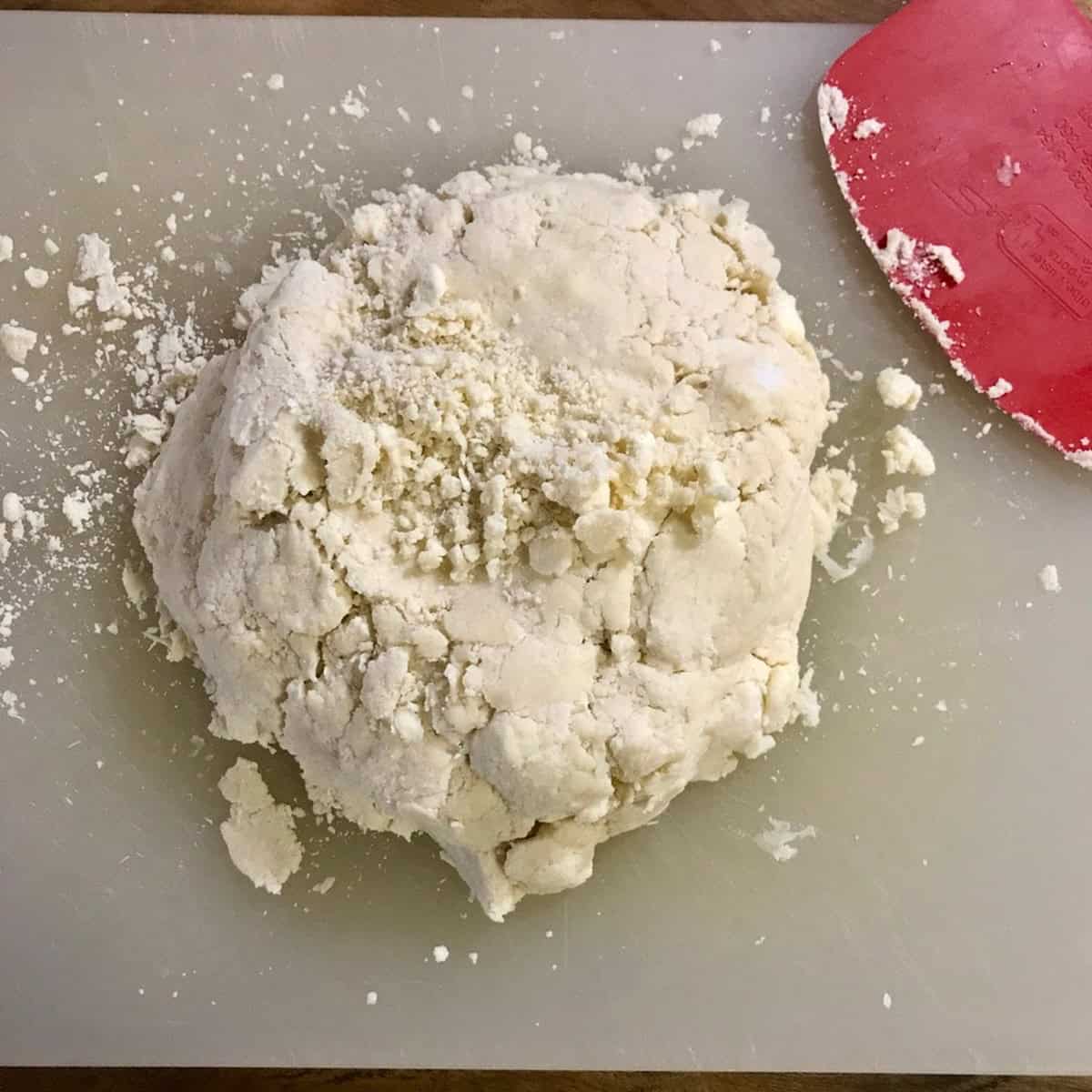
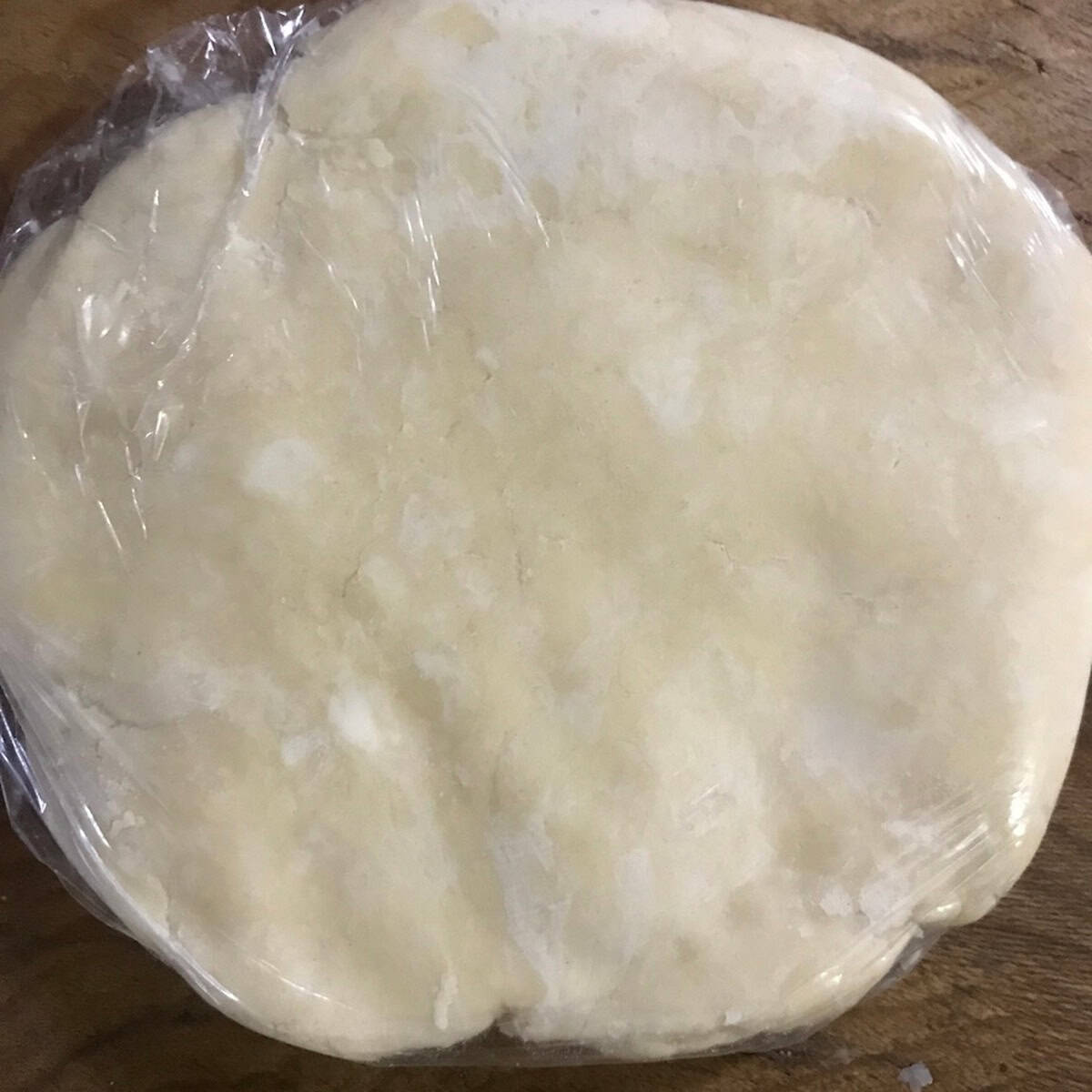
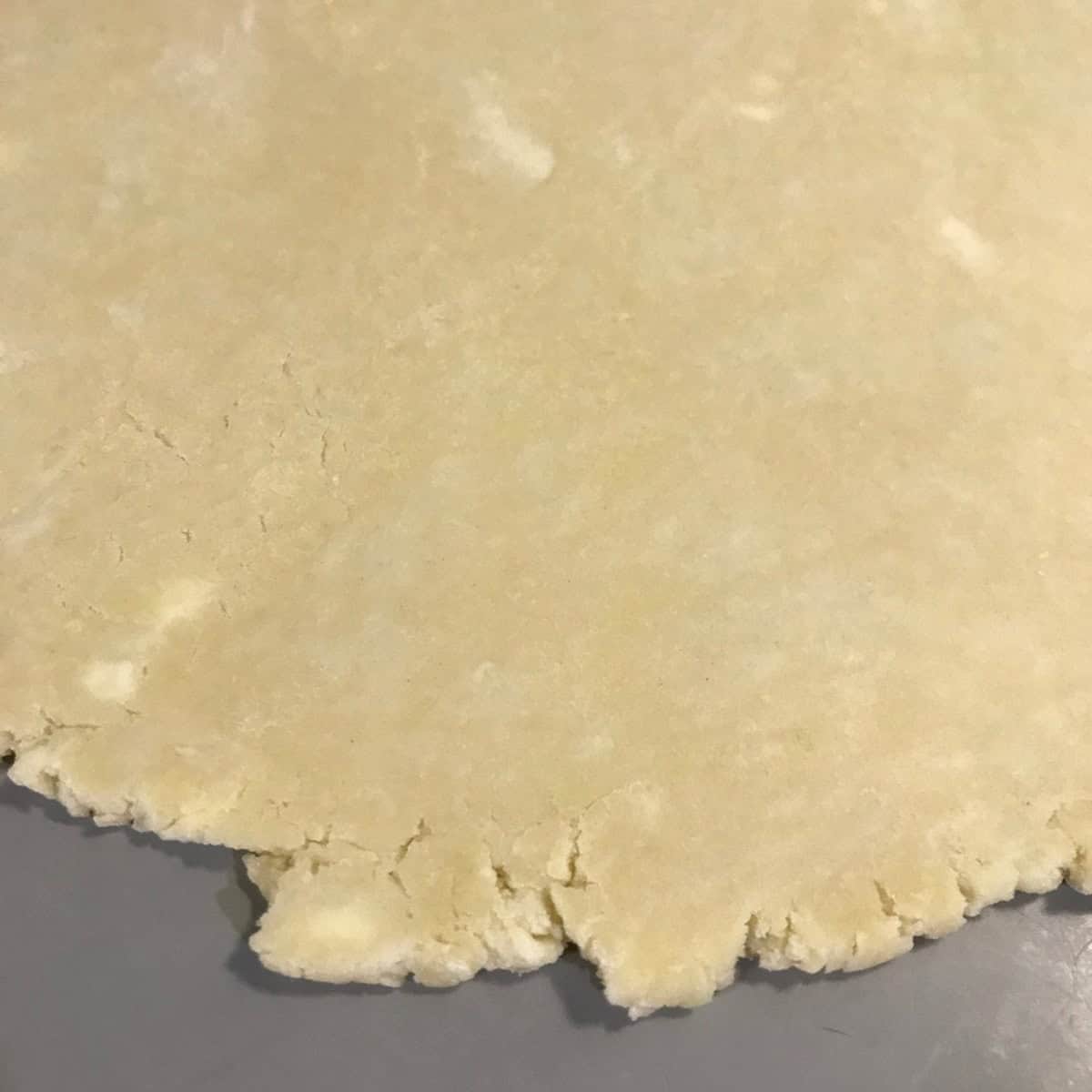
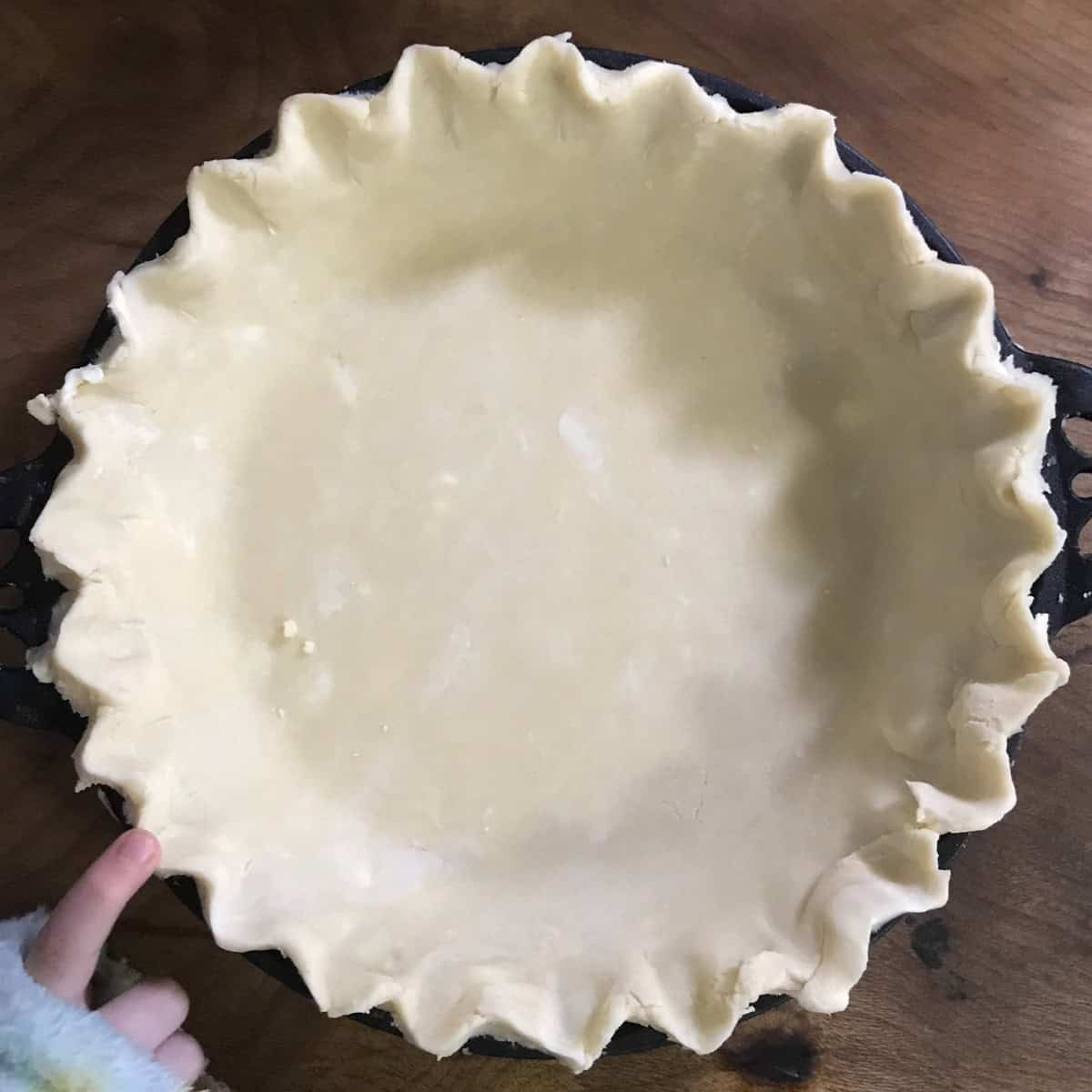
This recipe for pie dough uses the cut-in/rub-in method:
- Mix together dry ingredients
- Cut cold fat into ½ inch cubes
- Coat butter with dry and cut/rub into flour until mealy
- Add cold water and bring dough together (don't knead)
- Flatten into ½" - 1" thick disk, wrap with plastic and place in fridge for minimum of 2 hours.
- Roll dough to ⅛" thickness
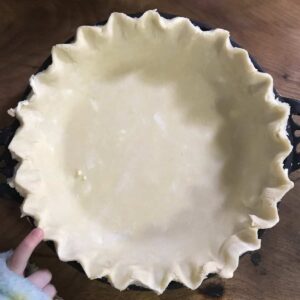
- Place rolled dough in pie pan
To read more, see The Cut-In/Rubbing Method
Substitutions
Substituting ingredients in a recipe (especially a baking recipe) will change the outcome of the end product; not just in flavor but also texture. That said, it is possible to substitute any of the following ingredients:
- Use butter, lard or shortening alone or in any combination as long as the total amount is the same as in the recipe
- Substitute pastry flour with all-purpose flour at a 1-1 ratio (you my need to add an additional tablespoon or two of water)
- Omit, decrease or increase sugar as needed
- If substituting gluten-free flour, you may have to experiment with water amount
Pie Pans
A good pie pan gets hot quickly quickly and retains heat which help to create flakiness and browning of the bottom crust.
- Cast Iron. Cast iron is the best at retaining heat so you're sure to always have a flaky crust with a golden brown bottom.
- Metal. Heats quickly and produces and even colored golden brown bottom. Not as good as cast iron, but still works very well.
- Ceramic & glass. Not my favorite, but it will do if that's what you got. Baking can be a little uneven. Bottom isn't as crisp and flaky
Rolling & Baking
Rolling
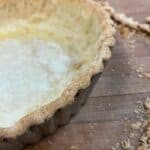
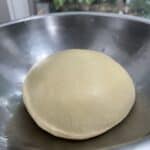
Resting the dough in the fridge allows the flour to fully hydrate and the gluten to relax, which makes for easier rolling. The images above show the before and after photos of dough that's rested in the fridge.
Pie dough tends to stick to the counter so use plenty of flour and rotate in between rolls. This also help to keep your dough round. Keep rolling and rotating until you have a disk about ⅛" thick. For reference, that's about two quarters stacked together.
Baking
- Bake an unfilled crust or bake a double-crusted pie around 400-425 degrees fahrenheit
- If a single-crusted pie needs to be baked again after filling, follow the instructions for the recipe that includes the filling
- I firmly believe you should always fully bake the crust of a single-crusted pie before filling and baking a second time. If you want to know why, you can read my rant below.
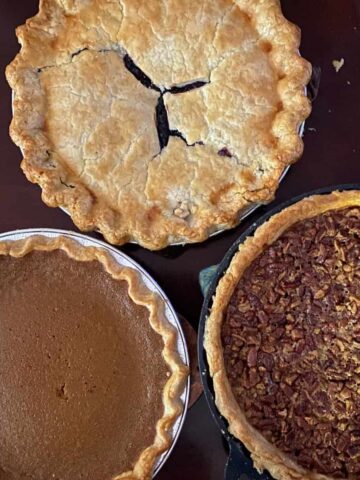
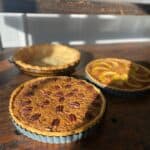
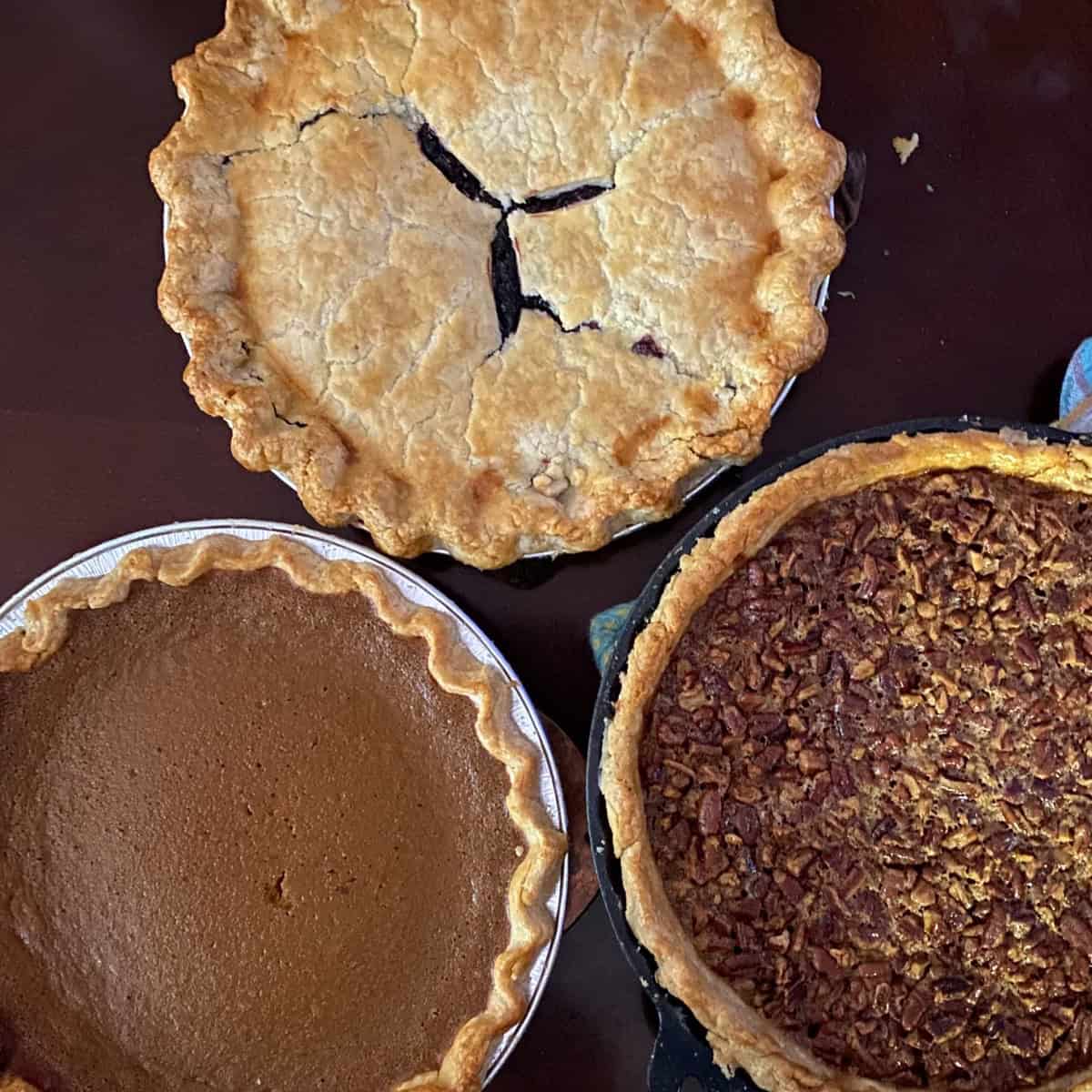
I am honestly amazed at how frequently I see people baking single crust pies without par baking. Like, AMAZED. In my opinion, one of the most crucial steps in obtaining a flaky bottom crust is to par bake it. I'm referring to cooked fruit pies, pecan pies, quiche and other cooked custard pies - anything that doesn't require a top crust. In fact, you can fully bake the crust and it will not burn once the filling is inside. The crusts of the pumpkin and pecan pies in the photo were fully baked prior to filling and baking a second time. As you can see, they're nicely baked and the bottoms were crisp and flaky.
Prep Ahead
Planning and working ahead can save you a lot of time and effort in the future. Luckily, pie dough and pie crust is freezer friendly at any stage. Listed below are the points at which you can freeze. Make sure to wrap well before placing your dough or crust into the freezer.
- After resting in the dough in fridge for two hours (still wrapped in plastic)
- After rolling it out into a sheet
- After rolling out and forming in a pan (I recommend using a metal dish)
- After the pie crust is baked (again, use a metal pan)
Pie Dough for Flaky Pie Crust
Ingredients
Dry Ingredients
- 390 g Pastry Flour
- 15 g Sugar
- 6 g Salt
Cut-In
- 112 g Butter cold from fridge
- 112 g Lard cold from fridge
Liquid Ingredients
- 112 g Water ice cold
Instructions
Combine Dry
- Whisk together flour, sugar and salt
Cut-In Fat
- Cut cold butter and lard (as best you can) into ½ inch cubes and toss with dry ingredients. Using your fingers, press the pieces of butter and lard along the bowl and between your finger taking care not to melt the fat. Keep rubbing the fat into the flour until you have something that resembles cornmeal with a few pea-sized bits of butter and lard remaining.
Add liquid
- With the flour still in the bowl, make a well in the center. Add the cold water and move the flour into the water using a fork. Once the water is evenly distributed and you have a shaggy mass of dough, dump it onto a clean counter and press it together. It will be dry, but should hold together well enough. Wrap in plastic and place in fridge. After two hours, the dough will be ready for rolling out.
Nutrition
Credit, sources, shout outs (& sometimes ramblings)
Very few recipes are true originals. Here is where I share my inspiration and cite my sources.
I've spent a significant amount of time trying to get pie crust right. It's been so long that I'm not even sure how I got here. No matter. As it turns out, most pie dough recipes (whether the author knows it or not) are modifications of the following ratio:
3 parts flour, 2 parts fat, 1 part water
Meaning, you could make a pie crust with 300g flour, 200g butter and 100g water (salt and sugar to taste).
So, in all honesty, another pie crust recipe will not make you a great pie baker. My recipe will not make you a great pie baker. Why? Because all the recipes are variations of the same ratio. What you really want is to master the method. Get the technique down, and you too will be able to achieve a perfect pie crust.