

Introduction
Croissants are one of the most labor-intensive products a bakery makes.
After the dough has been mixed, laminated, rested, sheeted, shaped, proofed, and baked, throwing away unsold croissants at the end of the day isn't a sustainable option.
Professional bakeries know they'll never predict sales perfectly.
Some days they'll sell every croissant.
Other days, a few will remain.
Instead of trying to eliminate waste entirely, they build systems that make inevitable leftovers valuable.
The goal isn't simply to "use leftovers."
It's to create a production system where today's unsold croissants become tomorrow's high-quality products.
That's one of the ways professional bakeries reduce waste, increase profitability, and make the most of every batch of dough they produce.
Jump to:
- Introduction
- Quick Answer: How Do Professional Bakeries Repurpose Leftover Croissants?
- Why Croissants Are Ideal for Repurposing
- Professional Bakeries Plan for Leftover Croissants Before They Bake Them
- Butter Croissants Are the Buffer
- Repurposing Is Part of the Production System
- Not Every Croissant Should Be Repurposed
- How Home Bakers Can Use the Same Mindset
- Common Ways Bakeries and Cafes Repurpose Croissants
- FAQ
- Related Guides
- Final Thoughts
- Pocket Baker Perspective
- Get the FREE Profitable Baker Pricing Calculator
Quick Answer: How Do Professional Bakeries Repurpose Leftover Croissants?
Professional bakeries rarely view leftover butter croissants as waste.
Instead, they often become products such as:
- almond croissants
- pistachio croissants
- hazelnut croissants
- crookies
- bread pudding
- breakfast casseroles
👉 Rather than reacting to leftovers, professional bakeries intentionally build these second-life products into their production schedule.
Why Croissants Are Ideal for Repurposing
Croissants are uniquely suited for second-life products because they're:
- labor-intensive to produce
- rich in butter, which helps maintain a good texture
- versatile enough to become many different products
After investing so much time in producing croissants, finding ways to extend its value simply makes good business sense.
Professional Bakeries Plan for Leftover Croissants Before They Bake Them
One of the biggest misconceptions about bakery production is that every croissant is expected to sell exactly as it's baked.
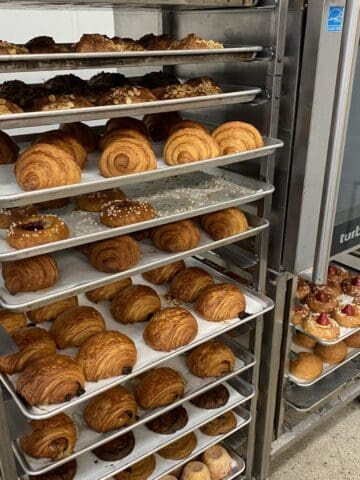
In reality, many bakeries intentionally bake extra butter croissants.
Why?
Because every bakery is balancing two different risks.
Running out of product.
or
Throwing product away.
Running out means disappointed customers and lost sales.
Throwing product away means losing both ingredients and the labor that went into making them.
Butter croissants help bridge that gap.
If they sell, great.
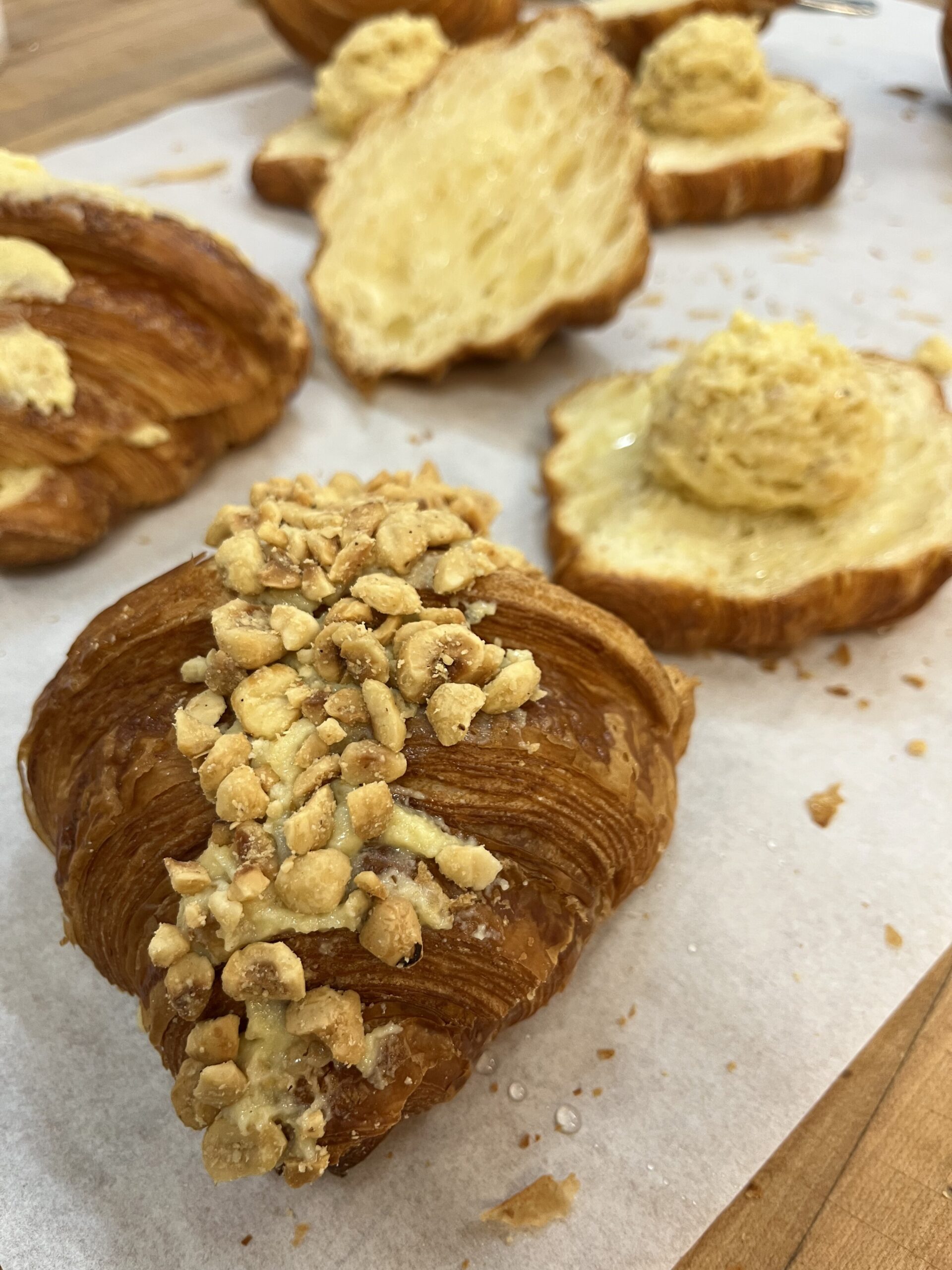
If a few remain at the end of the day, they become tomorrow's almond croissants, hazelnut croissants, or other twice-baked specialties.
Those products aren't created because something went wrong.
They're part of the production plan.
Good forecasting reduces waste.
Good production systems prevent waste from becoming a loss.
Butter Croissants Are the Buffer
Butter croissants offer something many other pastries don't:
Flexibility.
A butter croissant can become:
- almond croissants
- pistachio croissants
- hazelnut croissants
- crookies
- savory twice-baked croissants
- bread pudding
That flexibility has value.
It's one of the reasons butter croissants often become the foundation of a laminated pastry program.
Filled croissants don't offer that same flexibility.
A ham and Gruyère croissant has one opportunity to sell as a ham and Gruyère croissant.
A butter croissant can become many different products depending on:
- how many remain
- what ingredients are already available
- tomorrow's production schedule
- what customers are most likely to buy
That's why butter croissants often become the "buffer" that helps bakeries avoid both running out of product and unnecessary waste.
Repurposing Is Part of the Production System
The longer you operate a bakery, the better you'll become at estimating sales.
But you'll never predict every day perfectly.
Weather changes.
Events happen.
Customer habits change.
Professional bakeries don't try to eliminate that uncertainty.
They build production systems that can absorb it.
Making a few additional butter croissants is often easier - and more profitable - than risking running out during your busiest hours.
Repurposing also:
- reduces food waste
- creates additional menu items
- makes better use of labor you've already invested
- fits naturally into existing production
- often increases profitability, since twice-baked croissants typically sell for more than plain butter croissants
Perhaps most importantly, assembling a tray of almond croissants the next morning requires far less labor than creating an entirely new pastry from scratch.
It's not extra work.
It's simply the next step in the workflow.
Not Every Croissant Should Be Repurposed
Not every croissant is a good candidate for a second life.
Products containing:
- pastry cream
- whipped cream
- meat
- cheese
- other time- and temperature-sensitive fillings
are generally intended to be sold the day they're made.
On the other hand, butter croissants, as well as pain au chocolat, are ideal because they're versatile and can safely become many different products.
How Home Bakers Can Use the Same Mindset
Even if you bake only once a week for a farmers market, this same approach works.
Instead of trying to predict the exact number of every specialty pastry you'll sell, consider baking enough butter croissants that you don't have to worry about selling out early.
If every butter croissant sells, fantastic.
If a handful remain, freeze them.
The following week they can become:
- almond croissants
- pistachio croissants
- hazelnut croissants
- crookies
- bread pudding
Over time you'll begin to understand your sales patterns while building a menu that's flexible, efficient, and more profitable.
Common Ways Bakeries and Cafes Repurpose Croissants
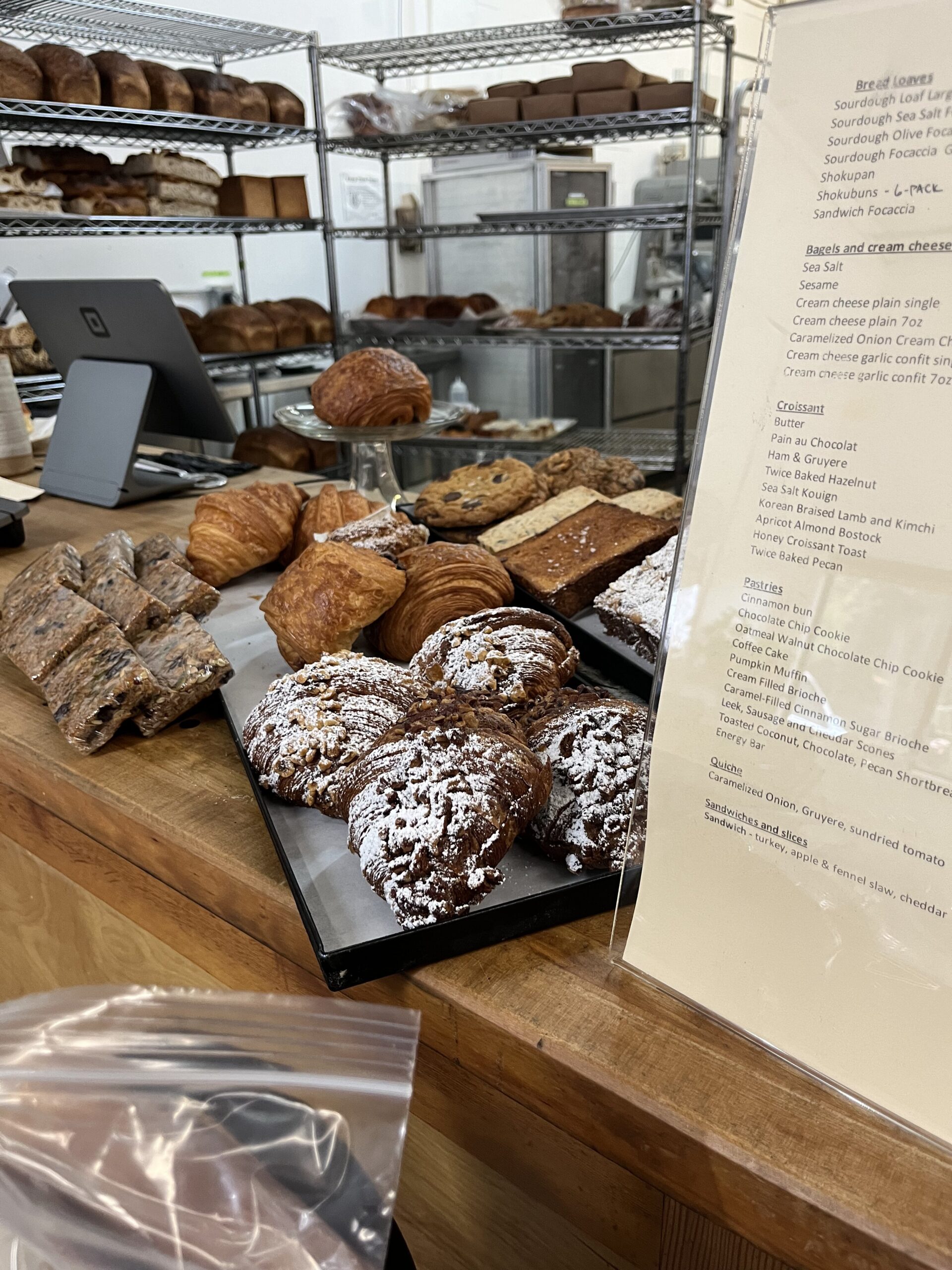
Twice-Baked Croissants
Perhaps the most common - and often the most profitable - second-life product.
Bread Pudding or Baked French Toast
Perfect for using larger quantities.
The drier the croissants become, the better they absorb the custard.
Breakfast Casseroles
An excellent café item that transforms day-old croissants into a completely different product.
FAQ
Can you repurpose stale croissants?
Yes.
Day-old croissants are ideal for twice-baked croissants as well as sweet and savory bread puddings.
How stale is too stale?
For twice-baked croissants, next-day croissants produce the best results.
If you won't be using them the following day, freezing is the better option.
For bread pudding, much older croissants work beautifully because dry bread absorbs more custard.
Why are almond croissants usually made with day-old croissants?
Historically, almond croissants were created as a way for bakeries to reduce waste by giving day-old butter croissants a second life.
Today they're often just as popular as fresh butter croissants.
Can you freeze croissants before repurposing them?
Yes.
If you bake only once or twice a week, freezing leftover butter croissants is one of the best ways to preserve quality until you're ready to repurpose them.
Can savory croissants be repurposed?
Generally, products containing meat, cheese, pastry cream, whipped cream, or other highly perishable fillings are intended to be sold the day they're made.
Butter croissants offer far more flexibility.
Do professional bakeries intentionally bake extra croissants?
Often, yes.
Many bakeries intentionally bake additional butter croissants because they know any unsold pastries can become popular twice-baked products the following day.
Related Guides
Croissant Workflow
👉 Can You Freeze Croissants? (Baked, Unbaked, and Laminated Dough)
👉 Freezer-Friendly Workflow: The Professional Baker's Approach
Bakery Production
👉 Why Does Baking Take Me So Long?
👉 What Is Product Mix in Baking? (How to Build a Menu That Actually Works)
👉 Why Your Baking Costs Feel Higher Than Expected (And What Food Cost Should Be)
Beyond Croissants
👉 How to Repurpose Leftover Bread and Pastries (Pro Baker Tips)
Final Thoughts
Repurposing croissants is less about rescuing leftovers and more about extending the value of the time, ingredients, and skill that went into making them.
By thinking one step ahead, professional bakeries reduce waste, create new products, and build production systems that are both more efficient and more profitable.
That's why repurposing isn't an afterthought.
It's part of the plan.
Pocket Baker Perspective
One thing I learned very quickly running a bakery is that every unsold pastry matters.
Most bakeries - especially small ones - operate on tight margins. By the time a croissant comes out of the oven, you've already invested ingredients, labor, time, and energy into making it. Throwing it away means losing all of that work.
Because of that, bakers tend to be some of the most economical people you'll meet.
When I built my menu, I intentionally looked for ways to give products a second life.
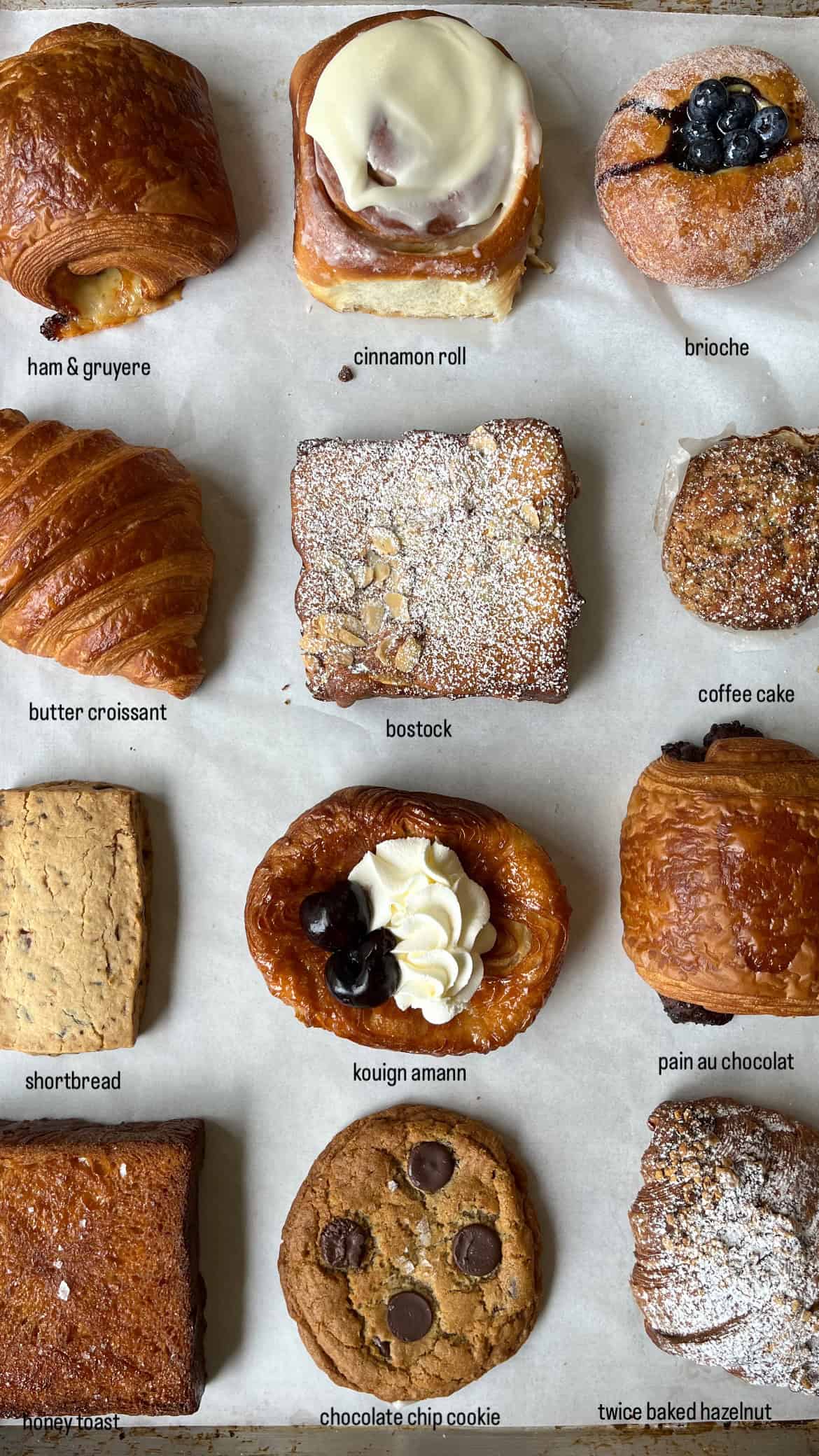
Unsold butter croissants became twice-baked hazelnut croissants.
Unsold chocolate croissants became twice-baked chocolate almond croissants.
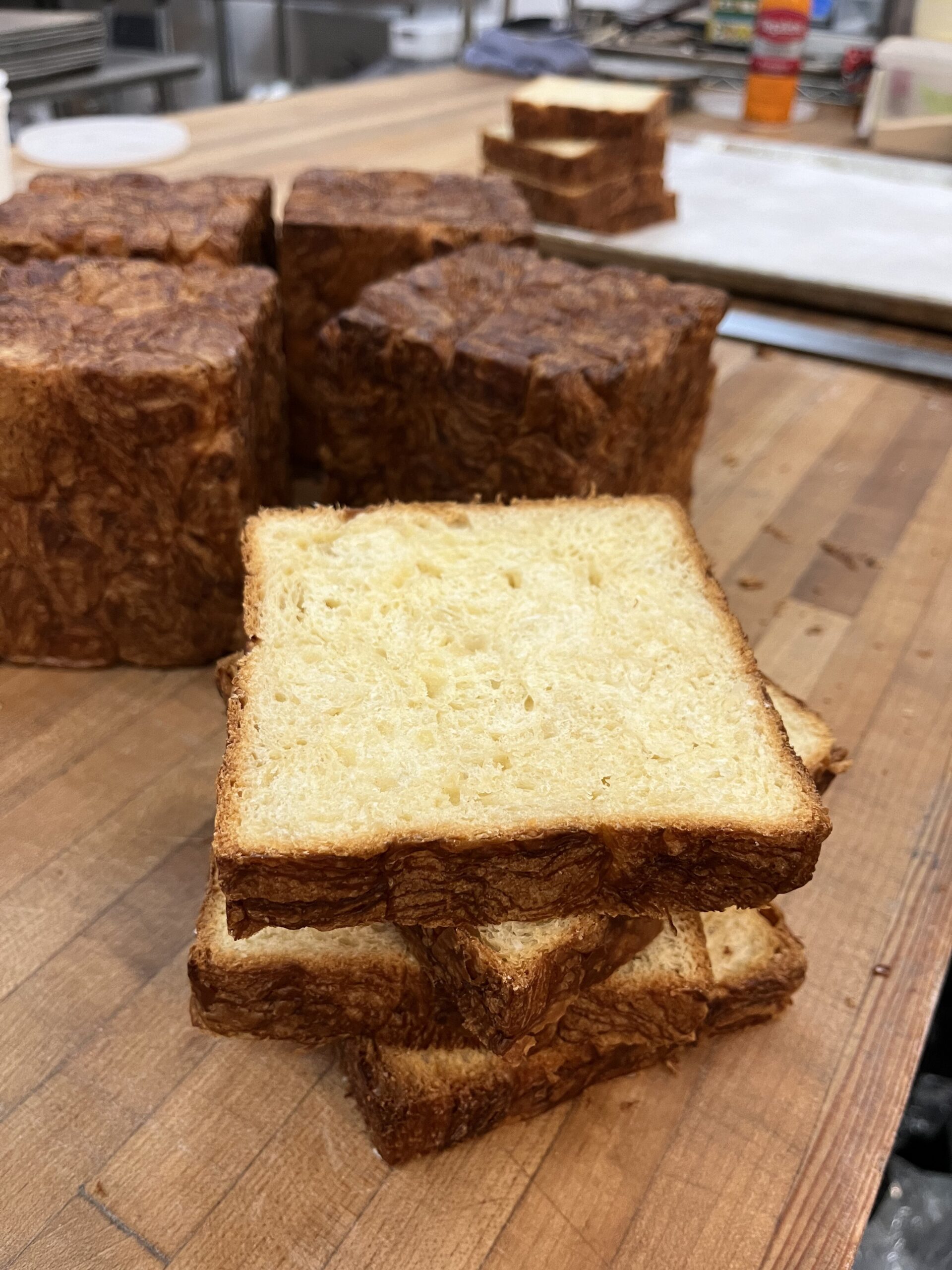
Croissant dough scraps became chocolate churro croissants and croissant loaves, which were later sliced and turned into apricot almond bostock and honey butter toast.
Those weren't "leftover" products.
They were staple menu items that customers came in expecting to see - and many days they sold just as well as, if not better than, the original pastries.
Because of that, I intentionally baked more plain butter croissants than I expected to sell.
That wasn't poor forecasting.
It was part of the production plan.
Butter croissants gave me flexibility.
If they sold, fantastic.
If a few remained at the end of the day, I already knew exactly what they would become the following morning.
This wasn't about simply finding something to do with leftovers.
It was about designing a production system that made the most of the time, ingredients, and labor that had already gone into making them.
The result was less waste, a more efficient workflow, additional products for the menu, happier customers, and ultimately, a more profitable bakery.