Introduction
Blind baking is often treated as something a pie recipe either tells you to do or doesn't.
If the instructions say to blind bake the crust, you do it. If they don't, you fill the raw crust and put the whole pie in the oven.
But that's not really how I think about it.
This isn't about whether you absolutely have to blind bake your pie crust. With most baked fillings, you can make a perfectly good pie either way.
The better question is:
What do you want your finished crust to be like?
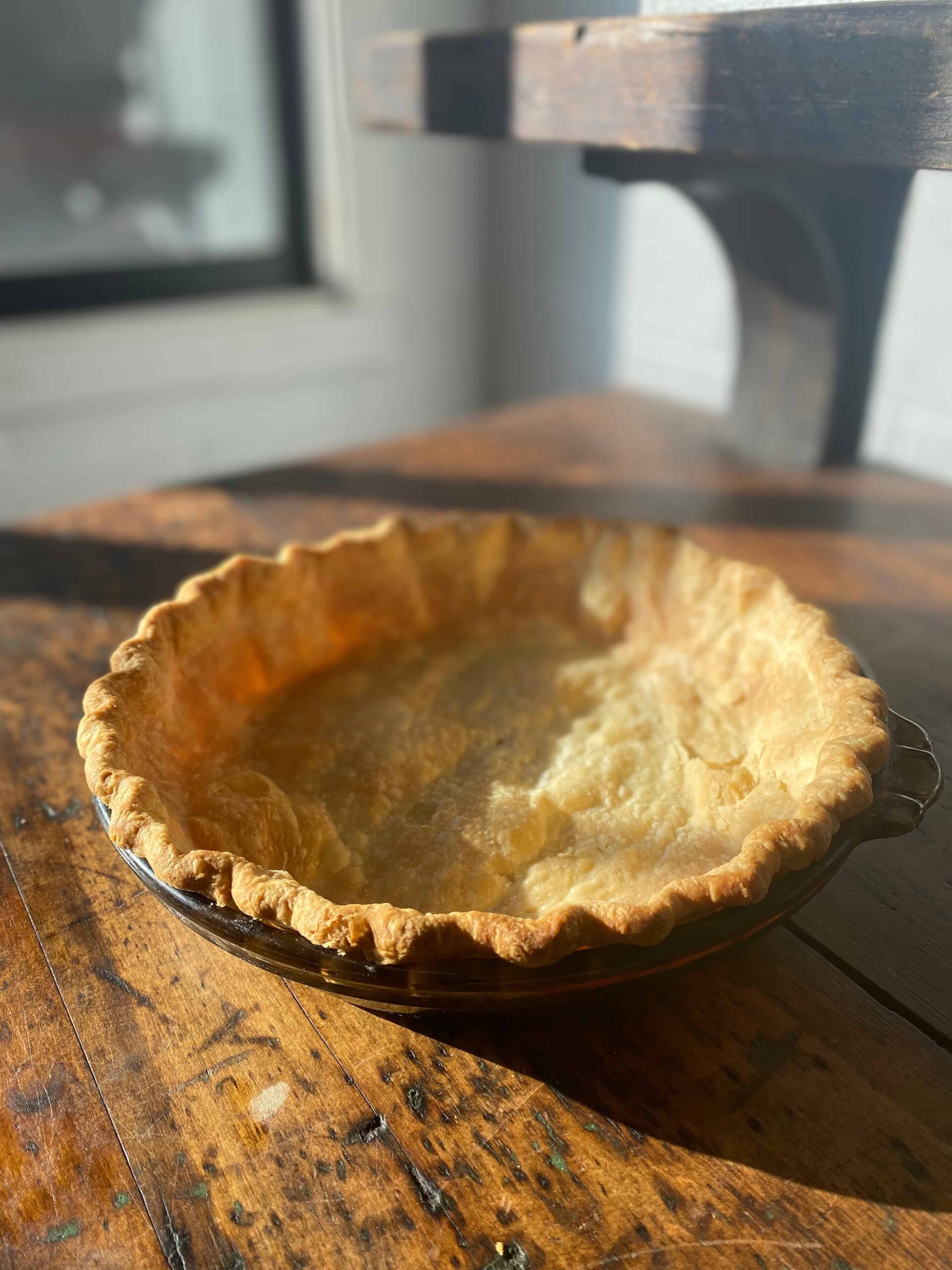
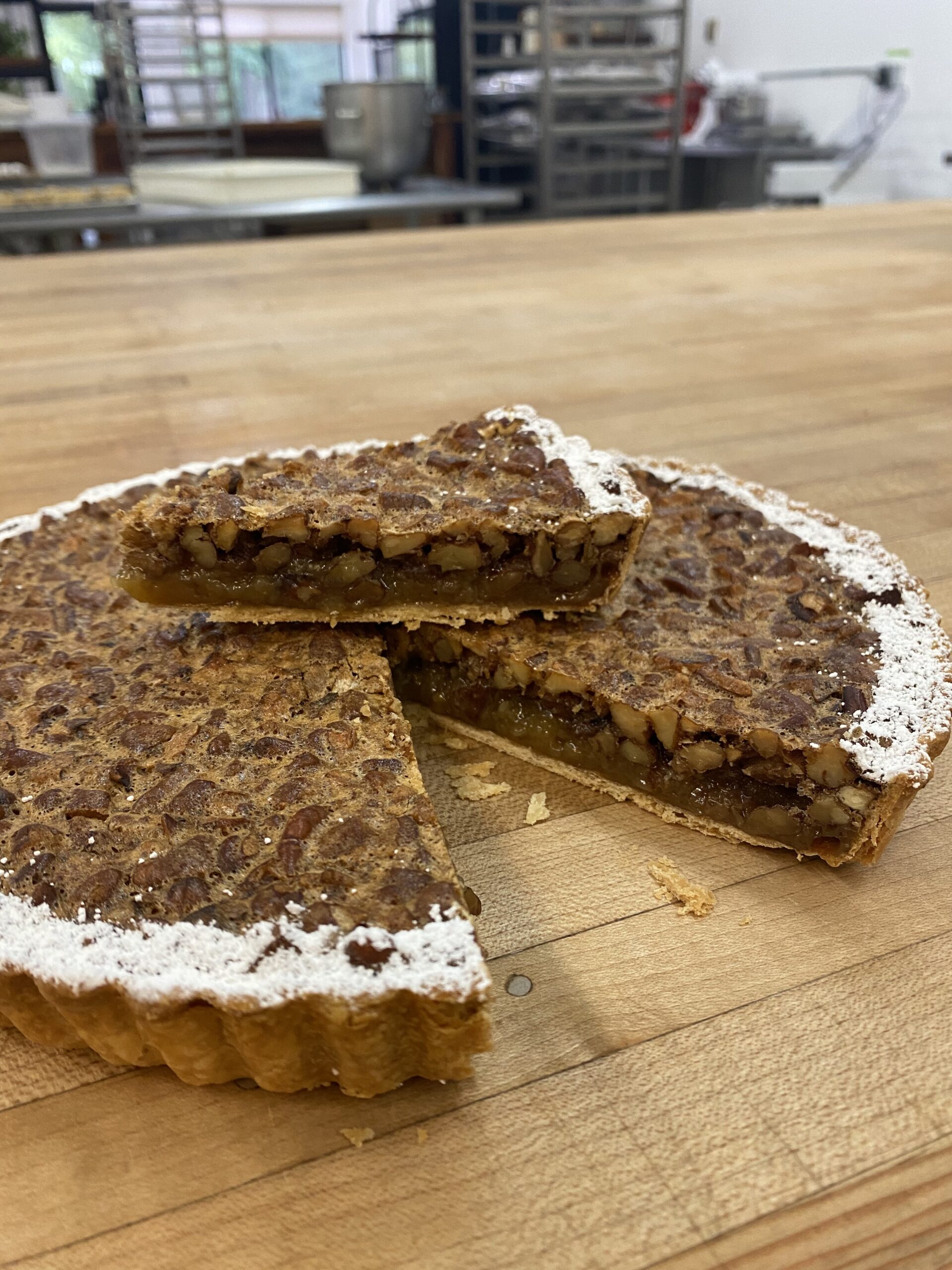
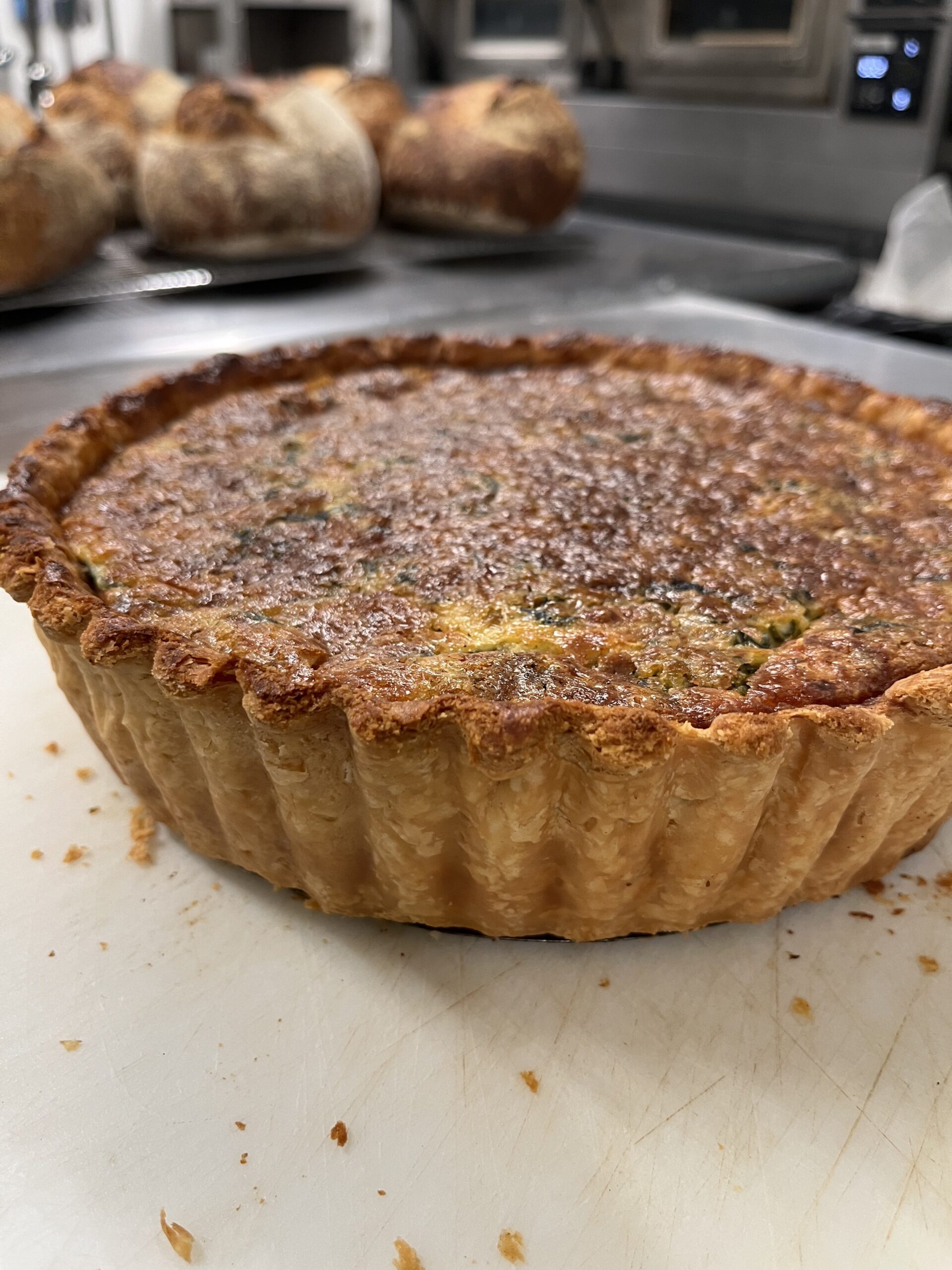
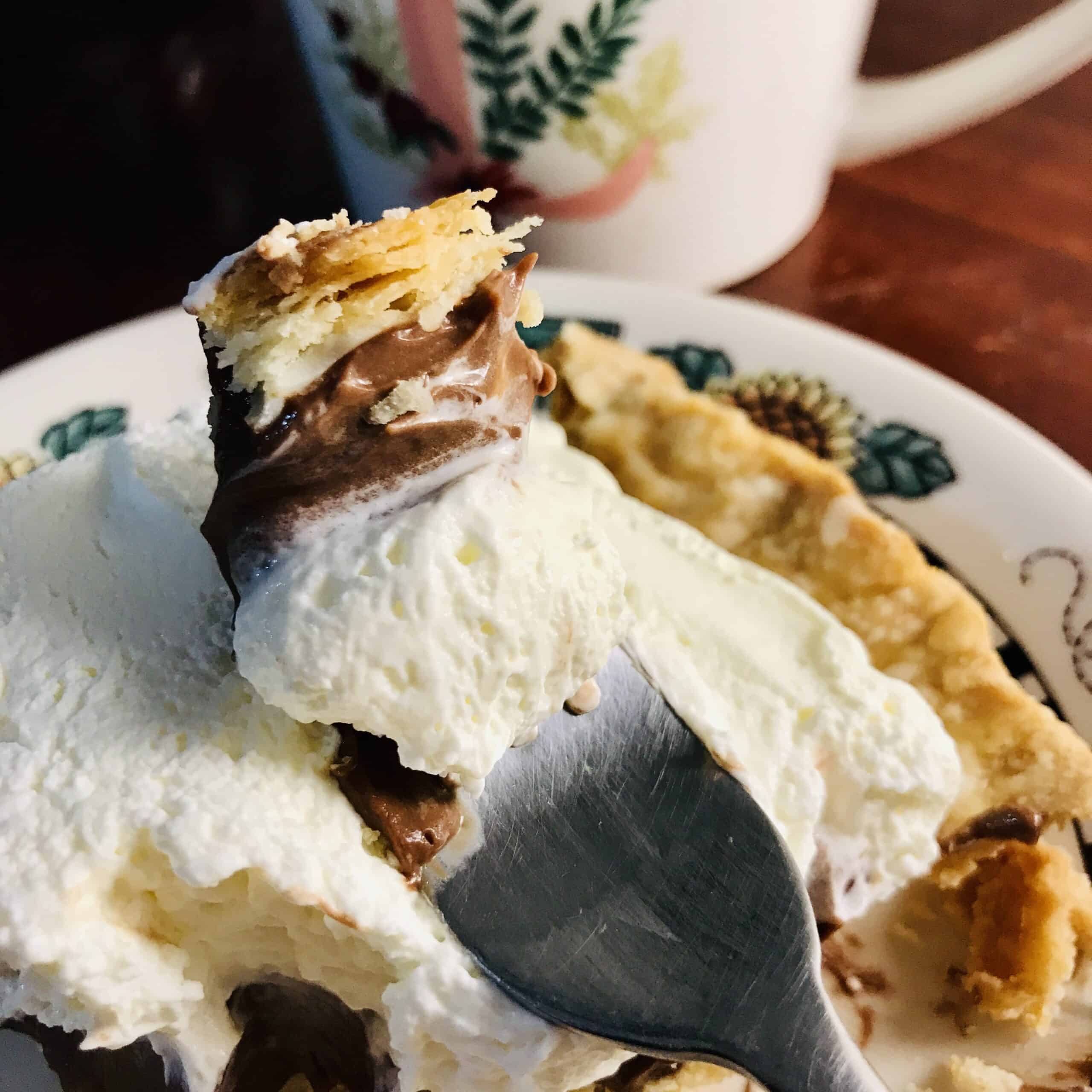
I like my pie crust crisp and flaky. When I cut into a slice with my fork, I want the crust to break cleanly and almost shatter.
I've also eaten plenty of pies with a softer bottom crust - and there are people who genuinely prefer their pie that way.
Neither is necessarily right or wrong.
But if you're like me and want a crisp, flaky bottom crust, I think blind baking makes a world of difference. That's why, regardless of whether the recipe tells me to, I blind bake almost every single-crust pie I make.
And you can make that same choice with just about any pie recipe.
[feast_advanced_jump_to]
Quick Answer: Should You Blind Bake a Single-Crust Pie?
👉 You don't have to blind bake every single-crust pie, but if you want a crisp, flaky bottom crust, I recommend it.
Blind baking gives the crust time to set, lose some moisture, and begin browning before you add the filling.
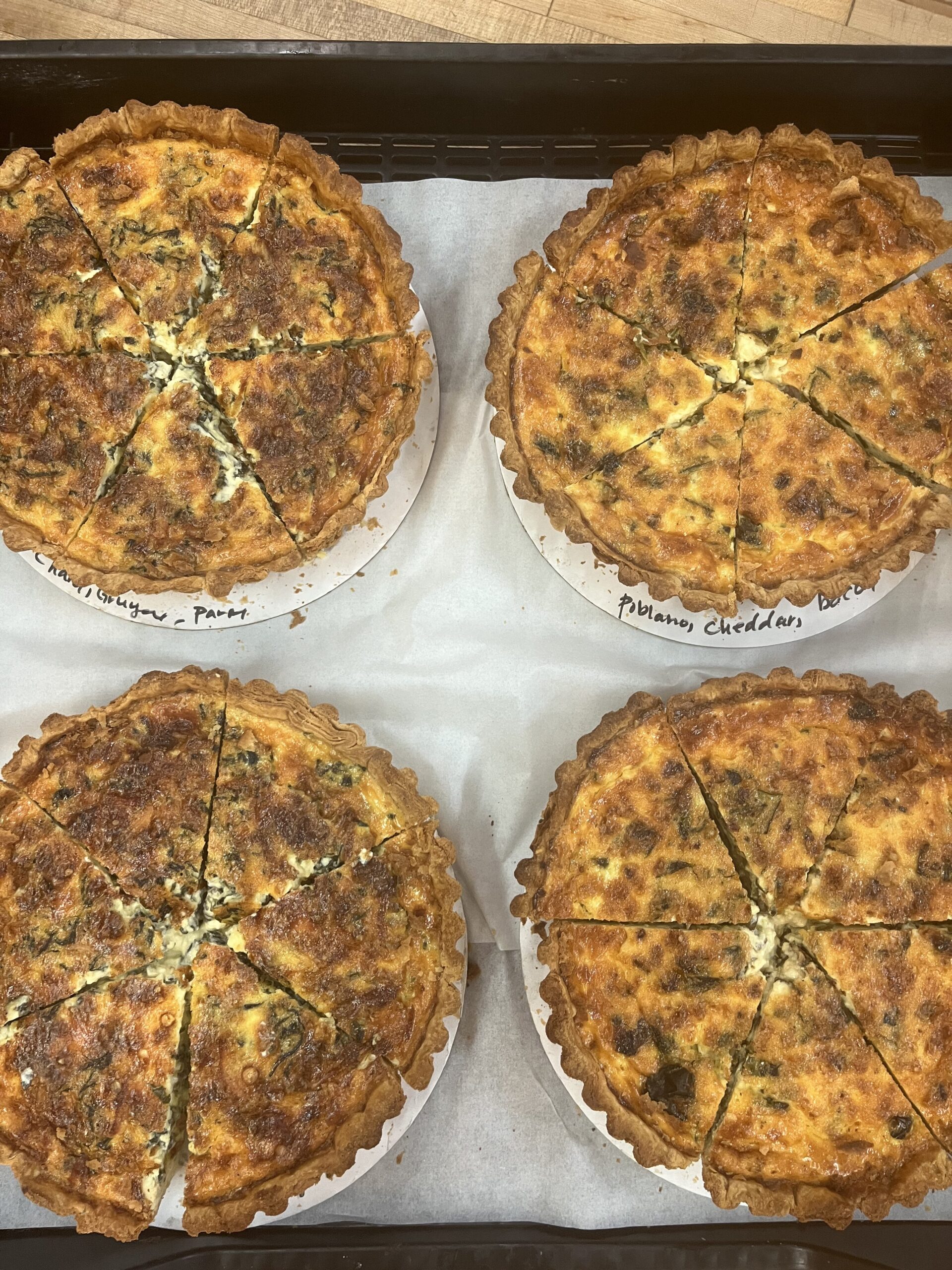
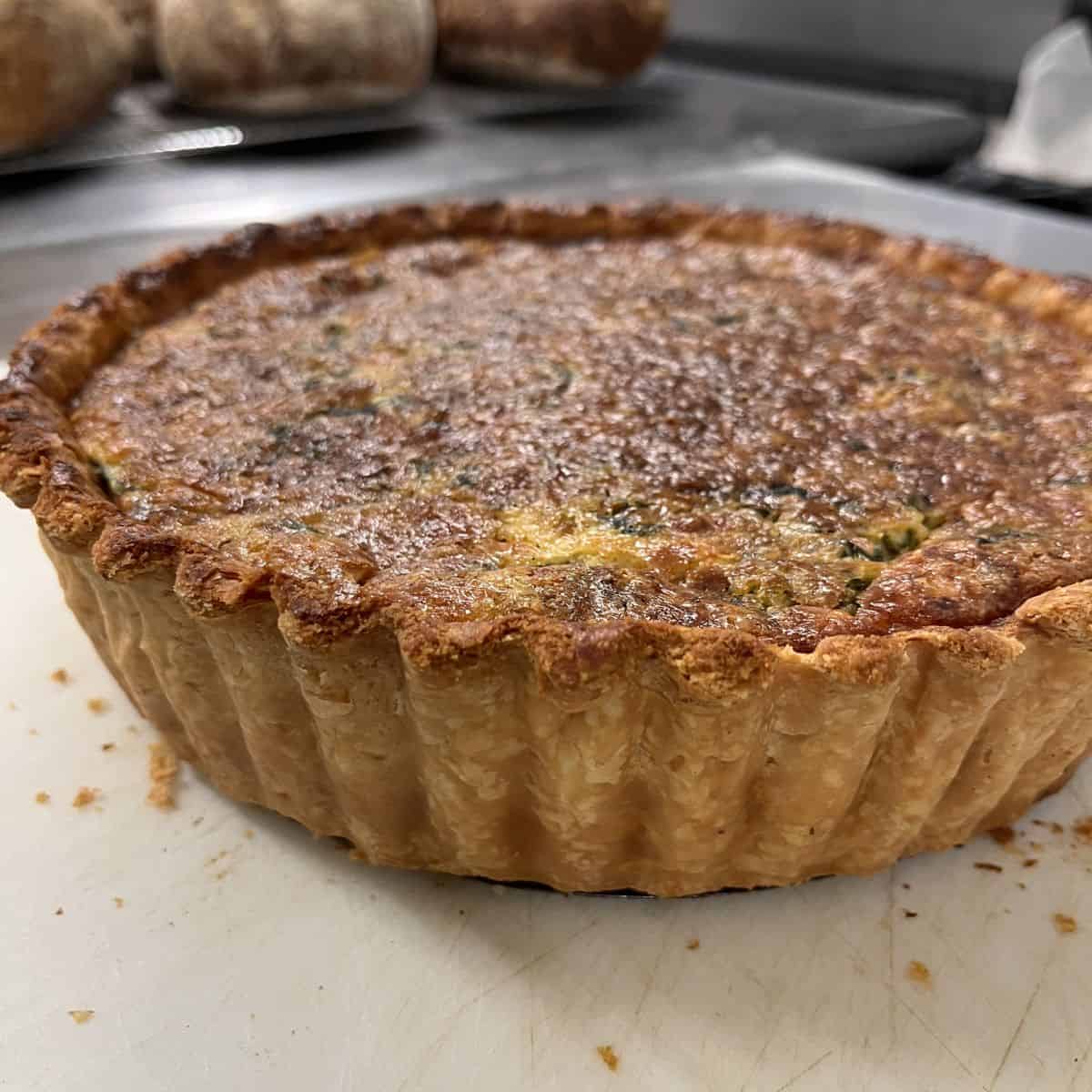
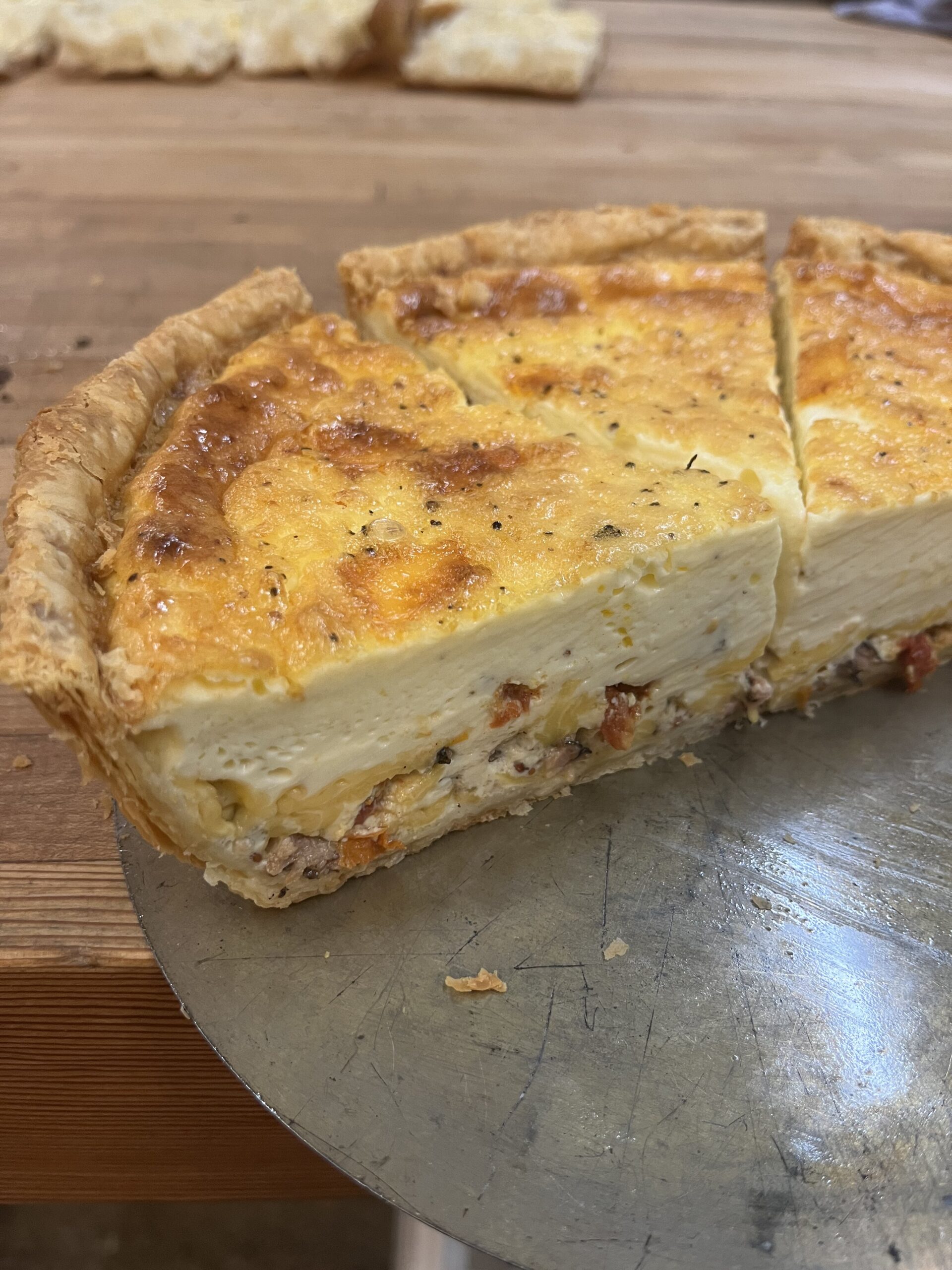
For pies that will go back into the oven - pumpkin, pecan, quiche, and similar pies - you can partially blind bake the crust first.
For a pie with a filling that won't be baked, such as a cream pie, the crust needs to be completely baked before it's filled.
But don't think of blind baking only as something you do when a recipe requires it.
Think of it as a choice you can make based on the crust you want.
You Can Blind Bake Even If the Recipe Doesn't Tell You To
This is probably the biggest thing I want bakers to understand about blind baking.
You don't need permission from the recipe.
If your pumpkin pie recipe tells you to pour the filling into an unbaked shell, you can still choose to partially blind bake that shell first.
The same goes for pecan pie, custard pie, quiche, or just about any other single-crust pie that will be baked after it's filled.
The recipe may have been developed to bake the crust and filling together. That doesn't mean it's the only way to make it.
When you understand what blind baking changes, you can decide whether that change gets you closer to the result you want.
Think of the Crust and Filling as Two Components
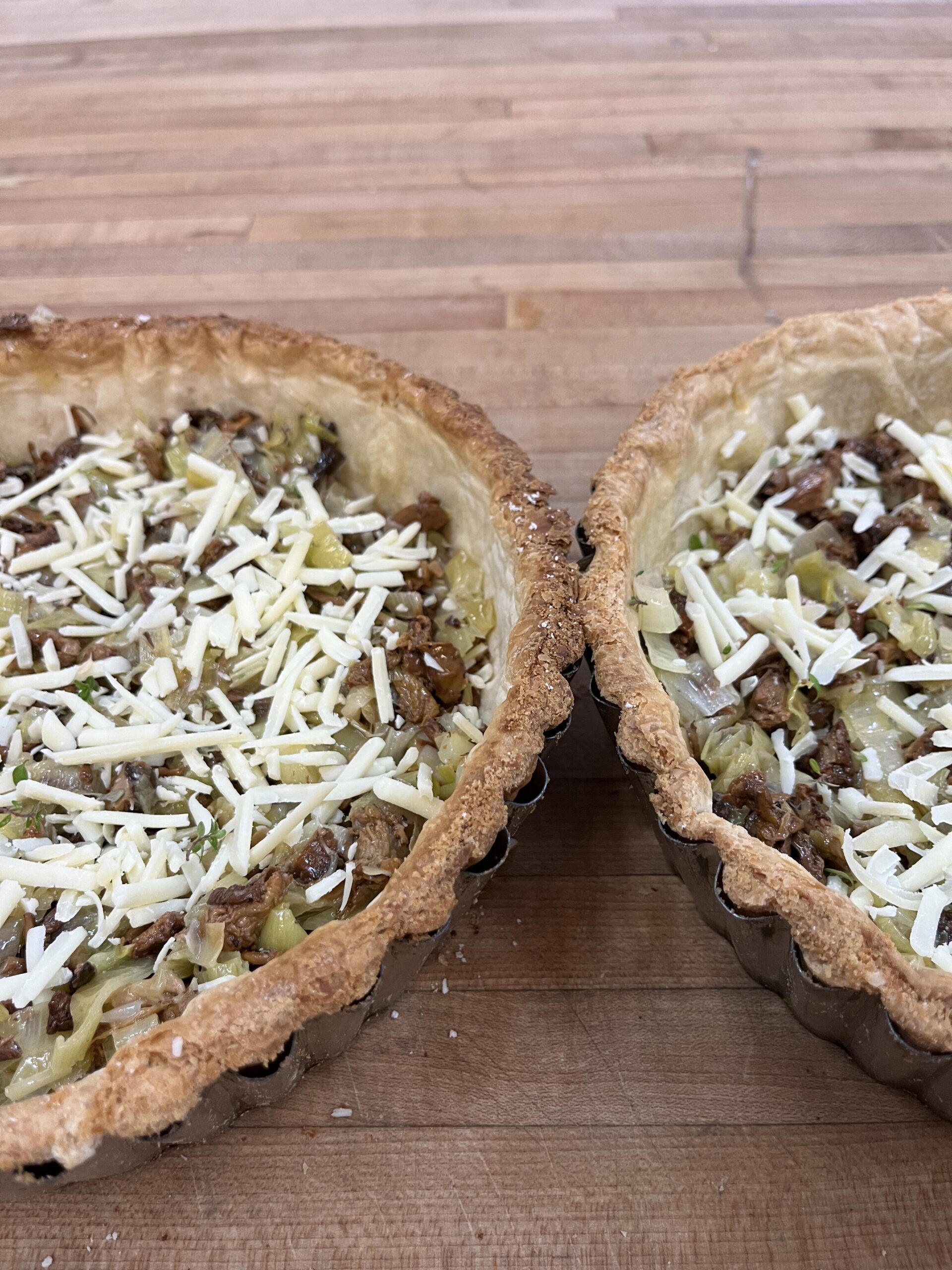
A pie is one finished dessert, but the crust and filling are doing very different things in the oven.
The crust needs heat to set its structure, cook the flour, develop color, and become crisp.
Meanwhile, many pie fillings contain quite a bit of moisture.
If you put a wet filling into raw pie dough, you're asking the bottom crust to bake and dry while it's sitting underneath that moisture.
It can work. Plenty of pies are made exactly that way.
But the filling may be finished before the bottom crust has developed as much color and crispness as you'd like.
Blind baking gives the crust some time on its own before you introduce the filling.
I like to think of it as giving each component of the pie some consideration.
We spend a lot of time thinking about whether the pumpkin custard is properly set or whether the pecan filling is cooked correctly. The crust deserves the same attention.
If giving the crust its own baking stage gets you closer to the pie you want, there's no reason not to do it simply because the recipe didn't tell you to.
Why I Especially Like Blind Baking Single-Crust Pies
Single-crust pies give us a particularly good opportunity to do this.
Think about:
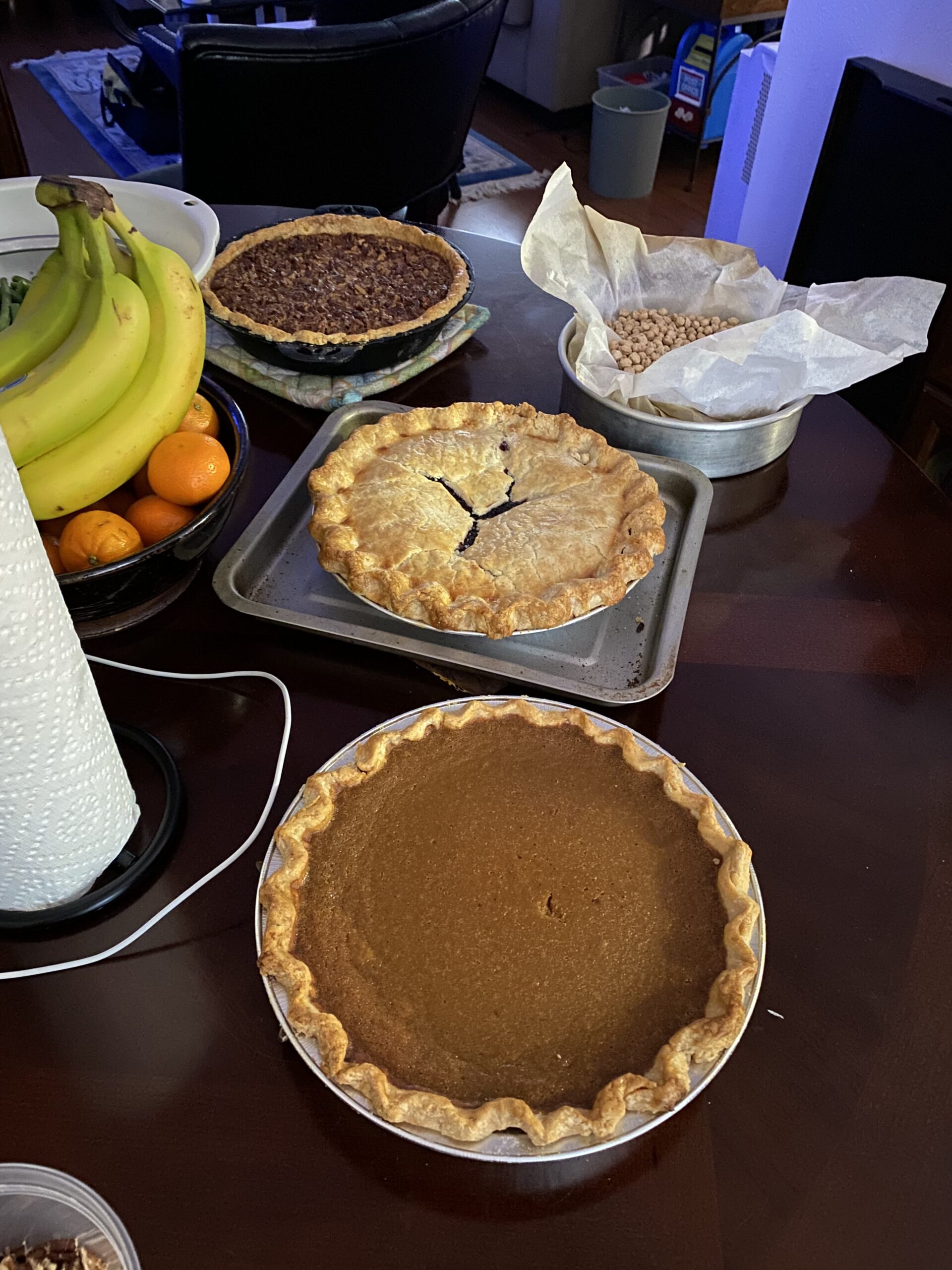
- Pumpkin pie
- Pecan pie
- Custard pies
- Quiche
- Cream pies and other pies added to a baked shell
Many of these fillings are relatively wet, which makes it harder for the bottom crust to become as crisp as it would on its own.
With a single-crust pie, we can solve that problem fairly easily: bake the crust first.
Double-crust pies are different. While you technically can partially bake a bottom crust before adding a filling and top crust, it complicates assembling and sealing the pie.
For that reason, double-crust pies are generally where I let the crust and filling bake together.
But if I'm making a single-crust pie?
I'm almost always going to give that bottom crust a head start.
How Far Should You Blind Bake the Crust?
This is where I don't want you to get too caught up in an exact number of minutes.
How far you bake the crust depends partly on what happens next.
If you're adding a filling that won't be baked at all, the crust needs to be completely baked.
If the filled pie is going back into the oven, you can stop earlier.
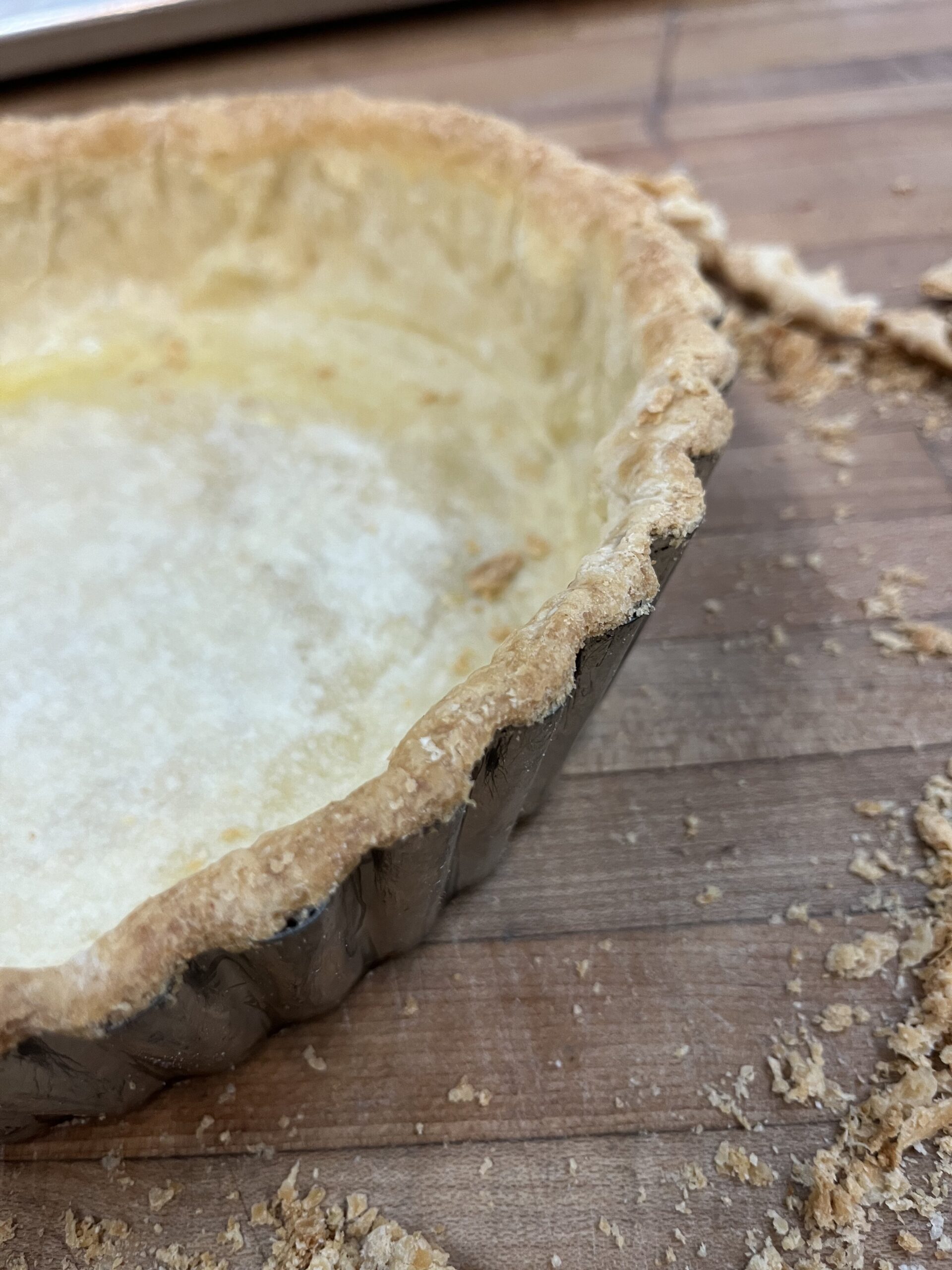
Personally, I take the color on my blind-baked crust fairly far. I know how much more color I can expect once the filling goes in, and I like a deeply baked, crisp crust.
If you haven't made a lot of pies, though, I wouldn't tell you to start there.
Instead, look for a crust that:
- no longer looks raw or wet
- has completely set
- has begun developing some color on the bottom
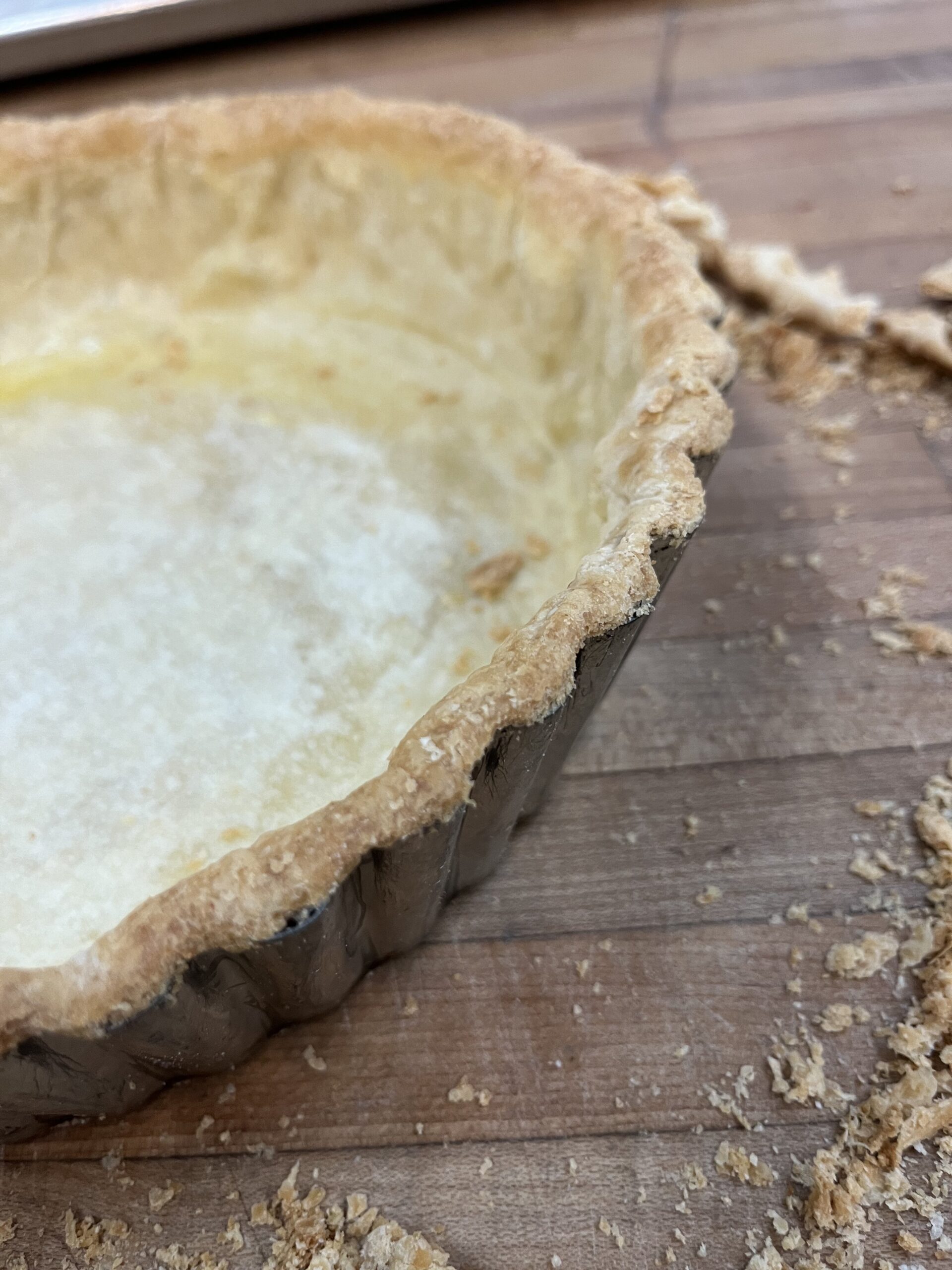
A light golden color is a very reasonable place to start.
As you make more pies, you can experiment with taking the crust a little further and see what you prefer.
That's ultimately the point.
You don't need to bake your crust as dark as I bake mine to benefit from blind baking.
Won't the Crust Burn When I Bake the Pie Again?
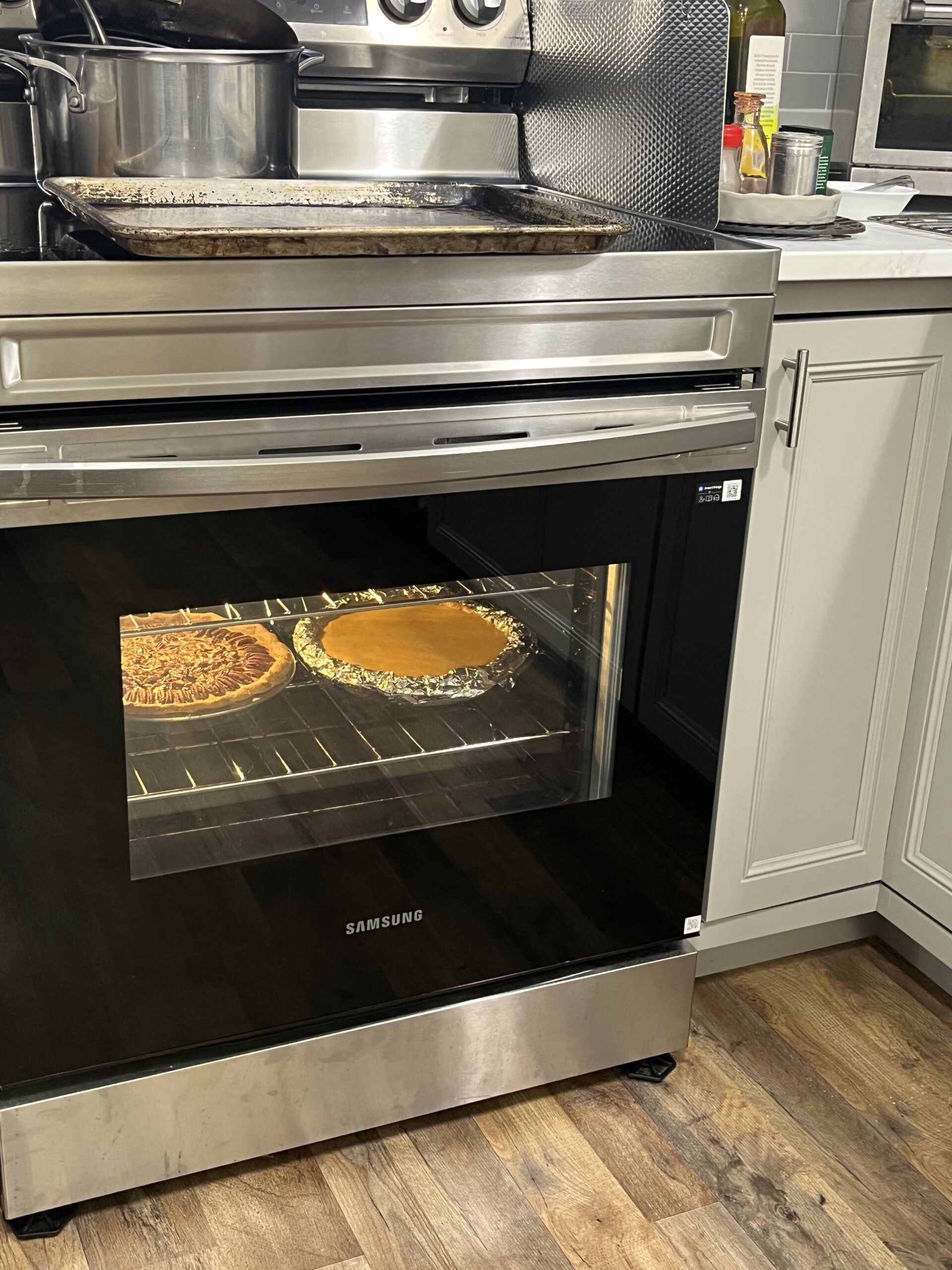
This can feel a little counterintuitive.
If you've already baked the crust until it has some color and you're about to put it back into the oven with the filling, it seems like you're setting yourself up for an overbaked crust.
But the bottom and sides of the crust are usually not the part I'm most concerned about.
The exposed edge is.
The edge receives direct heat throughout the bake, so it can become dark before the filling is finished.
This is also where experience helps. After you've made enough pies, you'll get better at judging how much color the edge can take.
Until then, keep an eye on it.
If the edge is getting as dark as you want before the filling is finished, cover it with a pie shield or foil and let the rest of the pie continue baking.
You don't need to avoid blind baking just because you're worried about the edge becoming too dark. You simply need to protect the edge when necessary.
Partial Blind Baking vs. Fully Baking a Pie Crust
The terminology can make this sound more complicated than it is.
Partially blind bake: The crust is baked first, then filled and returned to the oven.
This is what I would do with pies such as pumpkin, pecan, custard pies, and quiche.
Fully blind bake: The crust is completely baked before the filling is added.
This is necessary when the filling won't be baked afterward, as with many cream pies.
The basic decision is simply:
Does this crust have more baking ahead of it after I add the filling?
If yes, you don't necessarily need to finish baking it completely.
How I Blind Bake a Pie Crust
The process itself doesn't need to be complicated.
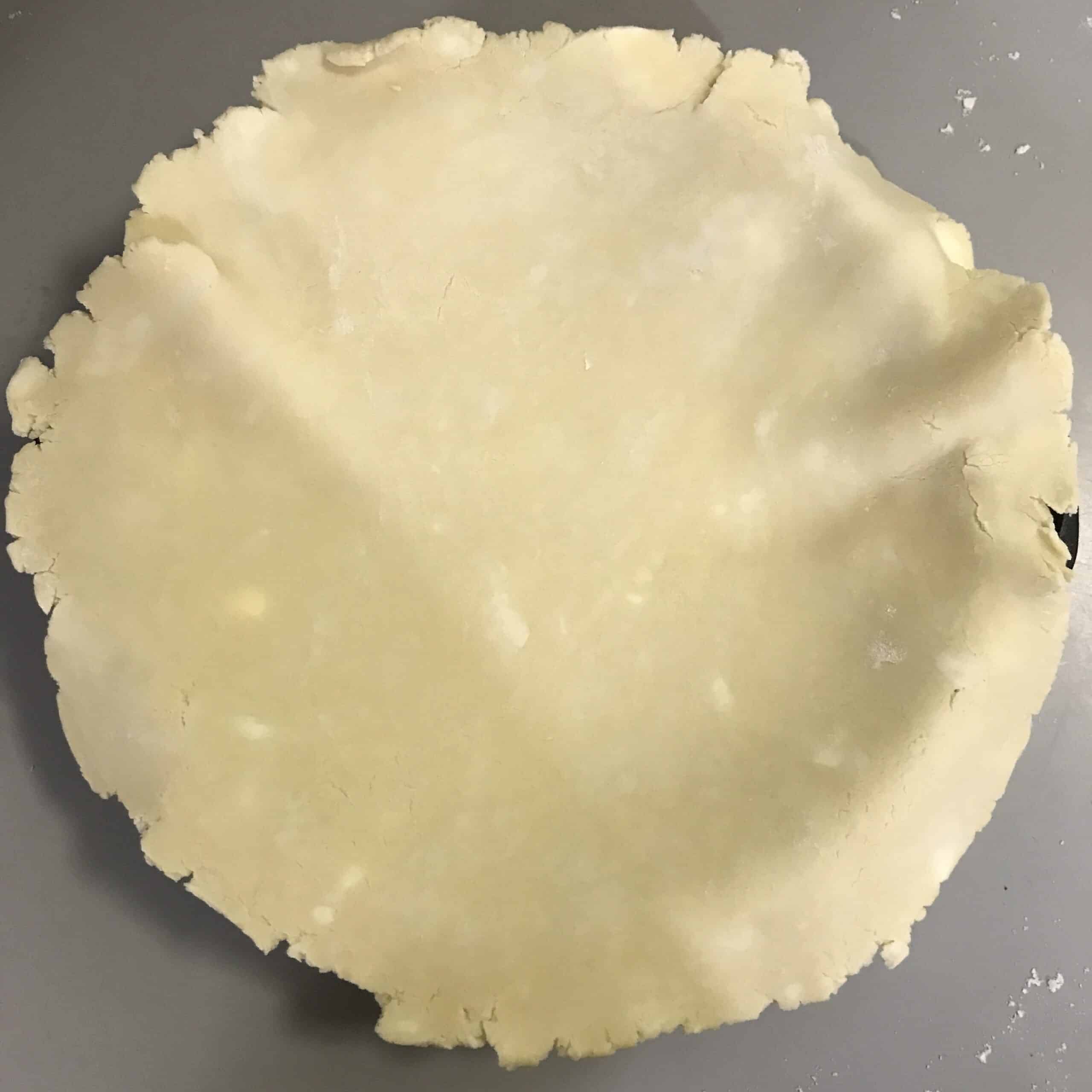
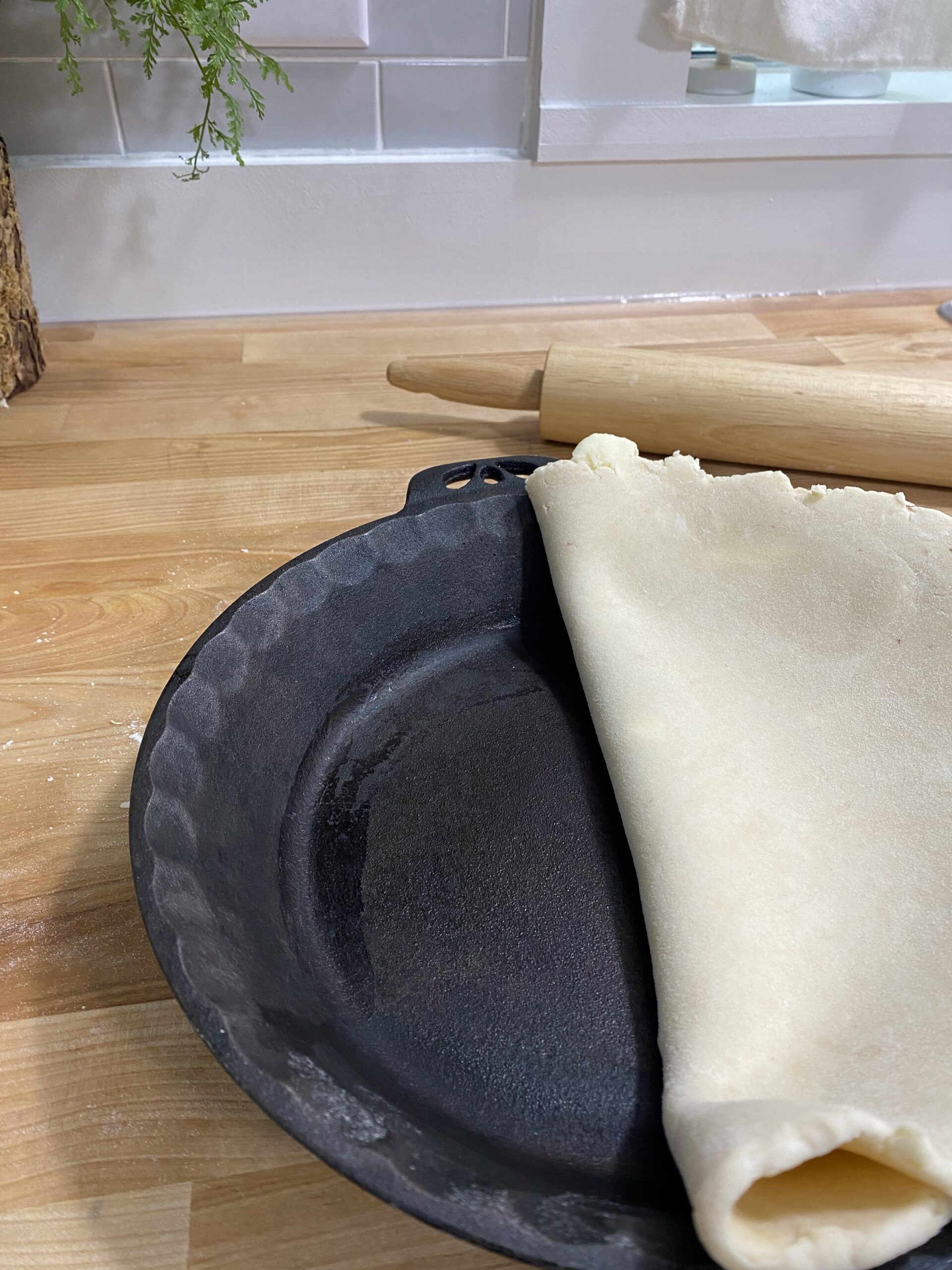
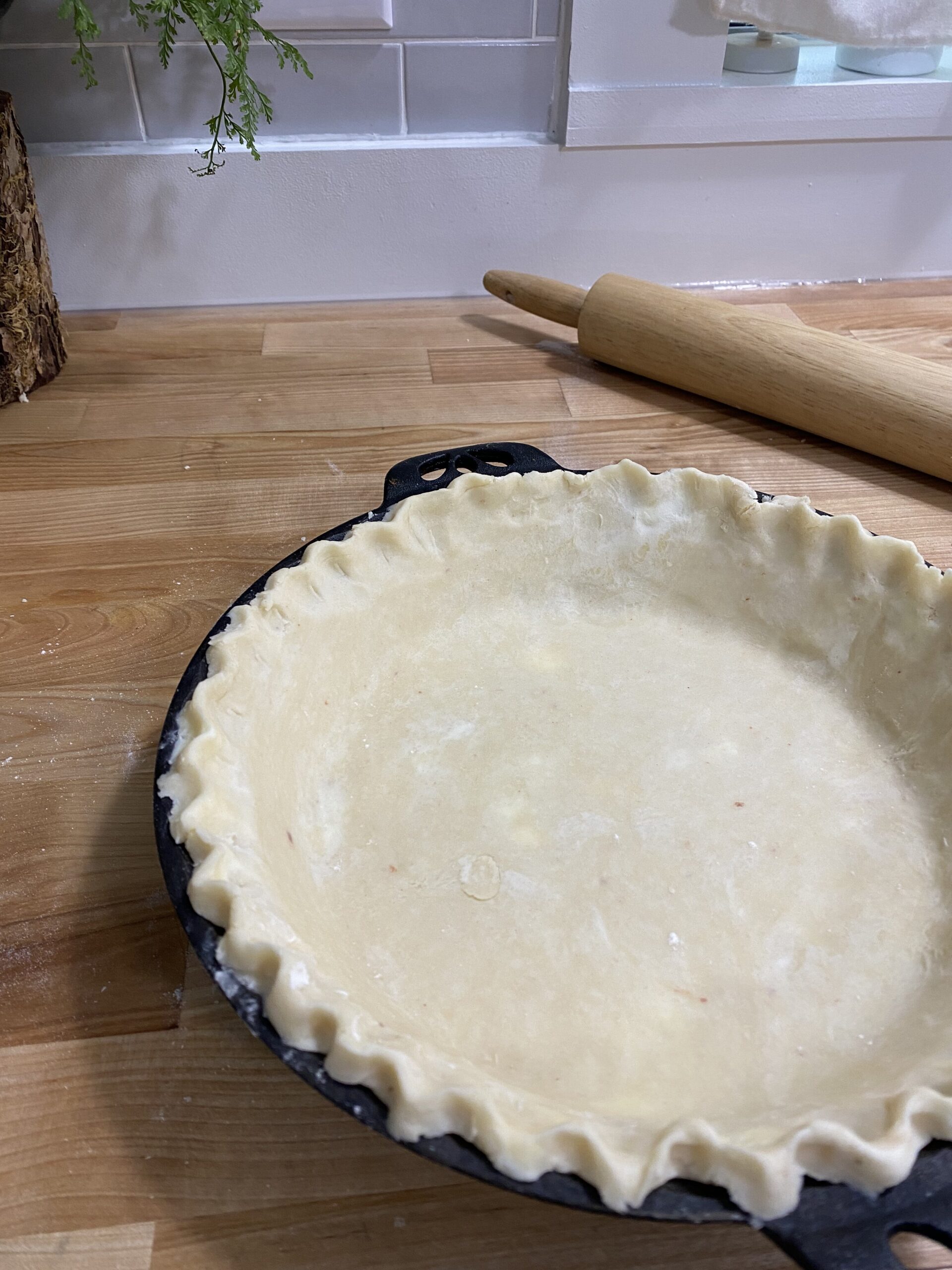
After rolling out the dough, place it in your pie pan without stretching it. Shape the edge, then chill or freeze the crust thoroughly before baking.
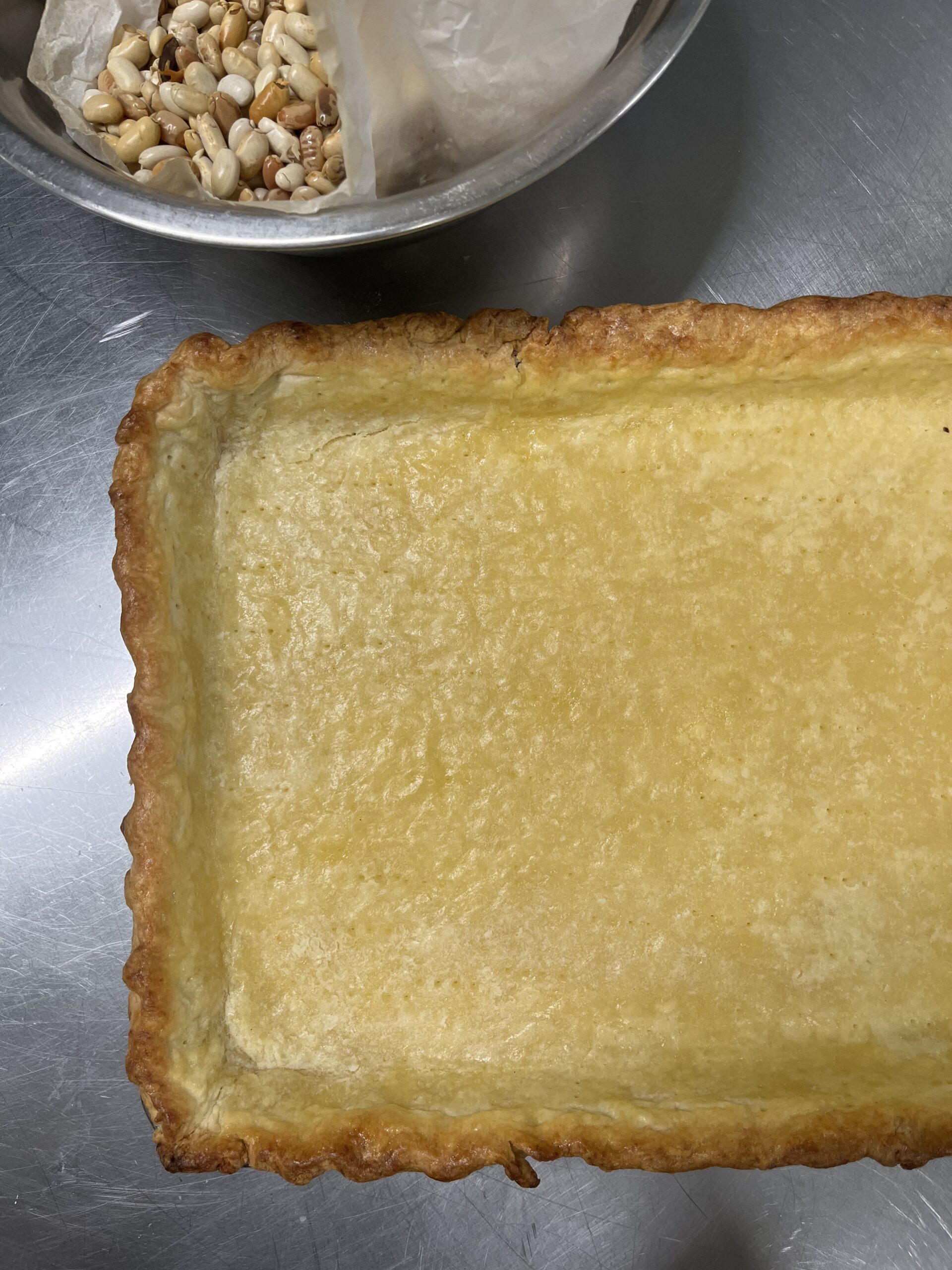
Line the cold crust with parchment and fill it with pie weights or dried beans. Make sure the weights support the sides as well as the bottom.
Bake until the dough has set and no longer looks raw.
At this point, the parchment and weights should lift away fairly easily. If the dough still wants to stick to the parchment, it may simply need more time in the oven to set.
Remove the weights and parchment, then brush the crust with egg wash and return it to the oven.
Continue baking until the bottom has begun developing some color.
For most bakers trying this for the first time, I'd stop when the crust looks dry, set, and lightly golden rather than trying to push it very dark.
Then add your filling and continue with your recipe.
Start With a Cold Pie Crust
I prefer my shaped crust to be very cold before it goes into the oven.
This isn't just about blind baking. Resting and chilling pie dough gives the gluten time to relax after rolling and shaping, while firming the fat again.
That helps the crust hold its shape once it hits the oven.
You can also freeze a shaped pie shell and blind bake it directly from cold, which is one of my favorite ways to work ahead.
👉 Related: Freeze Pie Dough Like a Pro: Smart Make-Ahead Methods for Perfect Crusts
What About Pie Weights?
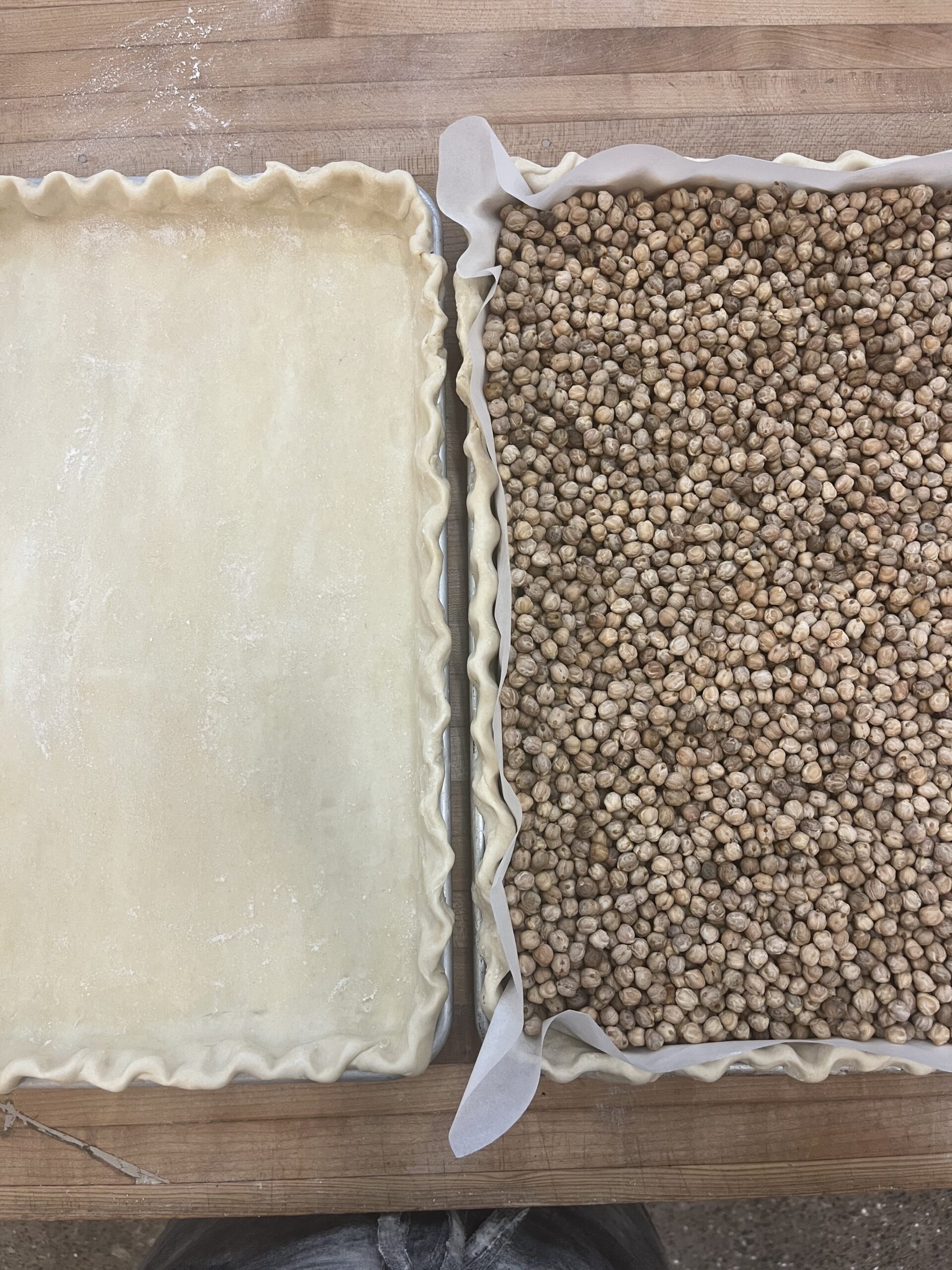
Pie weights aren't just there to keep the center of your crust from puffing up.
They also support the dough as its structure sets.
Without that support, the sides of a warm pie crust can slump inward before they're firm enough to hold themselves in place.
You don't need anything particularly fancy. Commercial pie weights work, but in every bakeshop I've ever worked it, we've used beans. At home, I only had rice so that's what I used. note: you can reuse the beans and rice as pie weights for several years.
What's more important is that you use enough to support the crust - not just scatter a handful across the bottom.
Once the crust has set, you can remove the weights and finish baking the bottom uncovered.
Blind Baking Doesn't Have to Mean Shrinking Pie Crust
If you've had pie crust shrink while blind baking, it can be tempting to blame the blind baking itself.
Usually, though, there are other things happening.
Pie dough that has been stretched into the pan, overworked, allowed to get too warm, or not given enough time to rest is more likely to shrink when it hits the oven.
That's why I focus on the dough before it ever gets to the blind-baking stage:
Let it rest. Keep it cold. Make sure the dough is relaxed and don't stretch.
If shrinking is a recurring problem for you, I go much deeper into this in Why Does My Pie Crust Shrink?
Blind Baking and Egg Wash Do Different Jobs
I like to brush the crust with egg wash after removing the pie weights.
The blind bake has already helped the crust set and dry.
The egg wash adds another layer of protection between that crust and the wet filling while also helping with browning.
Other barriers can work for specific pies, too - cheese on a savory crust or chocolate on a fully baked crust for certain cream pies.
But the important distinction is:
Blind baking sets the crust. A moisture barrier helps protect it once the filling is added.
If soggy bottoms are something you struggle with, see Why Is My Pie Crust Soggy on the Bottom? for the other factors that can contribute.
Final Thoughts
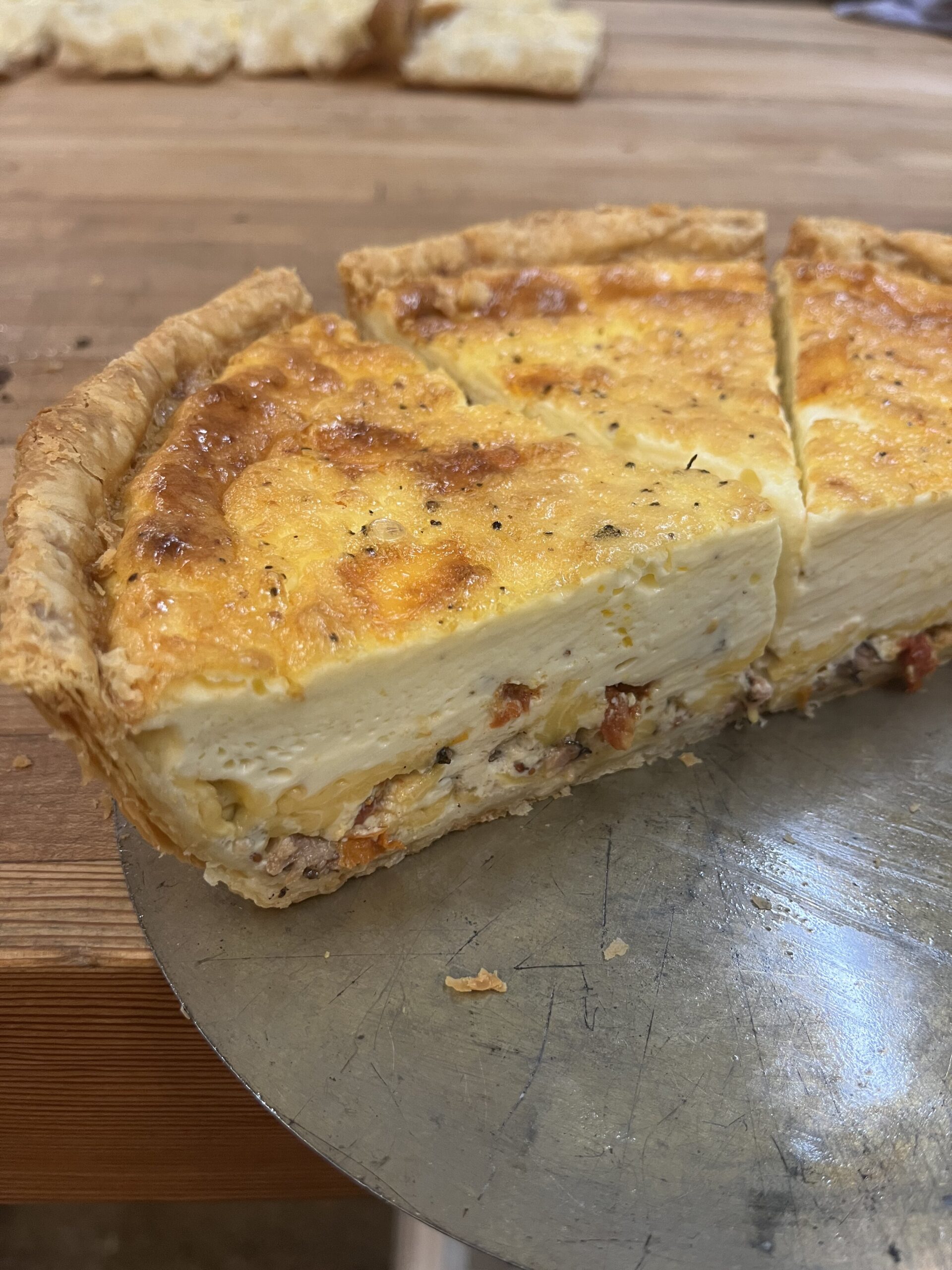
Do you have to blind bake your pie crust?
No.
And that's really the point I want to leave you with.
A pie recipe gives you one method for producing that pie. Once you understand what each stage is doing, you can make choices based on the result you want.
If you like a softer bottom crust, you may be perfectly happy adding your filling to raw dough and baking the crust and filling together.
If you want your crust crisp, flaky, and well browned, try giving it a head start.
Blind baking isn't automatically better. It just produces a different result.
And for the kind of pie crust I want?
I'll take the extra step.
Pocket Baker Perspective
I spent a lot of time early in my baking career thinking about pie dough - probably more than necessary.
But pie is one of those foods where relatively small changes in technique can make a surprisingly large difference in the finished result.
Blind baking is one of those changes for me.
I know what I want from my crust -
I want it flaky. I want it crisp. And I want my fork to break through it rather than sink through a soft bottom crust.
Once I started thinking about the crust as its own component - not simply something that holds the filling - the decision became pretty simple.
If I'm making a single-crust pie, I give the crust its own time in the oven.
Not because the recipe tells me to, but because that's the pie I want to make.
Pie Making: Start Here
If you're new to pie making - or simply want more consistent results - these guides will walk you through the entire process.
Build Better Pie Dough
👉 Pie Making Guide: How to Make Better Pie Dough & Pie Crust
👉 Pie Dough Recipe for a Flaky Pie Crust
Troubleshoot Common Problems
👉 Why Is My Pie Dough Crumbly?
👉 Why Does My Pie Crust Shrink?
Work Ahead Like a Professional