








Introduction
One of the most common reasons bread turns out dense or lacks volume starts much earlier in the process.
It starts with kneading - or what we refer to in bakeshops as mixing.
Many recipes instruct you to knead dough for a certain amount of time, then move on.
Sometimes it’s until the dough looks cohesive.
Sometimes until there are no dry bits.
Sometimes until it feels smooth.
Sometimes it’s simply “don’t overmix.”
But kneading isn’t really the objective.
The objective is to develop enough structure for the dough to hold gas and expand properly during fermentation.
And that structure can be built in more than one way.
If your bread feels dense, your cinnamon rolls lack softness, or your dough doesn’t rise the way you expect, the issue often begins here.
Jump to:
- Introduction
- Quick Answer: How Do You Know When Dough Is Properly Kneaded?
- Kneading vs Mixing: What’s the Difference (and What Matters Most)
- How Long Should You Knead Dough? (Why Time Isn’t Enough)
- How to Tell When Dough Is Fully Developed (What to Look For)
- How Dough Develops (Mixing, Time, and Folds Explained)
- What Happens If You Don’t Knead Dough Enough
- Why Dough Feels Sticky During Mixing
- Do Different Doughs Require Different Mixing?
- How Mixing Affects Fermentation and Final Bread Texture
- Bread Making: Start Here
- FAQ
- Final Thoughts
- Pocket Baker Perspective
- Get the FREE Profitable Baker Pricing Calculator
Quick Answer: How Do You Know When Dough Is Properly Kneaded?
Dough is properly developed when it has enough structure to stretch without tearing and hold gas during fermentation.
A well-developed dough should feel:
- smooth
- elastic
- slightly tacky (not sticky)
If the dough tears easily or feels rough, it needs more development.
Kneading vs Mixing: What’s the Difference (and What Matters Most)
Kneading is just one way to develop structure.
You can also build strength through:
- mixing (by hand or with a mixer)
- stretch and folds
- allowing the dough to rest
- or a combination of these methods
The goal isn’t how you knead the dough - it’s whether the dough has developed enough structure.
How Long Should You Knead Dough? (Why Time Isn’t Enough)
Mixing is often treated as a simple step:
“Combine ingredients.”
“Knead for 8 - 10 minutes.”
But time doesn’t tell you when the dough is ready.
Different doughs - and different methods - develop at different rates.
What matters is how the dough looks and feels as it develops.
How to Tell When Dough Is Fully Developed (What to Look For)
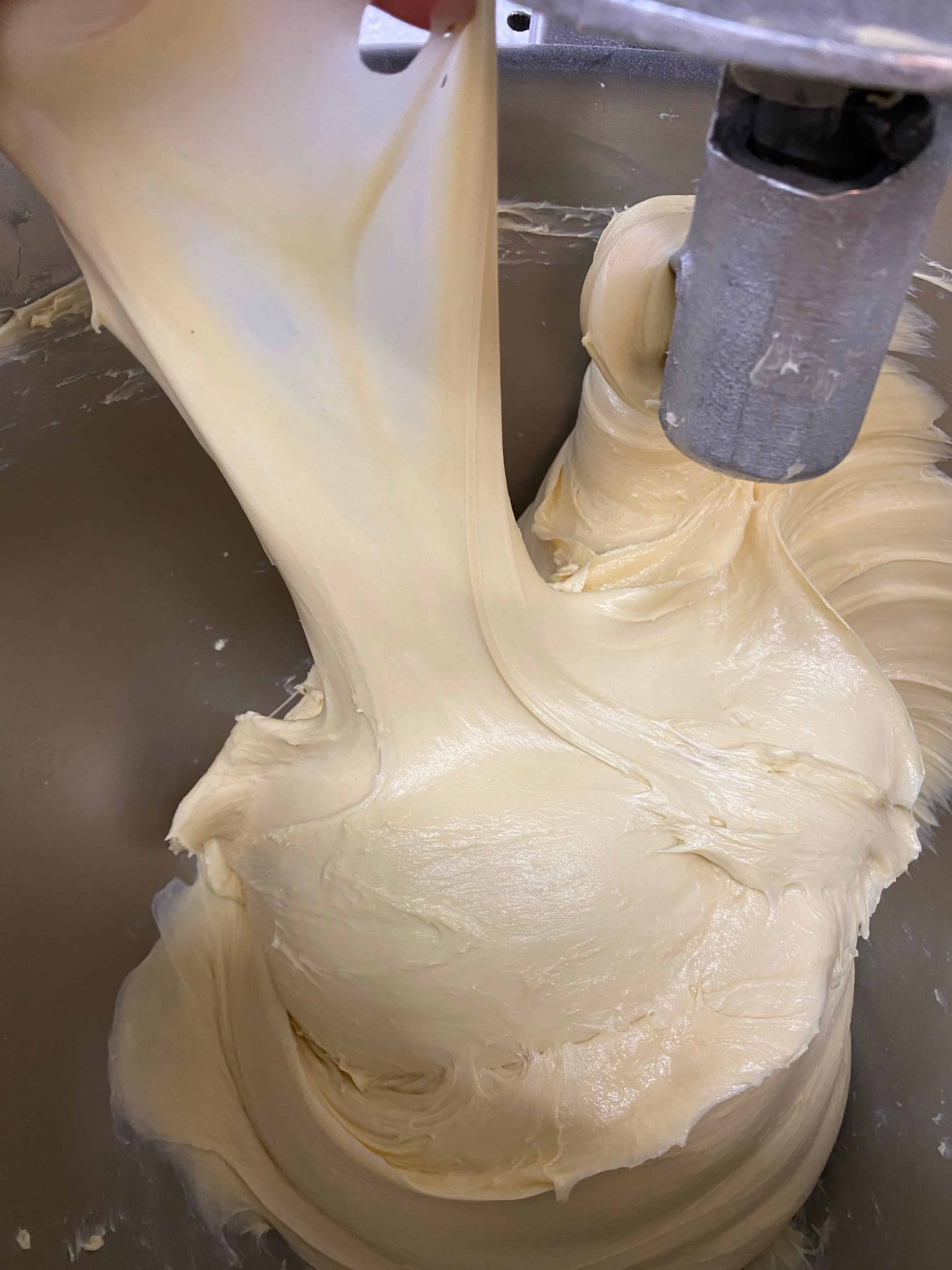
A properly developed dough will:
- feel smooth and cohesive
- stretch without tearing (windowpane)
- show elasticity
These cues are more reliable than any fixed mixing time.
How Dough Develops (Mixing, Time, and Folds Explained)
Dough strength doesn’t come from kneading alone.
It develops through:
- mixing (kneading or machine mixing)
- time
- folds
Mechanical Mixing (Kneading or Mixer)
Builds structure quickly and is especially useful for enriched doughs.
Time-Based Development
Allows structure to form gradually as the dough rests (example: autolyse)
Stretch and Folds
Strengthen dough over time without intensive mixing.
What Happens If You Don’t Knead Dough Enough
Underdeveloped dough often leads to:
- dense bread
- poor rise
- tight crumb
The dough won’t expand properly without enough structure.
👉 Why Is My Bread Dense? (6 Common Causes and How to Fix Them)
Why Dough Feels Sticky During Mixing
Sticky dough during mixing doesn’t always mean something is wrong.
In many cases, it simply hasn’t developed enough structure yet.
As the dough develops, it becomes smoother and easier to handle.
👉 Why Is My Dough Sticky? (And how to fix it)
Do Different Doughs Require Different Mixing?
Not all doughs behave the same way. Generally speaking...
Lean Doughs (especially high hydration doughs)
- rely more on time and folds
- benefit from gentler handling
Enriched Doughs (brioche) and Low hydration doughs (bagels, pretzels)
- require full development through mixing
- benefit from mechanical mixing
👉 Troubleshooting Cinnamon Rolls (Fix Dense, Dry or Flat Rolls)
How Mixing Affects Fermentation and Final Bread Texture
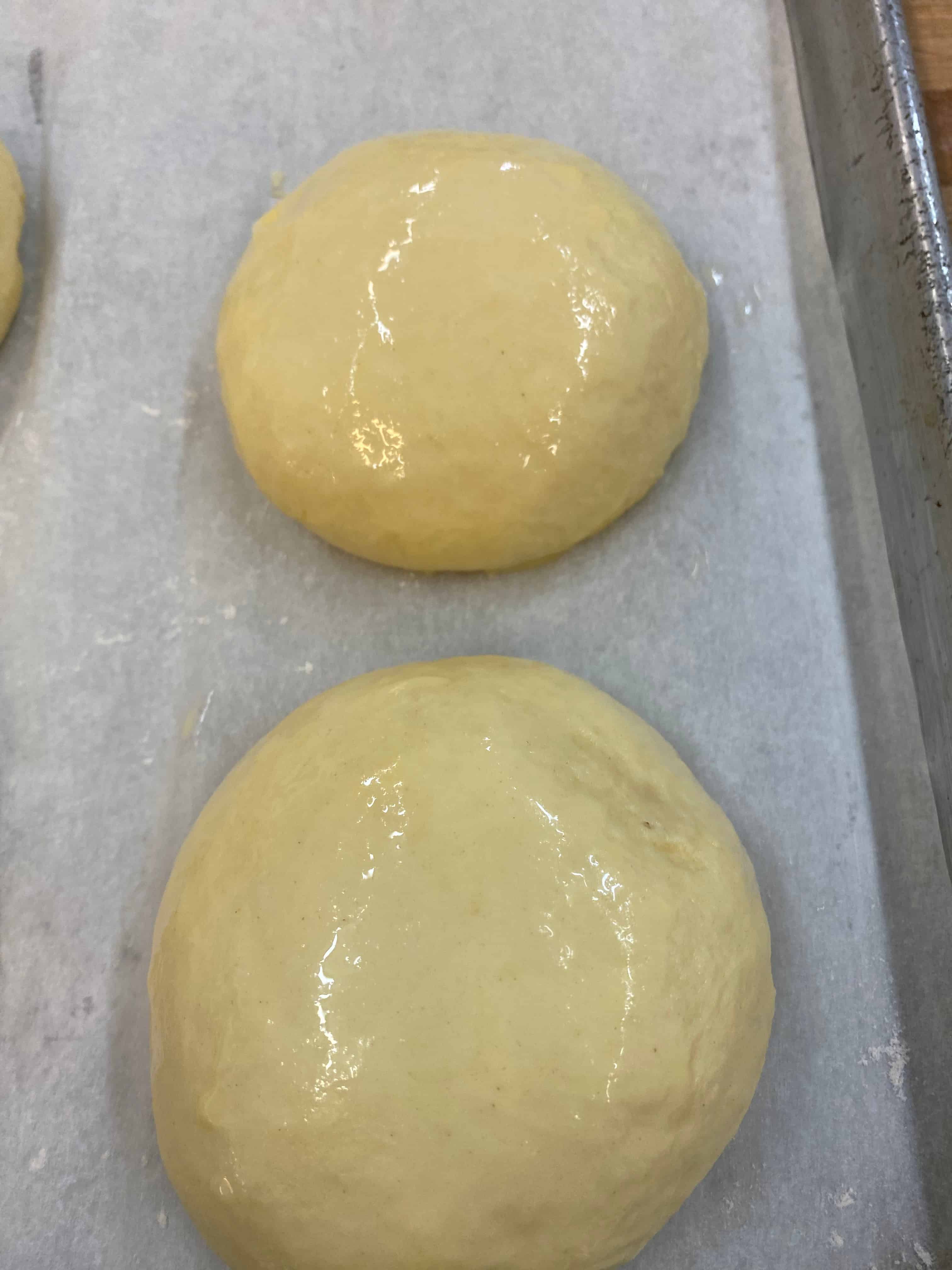
Mixing affects everything that comes after it.
Weak structure → limited expansion
Limited expansion → dense final product
This is why bread making works as a system.
Bread Making: Start Here
If you're trying to become a more confident bread baker, it's helpful to understand how each stage of the process builds on the next.
Step 1: Understand the Bread-Making Process
Start by learning how bread comes together from beginning to end.
👉 Bread Making Explained: The 12 Steps That Matter
Step 2: Build Strong Dough
A well-developed dough is the foundation of good bread.
👉 Why Is My Dough Sticky? (And How to Fix It)
👉 Why Is My Dough Not Smooth or Elastic? (And How to Fix It)
👉 How to Knead Dough Properly (And How to Know When It's Ready)
Step 3: Master Fermentation & Proofing
Learn how yeast, time, and temperature affect your dough.
👉 Do You Really Need to Proof Yeast? (Instant vs Active Dry Explained)
👉 How to Proof Bread in the Oven (Without Overproofing It)
👉 How Long Should Bread Proof? (And How to Know When It's Ready)
Step 4: Troubleshoot Your Bread
If something doesn't turn out as expected, these guides can help.
👉 Why Is My Bread Dense? (6 Common Causes and How to Fix Them)
👉 Can You Overknead Dough? (Why It's Less Common Than You Think)
Step 5: Apply It to Specific Bakes
See how these same principles apply to enriched doughs and specialty breads.
👉 Troubleshooting Cinnamon Rolls (Fix Dense, Dry or Flat Rolls)
👉 Are All Cinnamon Roll Recipes Basically the Same? (Here's What Actually Matters)
FAQ
How long should you knead dough?
There isn’t a fixed amount of time that works for every dough.
Instead of focusing on time, watch how the dough behaves.
When it’s smooth, elastic, and stretches without tearing, it has likely developed enough structure.
Can you over-knead dough?
Yes, but it’s uncommon in home kitchens.
Overmixing usually happens in a mixer and can cause the dough to weaken and lose structure.
In most cases, underdevelopment is far more common than overmixing.
What happens if you don’t knead dough enough?
The dough won’t have enough structure to trap gas during fermentation.
This often leads to poor rise, dense bread, and a tight crumb.
👉 Why Is My Bread Dense? (6 Common Causes and How to Fix Them)
Can dough develop without kneading?
Yes.
Dough can develop through time and folds, not just kneading.
Can you fix dough that isn’t kneaded enough?
In most cases, yes.
You can let the dough rest, continue mixing, or perform stretch-and-folds.
As structure develops, the dough will become smoother and easier to handle.
👉 Why Is My Dough Sticky? (And how to fix it)
Final Thoughts

Kneading isn’t just about working the dough.
It’s about building the structure that allows everything else to work.
Once the dough has enough structure:
- fermentation becomes more effective
- shaping becomes easier
- results become more consistent
Pocket Baker Perspective
In professional kitchens, kneading - or mixing - isn’t treated as a fixed step.
It’s treated as the foundation.
The goal isn’t to rush the dough - it’s to give it what it needs to develop.