









Introduction
Croissants take time.
Between mixing, laminating, resting, rolling, shaping, proofing, and baking, they can easily become a multi-day project.
So it's natural to wonder:
👉 Can you freeze croissants?
The answer is yes.
In fact, freezing croissants is a common practice in professional bakeries.
Whether you're trying to work ahead, save leftovers, or make production more manageable, freezing can be an excellent tool when used correctly.
The key is understanding what can be frozen - and when.
Jump to:
- Introduction
- Quick Answer: Can You Freeze Croissants?
- Why Freeze Croissants?
- Freezing Baked Croissants
- Freezing Unbaked, Shaped Croissants
- Freezing Laminated Dough Before Shaping
- Which Method Is Best?
- FAQ: Freezing Croissants
- Related Guides
- Final Thoughts
- Pocket Baker Perspective
- Get the FREE Profitable Baker Pricing Calculator
Quick Answer: Can You Freeze Croissants?
👉 Yes. Croissants can be frozen at several stages of production.
Including:
- baked croissants
- unbaked, shaped croissants
- laminated croissant dough before shaping
Each method has advantages depending on your goals.
For best quality:
- baked croissants should be cooled completely before freezing
- shaped croissants should be frozen immediately after shaping
- laminated dough should be wrapped well to prevent drying
👉 The freezer is one of the most useful tools for managing croissant production.
Why Freeze Croissants?
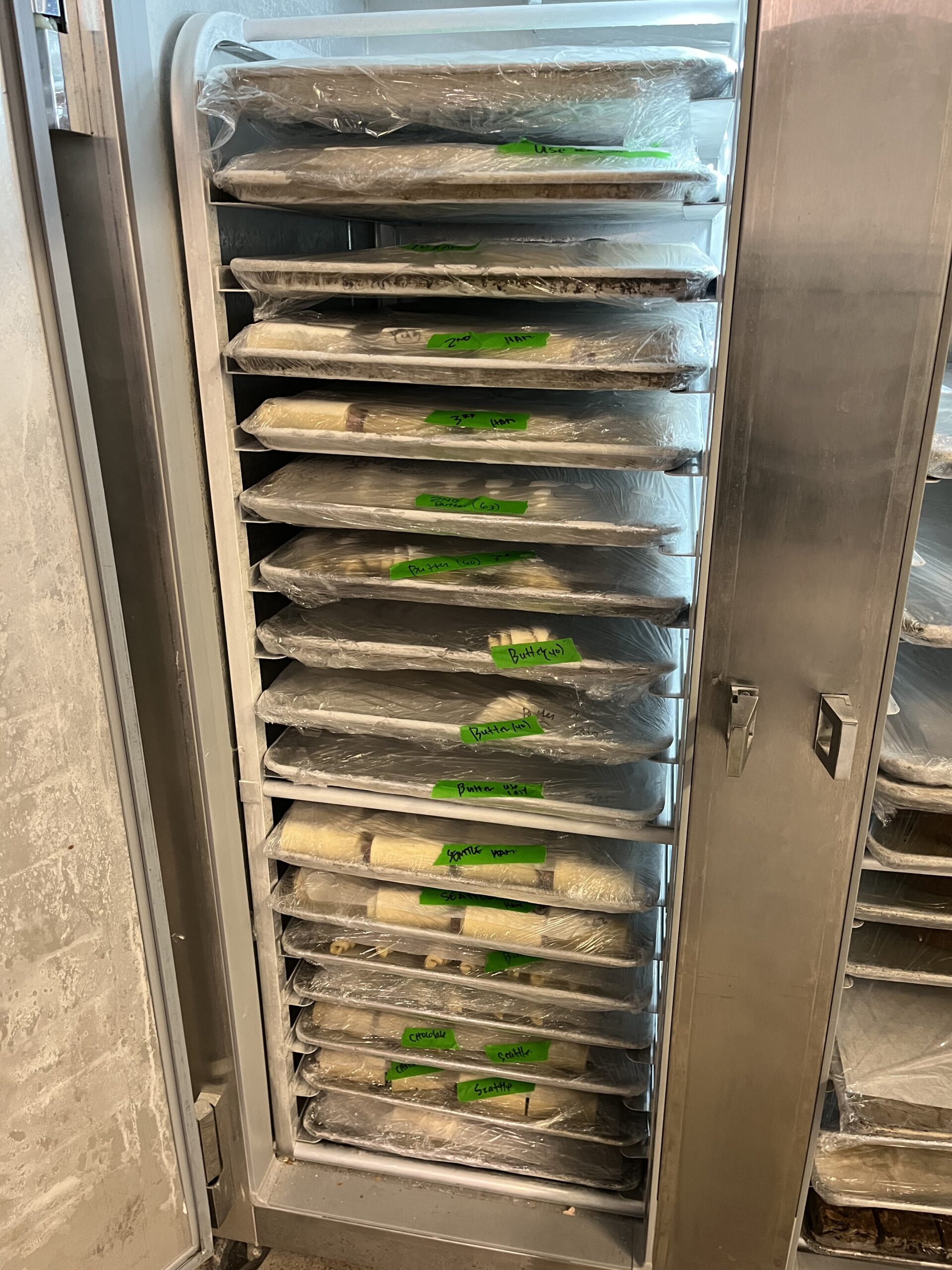
Most people assume freezing is about storage.
In professional kitchens, it's often about workflow.
Freezing allows you to:
- spread production across multiple days
- work ahead
- provide a greater variety of product
- make fresh croissants more practical
The best stage to freeze depends on what you're trying to accomplish.
Freezing Baked Croissants
This is the simplest option.
After baking:
- allow the croissants to cool completely
- wrap well
- place in the freezer
When needed:
- thaw at room temperature
- warm briefly in the oven to refresh
Why Freeze Baked Croissants?
Freezing baked croissants works well when there are leftovers that won't be used immediately.
They're excellent for:
- twice-baked croissants
- bread pudding
Rather than throwing away day-old croissants, freezing gives them a second life.
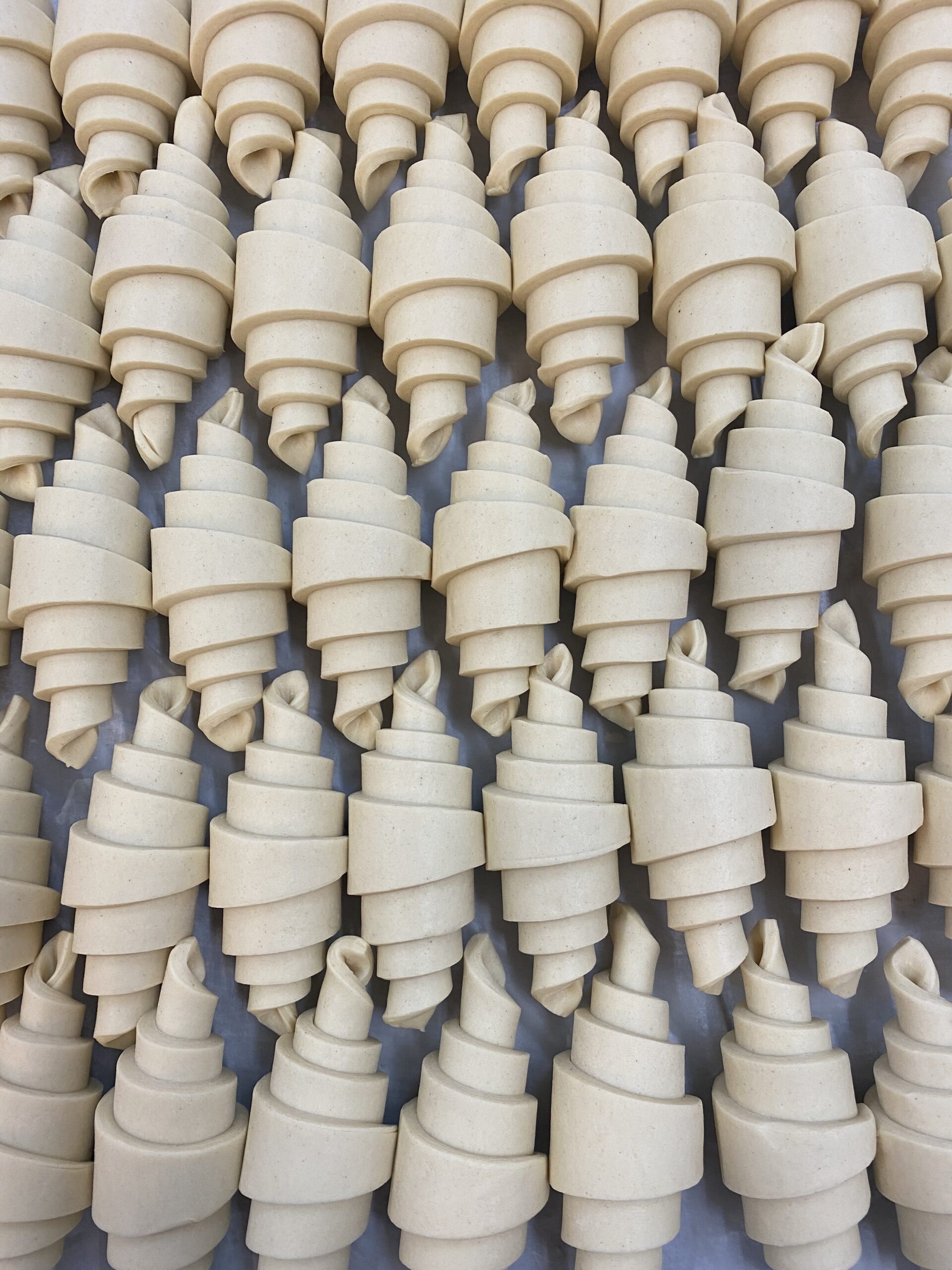
Freezing Unbaked, Shaped Croissants
This is one of the most useful methods for home bakers and small bakeries.
After shaping:
- place croissants on a sheet pan
- wrap very well
- freeze
When ready to use:
- thaw overnight in the refrigerator
- proof
- bake as normal
👉 Always make sure your dough is wrapped when thawing
Why Freeze Shaped Croissants?
This is my preferred method when the goal is efficiency.
The most labor-intensive part of croissant production has already been completed.
When you're ready to bake:
- the croissants are already shaped
- proofing and baking are the only major steps remaining
- fresh croissants become much easier to fit into your schedule
Potential Problems
Unbaked croissants are especially susceptible to freezer burn.
If they are not wrapped properly:
- the surface can dry out
- proofing may become uneven
- the croissants may not rise as well
Freezing for extended periods can also affect performance.
👉 For best quality, try to use frozen croissants within two weeks.
While they can often be stored longer, quality, rise, and overall texture may begin to decline.
Freezing Laminated Dough Before Shaping
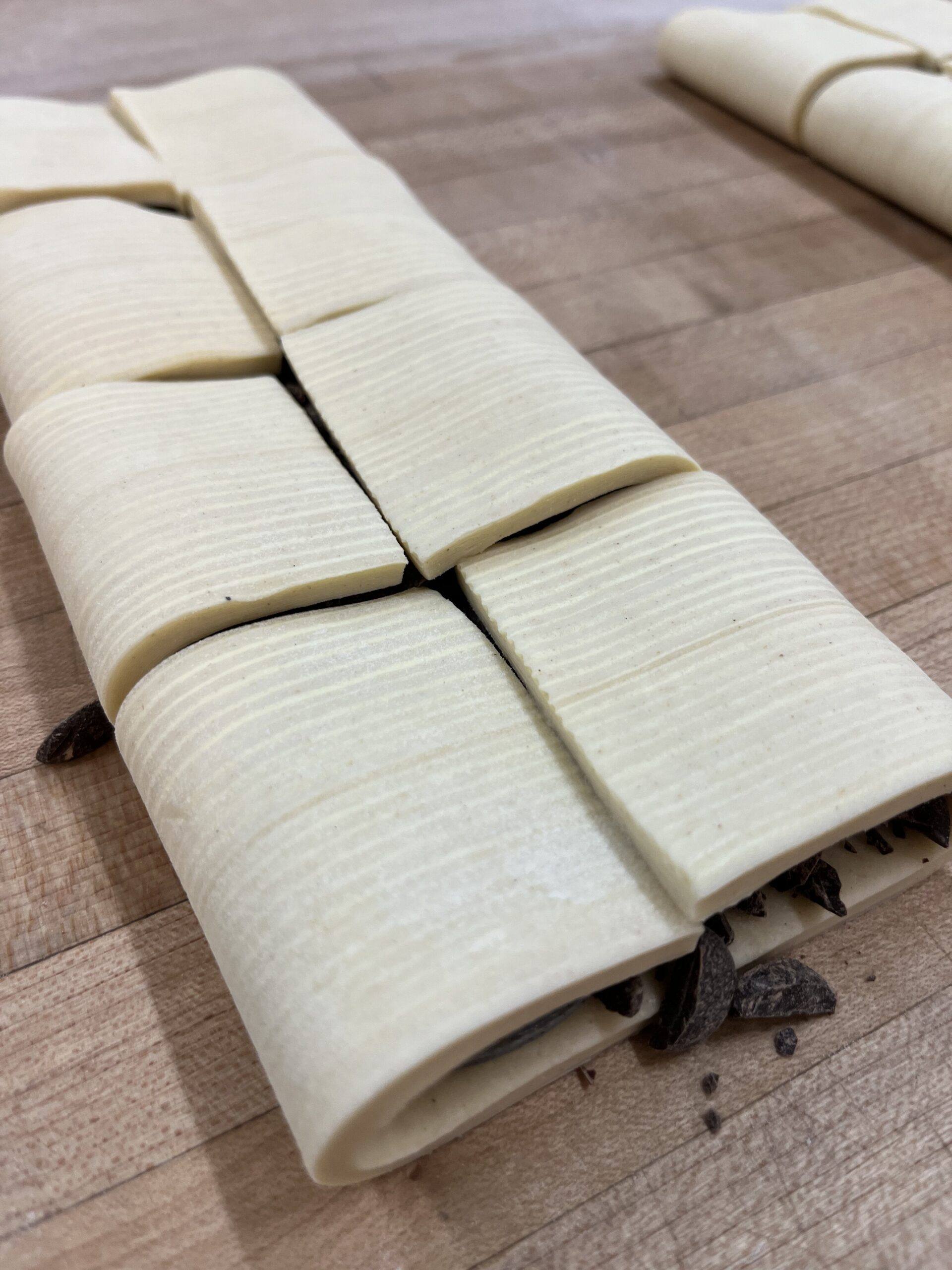
Laminated dough can also be frozen before it is shaped.
After laminating:
- roll the sheet to about an inch in thickness
- freeze flat
- wrap the dough thoroughly
👉 After laminating, placing a frozen tray on top of the dough allows the dough to cool down quickly and evenly in the freezer
When needed:
- thaw in the refrigerator
- roll to desired thickness
- cut
- shape
Why Freeze Laminated Dough?
This approach works well when:
- freezer space is limited
- you haven't decided how you'll use the dough
- you don't want to freeze fillings
It also provides flexibility.
One sheet of croissant dough can become:
- plain croissants
- pain au chocolat
- kouign amann
- croissant tart shells
depending on what you need later.
Which Method Is Best?
The best method depends on your goals.
Freeze Baked Croissants If:
- you have leftovers
- you plan to make twice-baked croissants
- bread pudding is on the menu
Freeze Shaped Croissants If:
- efficiency is your priority
- you want fresh croissants without starting from scratch
- you regularly bake croissants
Freeze Laminated Dough If:
- you need flexibility
- freezer space is limited
- you want to decide on fillings later
FAQ: Freezing Croissants
Can you bake croissants directly from frozen?
No.
👉 Frozen croissants should be thawed and proofed before baking.
After removing them from the freezer:
- thaw overnight in the refrigerator
- proof until noticeably puffy and jiggly
- bake as normal
This produces better volume, flakiness, and overall texture.
Should croissants be proofed before freezing?
No.
👉 Croissants should be frozen after shaping and before proofing.
Freezing after proofing can damage the structure and reduce the quality of the finished product.
For most home bakers and small bakeries, freezing shaped, unproofed croissants provides the most consistent results.
How long can croissants stay in the freezer?
It depends on the stage of production.
As a general guideline:
- baked croissants: up to 1-2 months
- laminated dough sheets: about 2 weeks
- shaped, unbaked croissants: best used within 2 weeks
While croissants may remain safe beyond these timeframes, quality gradually declines.
For the best rise, flakiness, and flavor, use them sooner rather than later.
Why didn't my frozen croissants rise properly?
Several factors can affect performance:
- freezer burn
- inadequate wrapping
- freezing for too long
- insufficient thawing time
- underproofing before baking
👉 Shaped croissants are particularly susceptible to drying out in the freezer, so wrapping well is important.
Can croissant dough be frozen before shaping?
Yes.
👉 Laminated croissant dough can be frozen before shaping.
This is a useful option when:
- freezer space is limited
- you haven't decided what products you'll make
- you don't want to freeze filled croissants
Simply thaw the dough in the refrigerator before rolling, cutting, and shaping.
Are frozen croissants as good as fresh?
When made and frozen properly, there isn't a noticeable difference.
In fact, many bakeries freeze croissant dough as part of their normal production schedule.
The key is:
- wrapping well
- preventing freezer burn
- avoiding excessively long storage
👉 The quality of the freezing process matters more than the freezing itself.
Related Guides
Creating Better Workflow
Final Thoughts

👉 Yes, croissants freeze well.
Baked croissants, shaped croissants, and laminated dough can all be frozen successfully.
The best option depends on whether your priority is storage, flexibility, or efficiency.
When wrapped properly and used within a reasonable time frame, freezing can make croissant production significantly easier without sacrificing quality.
When used intentionally, freezing allows you to:
- work ahead
- reduce stress
- improve consistency
- make fresh croissants more practical
Pocket Baker Perspective
In the bakeshop I ran, croissants were one of our staple products.
One of the things I love most about croissant dough is how many products can come from a single batch. Plain croissants, pain au chocolat, ham and gruyere croissants, almond croissants, kouign-amann - the possibilities are nearly endless.
Just as importantly, shaped croissants freeze exceptionally well.
For me, freezing wasn't about storage - it was about efficiency.
Making croissants is one of the most time-consuming processes in baking. Mixing, laminating, resting, rolling, cutting, shaping, proofing, and baking all take time. Freezing allowed me to go through that process once and benefit from it all week.
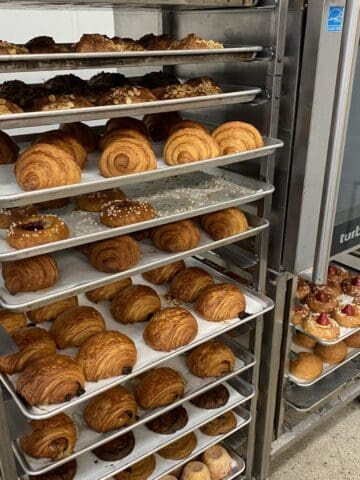
On Saturdays, I would mix enough dough to produce roughly 500 croissants.
On Sundays, I laminated the dough, rolled it into sheets, and shaped multiple varieties of croissants.
Everything was frozen unbaked.
The rest of the week, I simply transferred what I needed from the freezer to the refrigerator to thaw.
Each morning, the croissants were placed in the proofer for two to three hours until fully proofed and ready to bake.
The croissants were still baked fresh every day.
The difference was that the most labor-intensive part of the process had already been completed.
👉 That's the real value of freezing croissants. It allows you to separate production from baking, making fresh croissants far more practical without having to start from scratch every time.