








Introduction
Overhead is one of the most commonly overlooked parts of pricing - especially for home and cottage bakers.
Not because it’s complicated - but because it’s not always visible.
Ingredients are easy to see.
Labor can be tracked.
But overhead?
It’s everything happening in the background that still costs you money.
If you ignore it, your pricing may look profitable - but it won’t hold up over time.
This guide will walk you through what overhead really is, how to estimate it in a simple and practical way, and how it fits into your overall pricing.
Jump to:
- Introduction
- Quick Answer: What Is Overhead?
- Why Overhead Matters
- What Counts as Overhead?
- Why Overhead Is Hard to Calculate
- How to Estimate Overhead (Beginner-Friendly Method)
- Why This Method Works
- What Is a “Good” Overhead Percentage?
- Looking Ahead: Tracking Your Overhead Over Time
- How Overhead Fits Into Pricing
- Example: Overhead in Context
- Pricing System (Start Here)
- Final Thoughts
- Get the FREE Profitable Baker Pricing Calculator
Quick Answer: What Is Overhead?
Overhead is the cost of running your baking operation that isn’t directly tied to a specific item.
This includes things like:
- rent
- utilities
- equipment wear
- cleaning supplies
- administrative costs
Why Overhead Matters
Overhead can make up a good portion of your costs - often around 25% to 35%.
That’s not insignificant.
It’s also one of the hardest costs to track - especially when you’re working out of your home.
Most cottage bakers:
- calculate ingredients
- may include labor
- overlook everything else
Over time, this shows up as:
- inconsistent profit
- slower growth
👉 This is why including overhead matters - even when it’s not easy to see.
What Counts as Overhead?
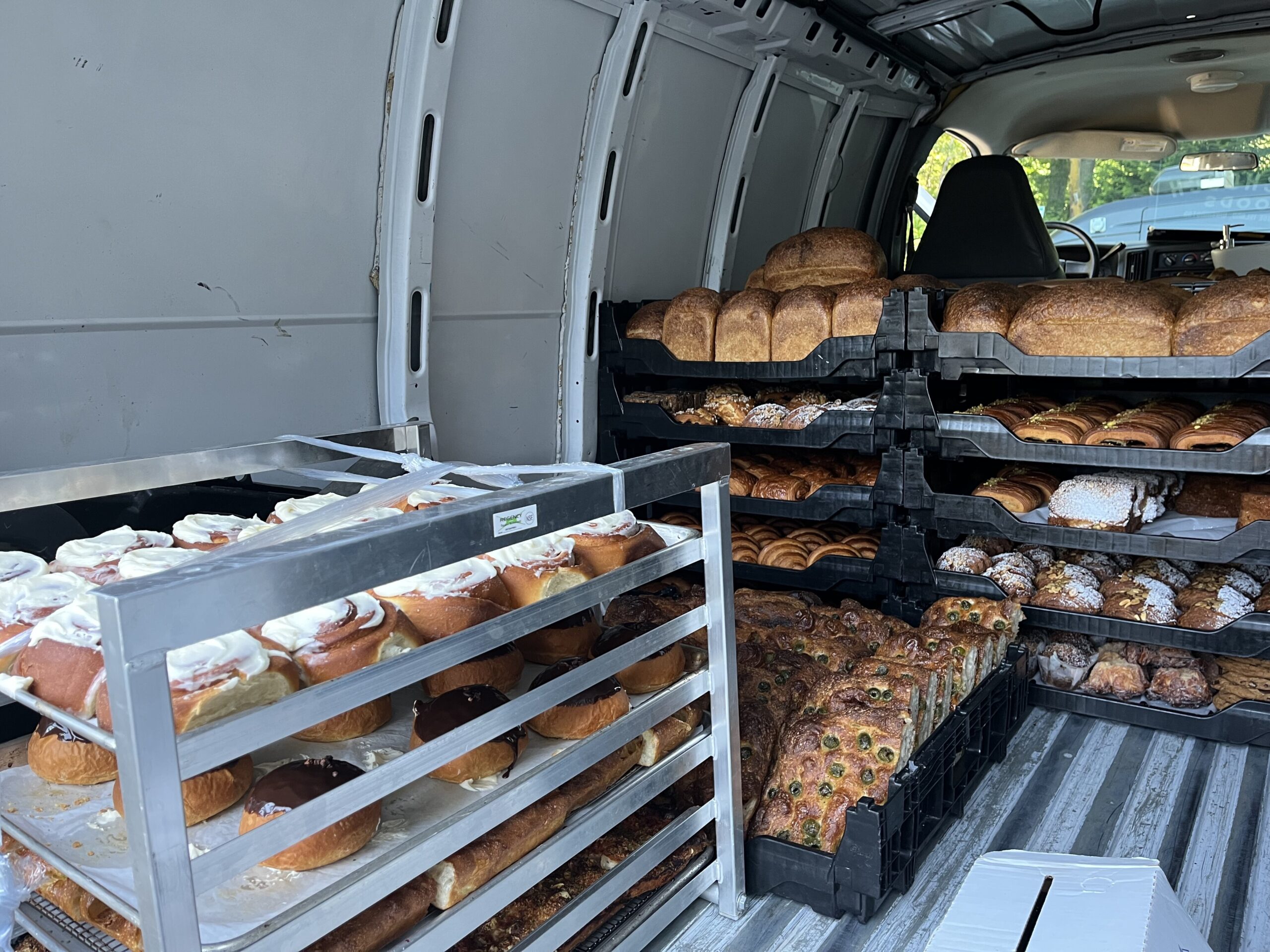
Overhead includes anything that supports your baking - but isn’t directly tied to producing a specific item.
Generally, overhead is anything that isn’t included in food cost or labor.
Common examples
- rental space
- utilities
- transportation and gas
- water
- equipment wear and replacement
- cleaning supplies
- website or payment processing fees
- insurance, permits or licenses
- market fees
Why Overhead Is Hard to Calculate
Unlike ingredients, overhead isn’t tied to a single batch.
👉 That makes it harder to:
- track precisely
- assign to individual products
especially when you’re first starting out.
👉 So instead of trying to be exact, you use a practical estimate.
How to Estimate Overhead (Beginner-Friendly Method)
A simple and effective approach is:
👉 use a percentage of your known costs
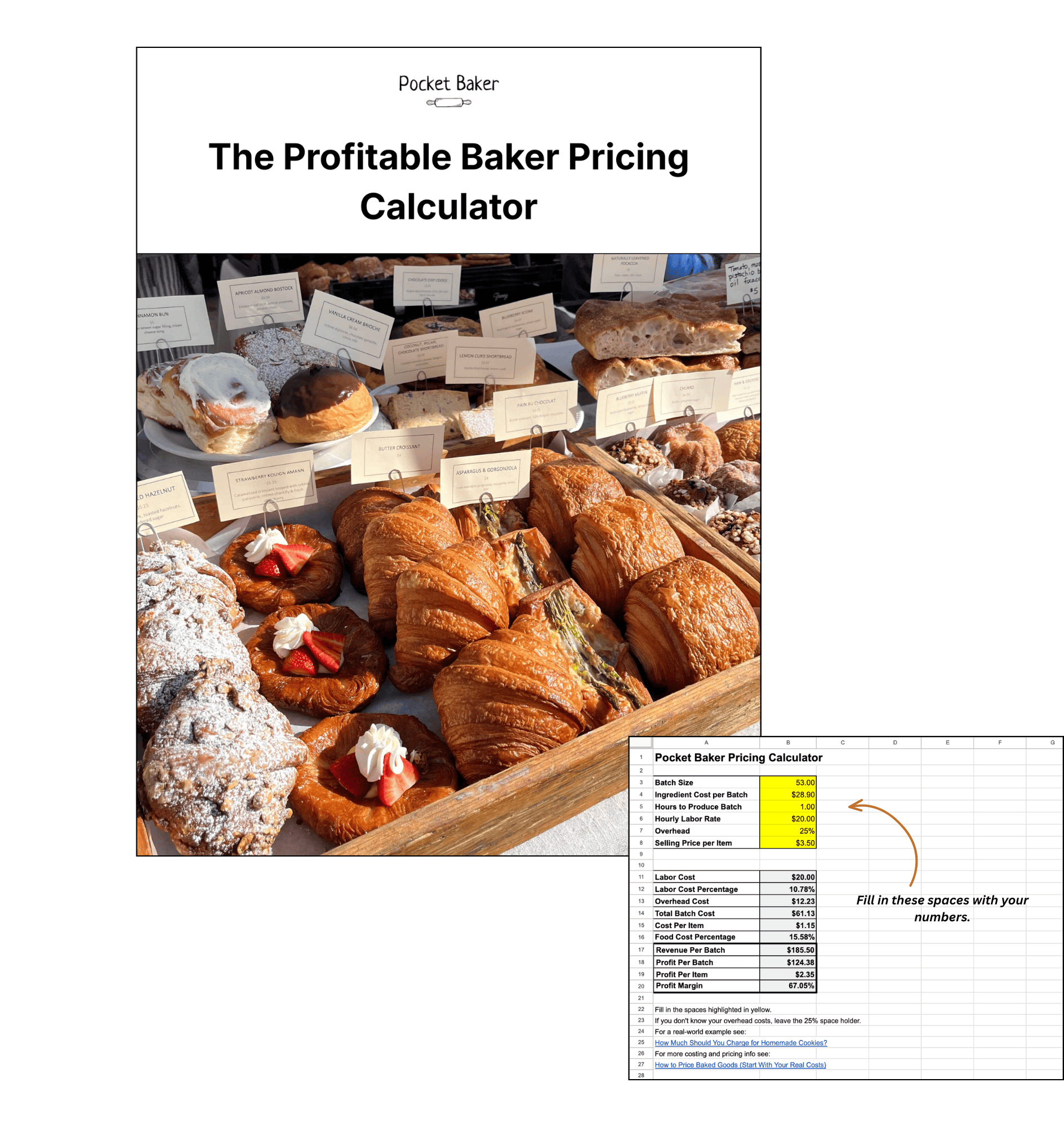
Step 1: Add Ingredients + Labor
Example:
- Ingredients: $28.90
- Labor: $20.00
👉 Total = $48.90
Step 2: Apply an Overhead Percentage
A common starting point:
👉 20%-30%
Example (25%):
- 25% of $48.90 = $12.23
Step 3: Divide by Yield
If your batch makes 53 cookies:
👉 $12.23 ÷ 53 = $0.23 per cookie
👉 This gives you your overhead cost per item.
Why This Method Works
This approach:
- keeps the process simple
- protects you from underpricing
- gives you consistency across products
👉 It’s not perfect - but it’s far more effective than ignoring overhead entirely.
As your business grows, you can replace this estimate with more detailed tracking.
What Is a “Good” Overhead Percentage?
There isn’t one exact number - but many small baking operations fall within:
👉 20%-35% of total cost
Lower overhead is often associated with:
- simpler setups or cottage bakeries
- low utility usage
- less equipment
Higher overhead is often associated with:
- high rent
- high utility usage
- more equipment
Looking Ahead: Tracking Your Overhead Over Time
The percentage method works well when you’re starting out.
But over time, you’ll want to understand your actual overhead more clearly.
This doesn’t need to happen right away.
As you continue baking, you can begin tracking:
- monthly utility costs (electricity, gas, water)
- equipment purchases and replacements
- subscriptions, website fees, or payment processing fees
You don’t need to do anything with it yet.
👉 Just start collecting the numbers.
Over time, this gives you a clearer picture of:
- what it actually costs to run your operation
- how your overhead compares to your pricing
- where your money is going
By your second year, you’ll have enough information to:
- adjust your overhead percentage
- or begin calculating overhead more precisely
👉 This is how your pricing becomes more accurate over time - without making the process complicated at the beginning.
How Overhead Fits Into Pricing
Overhead is one part of your total cost:
- food cost (ingredients)
- labor
- overhead
- profit
👉 If you leave out overhead, your pricing system is incomplete.
In larger or more established operations, overhead is often tracked more precisely across the business.
But when you’re starting out, using a consistent estimate is the most practical way to understand your costs.
👉 How to Price Baked Goods (Start With Your Real Costs)
Example: Overhead in Context
From a sample recipe:
- Ingredients: $28.90
- Labor: $20.00
- Overhead: $12.23
👉 Total cost = $61.13
👉 Including overhead ensures your full cost is accounted for - not just your ingredients and time.
Pricing System (Start Here)
If you’re unsure where to begin, start with the core pricing guide below.
Step 1: Understand Your Costs
Know exactly what it costs to produce your products.
- 👉 What Is Food Cost in Baking?
- 👉 How to Calculate Labor Cost in Baking
- 👉 What Is Overhead in a Baking Business?
Step 2: Build Your Pricing
Turn your costs into a price that actually works.
- 👉 Core Guide: How to Price Baked Goods (Start With Your Real Costs)
- 👉 Cost vs Value Pricing for Baked Goods
- 👉 Build a Menu That Works (Product Mix)
Step 3: Apply It to Your Products
Use your numbers to price specific items.
- 👉 How Much Should You Charge for Homemade Cookies?
- 👉 How Much Should You Charge for Homemade Cupcakes?
- 👉 How to Price Cakes for Profit
Step 4: Improve Profit Over Time
Refine your pricing as your business grows.
Final Thoughts
Overhead is easy to overlook - but it’s not something you can avoid.
When you include it consistently:
- you begin to understand what it actually takes to run your business
- you’re able to make decisions based on real numbers
- you stop wondering why your costing feels off
Pocket Baker Perspective
In professional kitchens, overhead is simply another cost - just like food cost and labor - that has to be accounted for.
Understanding these costs allows bakers and operators to:
- build menus intentionally
- plan production more efficiently
- adjust pricing with confidence
👉 At the end of the day, it’s about building a system that is efficient, sustainable, and manageable.