Introduction
If you’ve started costing your baked goods, you’ve probably reached a point where something doesn’t quite add up.
Prices seem reasonable.
Ingredients are accounted for.
But profit still feels unclear - or lower than expected.
This is usually where food cost comes into the picture.
Food cost is the cost of ingredients used to make the product you’re selling, along with other direct per-item costs like packaging.
But this is where many bakers pause - because food cost alone doesn’t tell you if something is profitable.
Jump to:
- Quick Answer: What Is Food Cost Percentage?
- What Is Food Cost in Baking (and What Does It Include)?
- What Is Food Cost Percentage (Food Cost %)?
- Why Food Cost Percentage Matters
- Why Food Cost Needs to Stay Within a Range
- What Is a Good Food Cost Percentage for Baked Goods?
- How to Calculate Food Cost (Quick Guide)
- When Food Cost Is “Correct” but Pricing Still Doesn’t Work
- How Food Cost Fits Into Your Overall Pricing System
- Ways to Improve Food Cost
- FAQ: Food Cost in Baking
- Pricing System (Start Here)
- Final Thoughts
- Pocket Baker Perspective
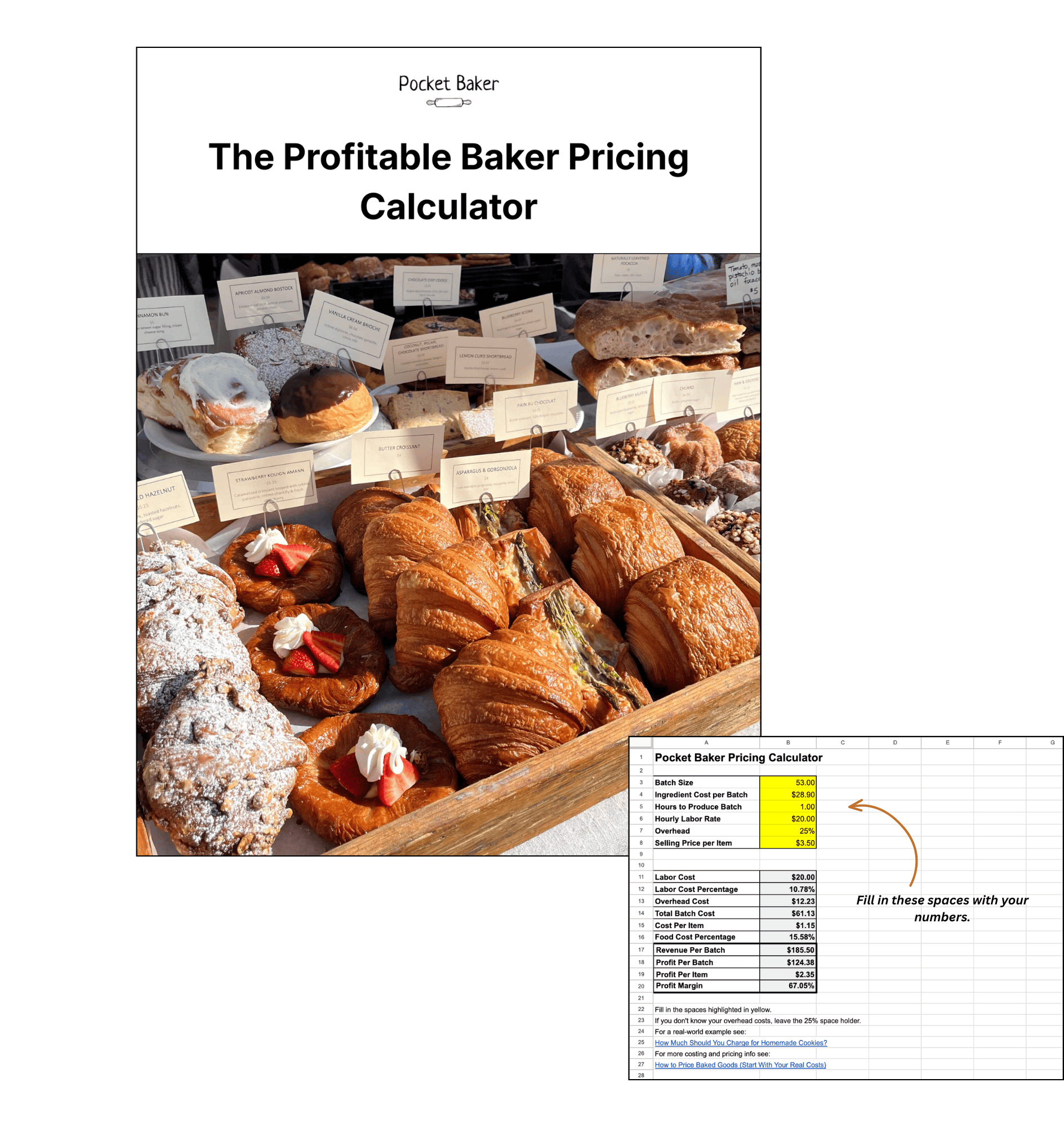
- Get the FREE Profitable Baker Pricing Calculator
Quick Answer: What Is Food Cost Percentage?
If your numbers feel off or your profit isn't wher you expected, food cost is often the first place to look.
Food cost is the total cost of ingredients and direct, per-item costs used to produce a product.
Food cost percentage (food cost %) shows how much of your selling price goes toward those costs.
Food Cost % = Total Food Cost per Item ÷ Selling Price
For bakeries:
- 20-35% is a typical range
- 15-25% is common for higher-margin items like cookies
- 30-40% may occur in more ingredient-heavy or specialty products
👉 If your food cost is consistently above this range, your pricing or product design may need to be adjusted.
Food cost is only one part of total cost - but it plays a key role in how your pricing works.
Food cost is only one part of your total cost:
food cost + labor + overhead = total cost
And understanding it is the first step in building a menu - and a system -that is consistently profitable.
What Is Food Cost in Baking (and What Does It Include)?
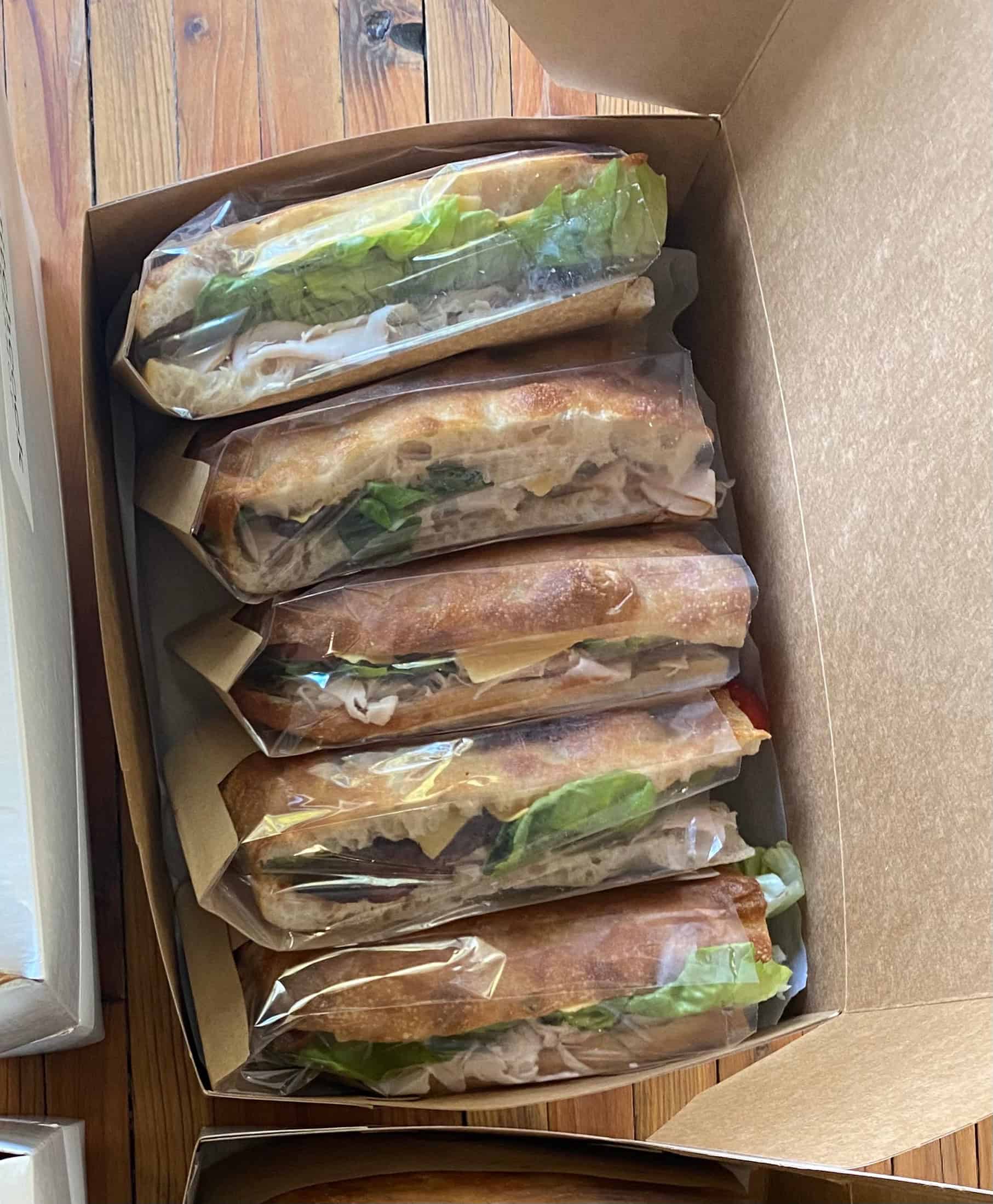
Food cost refers to the direct cost of producing each item you sell.
This includes:
- ingredients (flour, sugar, butter, eggs, chocolate, flavorings)
- packaging used for that item (boxes, bags, labels, liners)
In some professional and accounting contexts, packaging is tracked separately. For practical pricing - especially in small or cottage baking - it’s often included as part of food cost because it directly affects each item.
These are costs that are directly tied to each individual product - meaning they increase as you produce more.
It does not include:
- labor
- utilities
- equipment
- general business expenses
👉 These fall under labor and overhead.
👉 How to Calculate Labor Cost in Baking
👉 What Is Overhead in a Baking Business?
Why This Distinction Matters
Food cost is the easiest part of your cost to measure and control.
But on its own, it doesn’t tell you if something is profitable.
A product can have a well-managed food cost - and still not work - if labor or overhead isn’t accounted for.
What Is Food Cost Percentage (Food Cost %)?
Food cost percentage shows how much of your selling price is being used to cover per-item costs.
Formula:
Food Cost % = Total Food Cost per Item ÷ Selling Price
Example:
- Total food cost (ingredients + packaging): $1.00
- Selling price: $4.00
➡️ Food cost % = 25%
This means:
- 25% of the price covers total food costs
- 75% must cover labor, overhead, and profit
Why Food Cost Percentage Matters
Food cost % is one of the fastest ways to evaluate whether your pricing is working.
It helps you:
- understand how much room you have for labor and overhead
- compare products consistently
- identify items that may be underpriced
- make pricing decisions more confidently
Without this number, it’s easy to:
- price too low without realizing it
- assume something is profitable when it isn’t
- rely on guesswork instead of structure
👉 The next step is understanding how this number fits into your full pricing system.
How to Price Baked Goods (Start With Your Real Costs)
Why Food Cost Needs to Stay Within a Range
Food cost works best within a range - not as a fixed number.
There are two ways to think about this:
1. Individual Product Food Cost
Not every product will fall into the same range.
Some items naturally have:
- higher ingredient costs (cakes, chocolate-based items)
- lower ingredient costs (cookies, simple breads)
This is normal.
👉 What matters is how these products work together.
This is where product mix comes into play.
Some items may carry a higher food cost, while others create more room in the system.
2. Total Food Cost Across Your Menu
While individual items can vary, your overall food cost still needs to stay within a workable range.
Because food cost has to leave enough room for:
- labor
- overhead
- profit
If total food cost is too high:
- there’s less room for labor and overhead
- margins become tighter
- pricing may not support the business
If total food cost is too low:
- pricing may be higher than necessary
- products may feel out of sync with the market
- value perception becomes more important
Why Balance Matters
Food cost doesn’t work on its own.
It works alongside:
- labor
- overhead
- pricing
- value
👉 If one part moves too far out of range, the system becomes harder to sustain.
What Is a Good Food Cost Percentage for Baked Goods?
A “good” food cost % depends on the type of product and business model.
General Guidelines
- 20-35% → typical range for bakeries
- 15-25% → higher-margin items (cookies, breads)
- 30-40% → complex or ingredient-heavy products
These ranges help ensure there is enough room left for:
- labor
- overhead
- profit
Cottage & Home Bakers
Cottage bakers may:
- operate with lower overhead
- tolerate slightly higher food costs
But the same principle still applies:
👉 Food cost must still leave room for the rest of the business.
How to Calculate Food Cost (Quick Guide)
Step 1: Calculate Total Food Cost
Add the cost of all ingredients and packaging used for the product.
Step 2: Divide by Yield
Total ingredient cost ÷ number of items
→ gives you cost per item.
Step 3: Calculate Food Cost %
Ingredient cost per item ÷ selling price
👉 For a complete breakdown:
How to Price Baked Goods (Start With Your Real Costs)
When Food Cost Is “Correct” but Pricing Still Doesn’t Work
It’s possible to have a food cost that falls within a “good” range - and still struggle with pricing.
This usually comes down to:
- labor
- overhead
Food cost may be working - but the rest of the system may not be supporting it.
How Food Cost Fits Into Your Overall Pricing System
Food cost is one part of a larger system.
It doesn’t determine profitability on its own - but it strongly influences it.
It works alongside:
- ingredients & packaging → direct cost control
- labor → time and effort
- overhead → business expenses
- profit → what’s left
👉 Pricing works when all of these are aligned.
Ways to Improve Food Cost
Improving food cost usually comes from small, consistent adjustments - not major changes.
1. Measure Accurately
- use weight-based recipes
- avoid over-portioning
👉 Consistency is key.
2. Reduce Waste
- track yields
- standardize portions
- repurpose where appropriate
👉 Pay attention to packaging costs - small per-item increases can add up quickly over time.
3. Source Ingredients Intentionally
- buy in bulk when possible
- compare suppliers
4. Adjust Product Design
- small changes in size or composition can impact cost
- balance ingredient-heavy components
5. Align With Pricing
- if food cost is high, pricing may need to reflect it
- or the product may need to be adjusted
👉 Small improvements here can have a significant impact over time.
Ways to Improve Food Cost
Improving food cost usually comes from small, consistent adjustments - not major changes.
1. Measure Accurately
- use weight-based recipes
- avoid over-portioning
👉 Consistency is key.
2. Reduce Waste
- track yields
- standardize portions
- repurpose where appropriate
👉 Pay attention to packaging costs - small per-item increases can add up quickly over time.
3. Source Ingredients Intentionally
- buy in bulk when possible
- compare suppliers
4. Adjust Product Design
- small changes in size or composition can impact cost
- balance ingredient-heavy components
5. Align With Pricing
- if food cost is high, pricing may need to reflect it
- or the product may need to be adjusted
👉 Small improvements here can have a significant impact over time.
6. Reevaluate Your Menu
Not every product needs to stay on your menu.
If an item consistently runs high in cost and doesn’t support your pricing or workflow, it may need to be adjusted, repositioned, or replaced.
👉 Food cost works across your entire menu - not just individual items.
FAQ: Food Cost in Baking
What is a good food cost percentage for a bakery?
Most bakeries operate between 20-35%, depending on product type and business model.
Is lower food cost always better?
Not necessarily. Lower food cost must still align with value and pricing.
Why is my food cost so high?
Common reasons include ingredient choices, portion size, inconsistent portions, or pricing that is too low.
Does food cost include labor?
No. Food cost includes ingredients and direct per-item costs like packaging - but not labor or overhead.
Can I price based only on food cost?
No. Food cost is only one part of total cost. Labor, overhead, and pricing must also be considered.
Pricing System (Start Here)
If you’re unsure where to begin, start with the core pricing guide below.
Step 1: Understand Your Costs
Know exactly what it costs to produce your products.
- 👉 What Is Food Cost in Baking?
- 👉 How to Calculate Labor Cost in Baking
- 👉 What Is Overhead in a Baking Business?
Step 2: Build Your Pricing
Turn your costs into a price that actually works.
- 👉 Core Guide: How to Price Baked Goods (Start With Your Real Costs)
- 👉 Cost vs Value Pricing for Baked Goods
- 👉 Build a Menu That Works (Product Mix)
Step 3: Apply It to Your Products
Use your numbers to price specific items.
- 👉 How Much Should You Charge for Homemade Cookies?
- 👉 How Much Should You Charge for Homemade Cupcakes?
- 👉 How to Price Cakes for Profit
Step 4: Improve Profit Over Time
Refine your pricing as your business grows.
Final Thoughts
Food cost is one of the most practical - and most useful - numbers you can track.
It gives you a clear starting point for pricing and evaluating products.
But on its own, it doesn’t determine profitability.
It works best when it’s part of a larger, structured system.
Pocket Baker Perspective
In professional kitchens, food cost is usually understood before an item is placed on the menu.
In a bakery, each product plays a role - some bring in customers, some are consistent sellers, some are staples, and some support workflow.
Not every item will hit the same number.
The goal is that, together, they create a system that supports the business.