




If your baking business is not making money, even though you’re selling consistently, you’re not alone.
Many cottage bakers and small bakery owners reach a frustrating point:
Orders are coming in.
Customers are happy.
You’re busy.
…but the numbers don’t reflect it.
You’re not making significantly more.
And it still feels like you’re working just to keep up.
In most cases, the issue isn’t one big mistake.
It’s a combination of small things that, together, prevent the business from working the way it should.
In professional kitchens, profitability isn’t left to chance.
It comes from a system.
Let’s walk through the four areas that most often determine whether a baking business feels sustainable - or constantly uncertain.
Jump to:
- Quick Answer: Why Your Baking Business Isn’t Making Money
- 1. Why Your Baking Business Is Not Making Money: Pricing
- 2. Cost Alone Doesn’t Determine Price
- 3. Why Your Baking Business Is Not Making Money: Workflow
- 4. Your Products Aren’t Working Together
- A Simple Way to Evaluate Your Business
- Pricing System (Start Here)
- Final Thoughts
- Pocket Baker Perspective
- Get the FREE Profitable Baker Pricing Calculator
Quick Answer: Why Your Baking Business Isn’t Making Money
If your baking business isn’t making money, it usually comes down to one (or more) of these:
• Your pricing doesn’t fully cover your costs
• Your products aren’t positioned to reflect their value
• Your process takes too long to sustain your pricing
• Your products aren’t working together as a system
The goal isn’t to fix one thing.
It’s to build a system where everything works together.
1. Why Your Baking Business Is Not Making Money: Pricing
This is where everything starts.
Many bakers choose prices based on:
• what others are charging
• what “feels fair”
• what they think customers will pay
But without understanding your actual cost, pricing becomes guesswork.
In professional kitchens, pricing always starts with a simple framework:
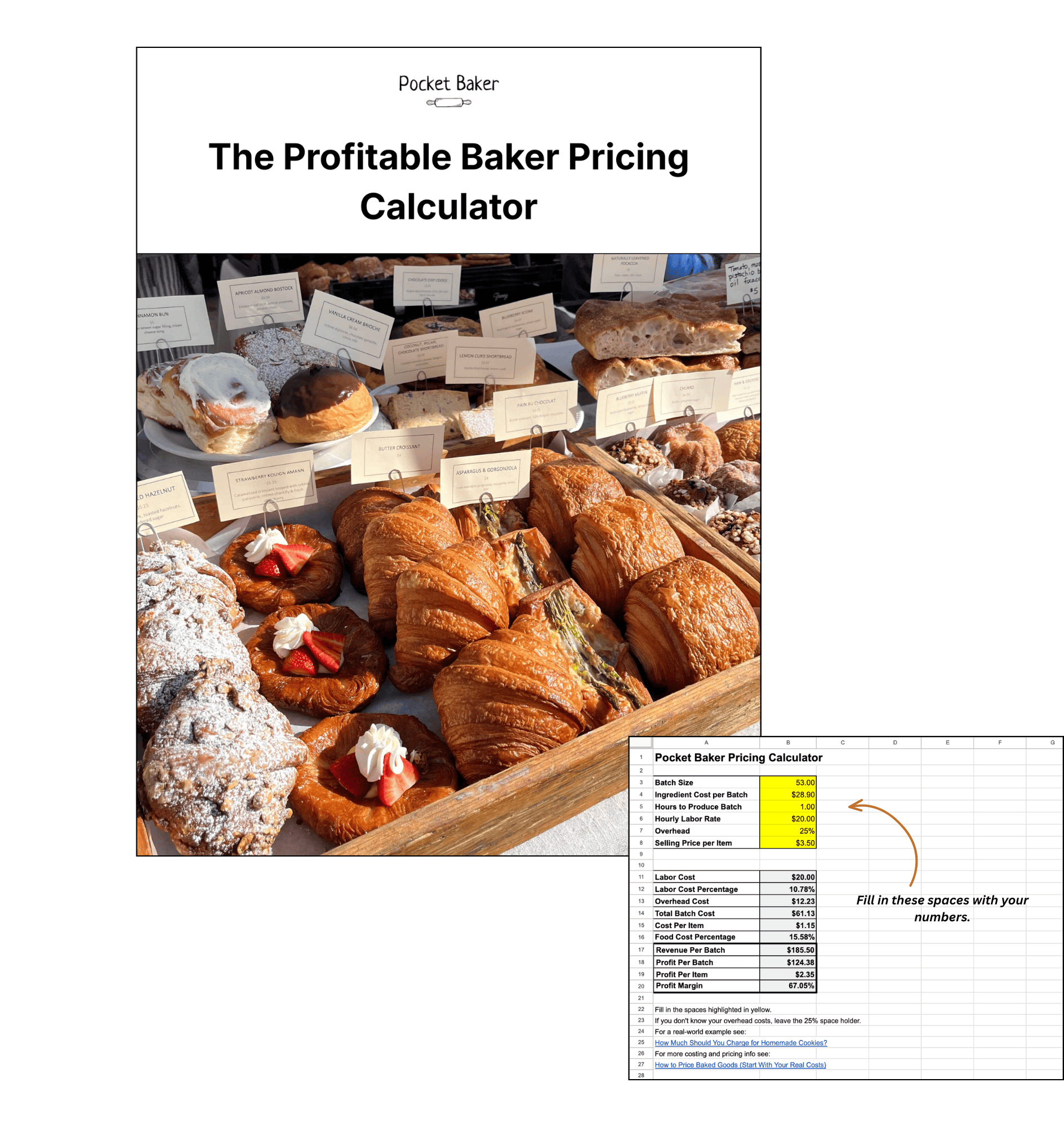
Ingredients + Labor + Overhead = Total Cost
This tells you your minimum.
If you price below this, you’re not just making less money - you’re losing it.
Even small gaps between cost and price add up quickly over time.
If you haven’t calculated your cost yet, start here:
👉 How to Price Baked Goods (Start With Your Real Costs)
2. Cost Alone Doesn’t Determine Price
Once you understand your cost, the next challenge appears:
the market doesn’t always match your numbers
This is where many bakers feel stuck.
Cost tells you what something costs you.
Value determines what a customer is willing to pay.
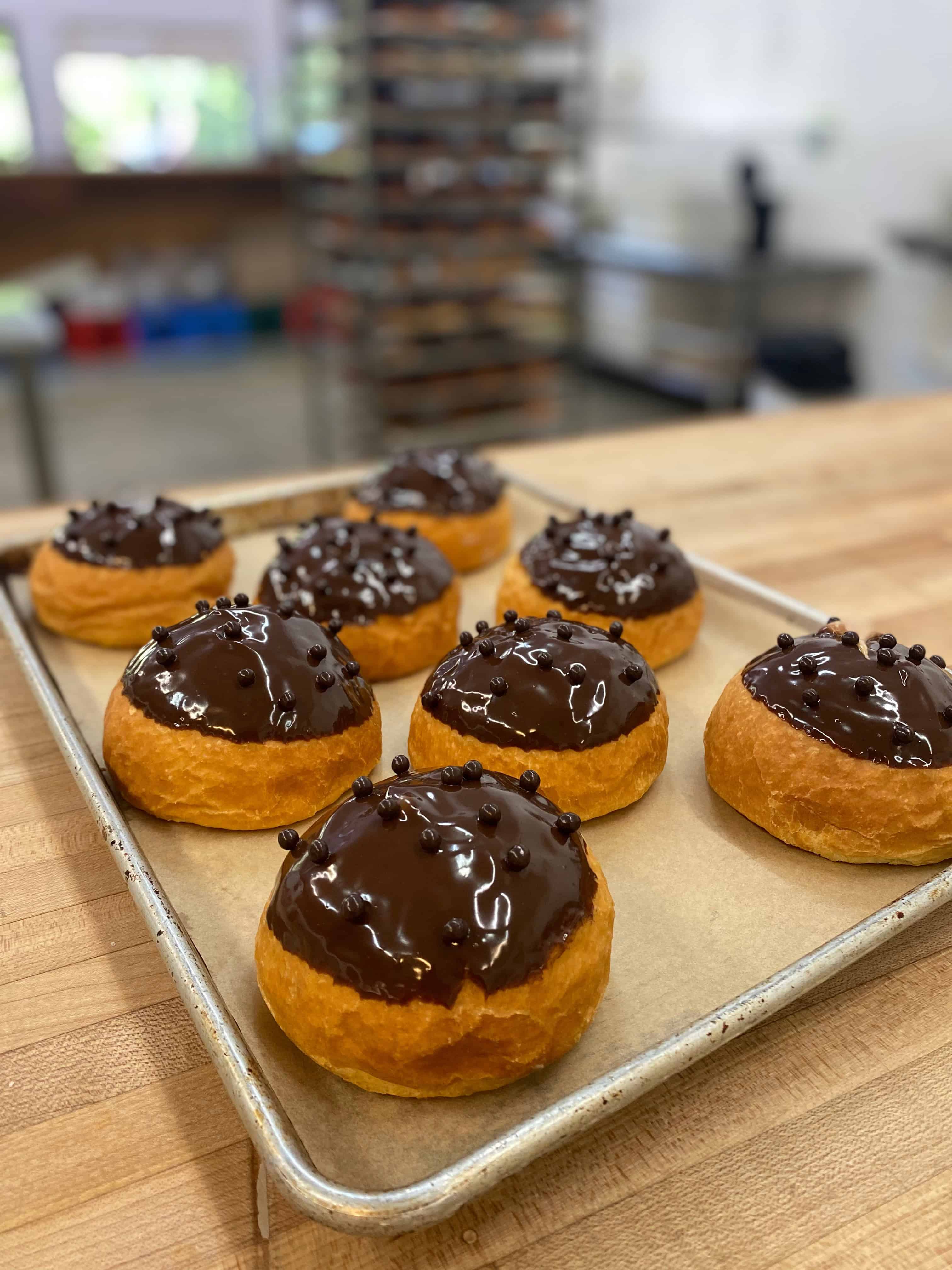
Two products with similar ingredients can sell at very different prices depending on:
• presentation & craftsmanship
• consistency
• perceived quality
• customer experience
All these things shape perceived value. And people are willing to pay for what they value.
Professional bakers don’t rely on cost alone.
They use both:
• cost-based pricing (to protect the business)
• value-based pricing (to grow it)
If your pricing looks right on paper but still isn’t working in practice, this might be why.
👉 Cost vs Value Pricing for Baked Goods
3. Why Your Baking Business Is Not Making Money: Workflow
This is one of the most overlooked reasons a newer baking business struggles.
A product can be:
• priced correctly
• well-positioned
• in demand
…and still not be profitable.
Because of how it’s being produced.
Many bakers try to:
mix, portion, bake, finish, and package everything in one day
It might work at first.
But over time, it becomes exhausting - and difficult to scale.
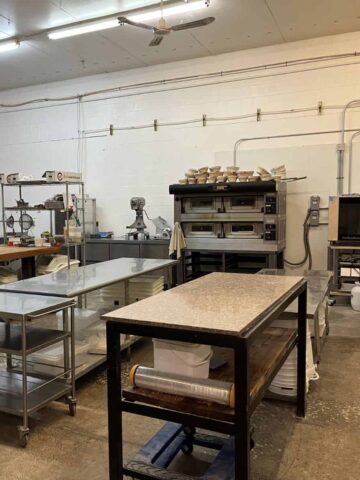
In professional kitchens, production is rarely done all at once.
It’s broken into phases:
• prep
• mix
• portion
• laminate/shape
• rest or freeze
• bake & finish
This isn’t about shortcuts.
It’s about structure.
Using a freezer-friendly workflow, batching tasks, and building repeatable systems allows you to:
• reduce stress
• increase output
• improve consistency
• make better use of your time
A product that looks profitable on paper may not be profitable in practice if it doesn’t fit your workflow or if you can't scale it efficiently.
Efficiency isn’t about working faster
It’s about creating a menu that supports your workflow and that your workflow supports your pricing
If you’re constantly busy but your numbers don’t reflect it, this could be the missing piece.
👉 For tips on how to organize baking like a professional see my posts on Work Flow & Make Ahead
4. Your Products Aren’t Working Together
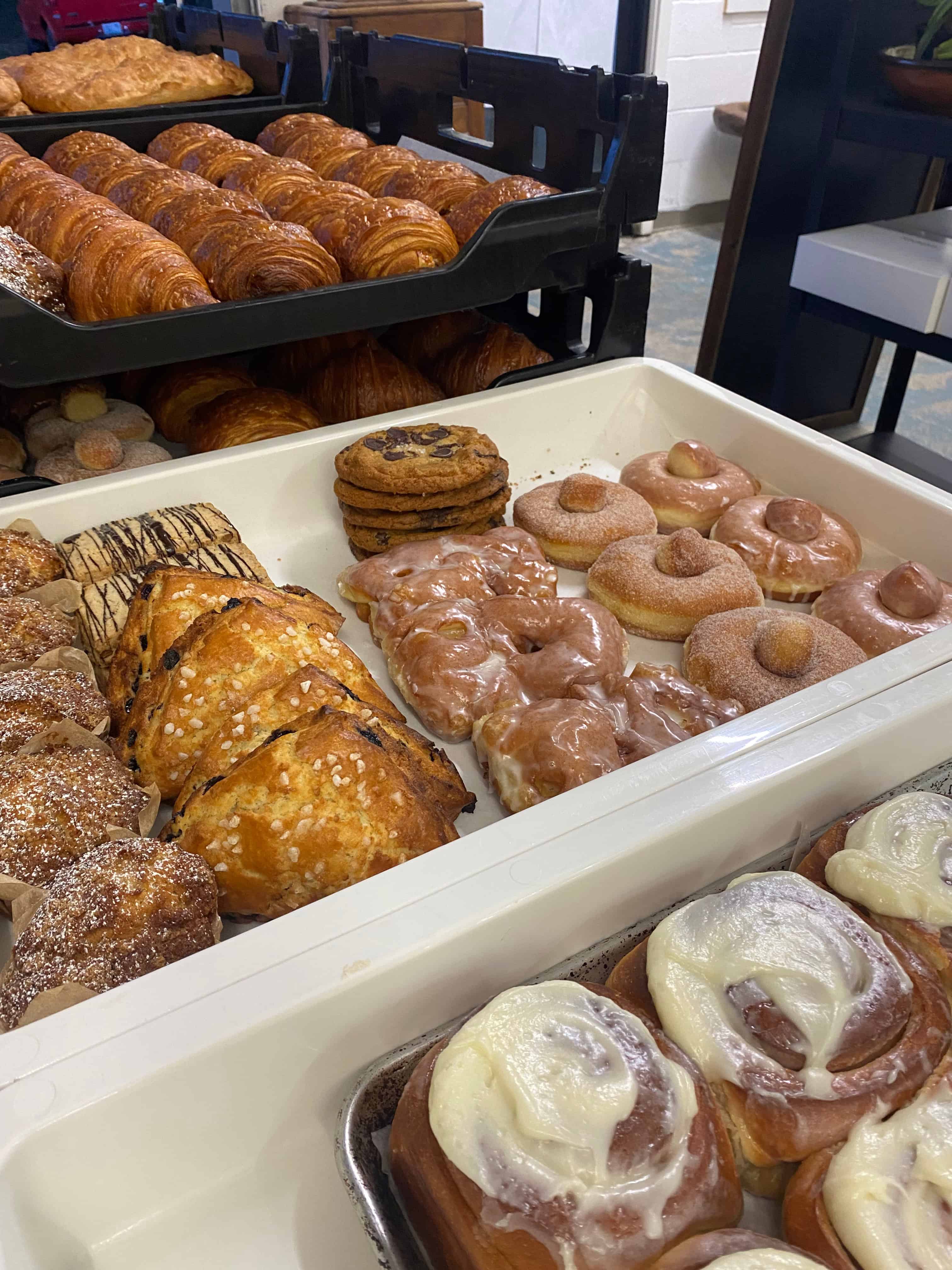
This is where everything comes together.
It’s easy to evaluate products one at a time:
• how much they cost
• how much they sell for
• how often they’re ordered
But profitability isn’t typically determined by one product.
It’s determined by how your products work together.
Some items:
• bring customers in
• generate stronger margins
• fill gaps in production
• support other products
Not every item needs to do everything.
And not every bakery needs a large menu.
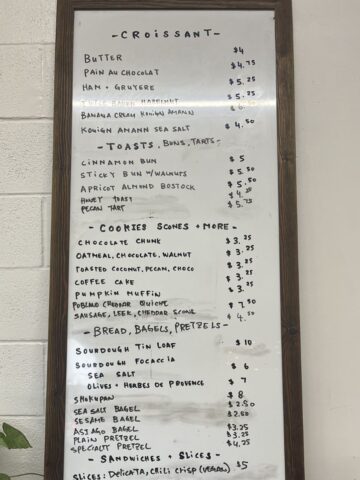
Some bakers build successful businesses around a single product.
Others rely on a small group of products that balance each other.
What matters is that your menu supports your workflow - and your workflow supports your pricing.
A Simple Way to Evaluate Your Business
If things feel off, step back and ask:
• Do I know my true cost?
• Does my pricing reflect both cost and value?
• How long does each product actually take me to produce?
• Does my process feel smooth - or unorganized and hectic?
• Do my products support each other - or compete for time?
The key is to evaluate each of these areas and start building a system that's profitable, efficient and sustainable.
Pricing System (Start Here)
If you’re unsure where to begin, start with the core pricing guide below.
Step 1: Understand Your Costs
Know exactly what it costs to produce your products.
- 👉 What Is Food Cost in Baking?
- 👉 How to Calculate Labor Cost in Baking
- 👉 What Is Overhead in a Baking Business?
Step 2: Build Your Pricing
Turn your costs into a price that actually works.
- 👉 Core Guide: How to Price Baked Goods (Start With Your Real Costs)
- 👉 Cost vs Value Pricing for Baked Goods
- 👉 Build a Menu That Works (Product Mix)
Step 3: Apply It to Your Products
Use your numbers to price specific items.
- 👉 How Much Should You Charge for Homemade Cookies?
- 👉 How Much Should You Charge for Homemade Cupcakes?
- 👉 How to Price Cakes for Profit
Step 4: Improve Profit Over Time
Refine your pricing as your business grows.
Final Thoughts
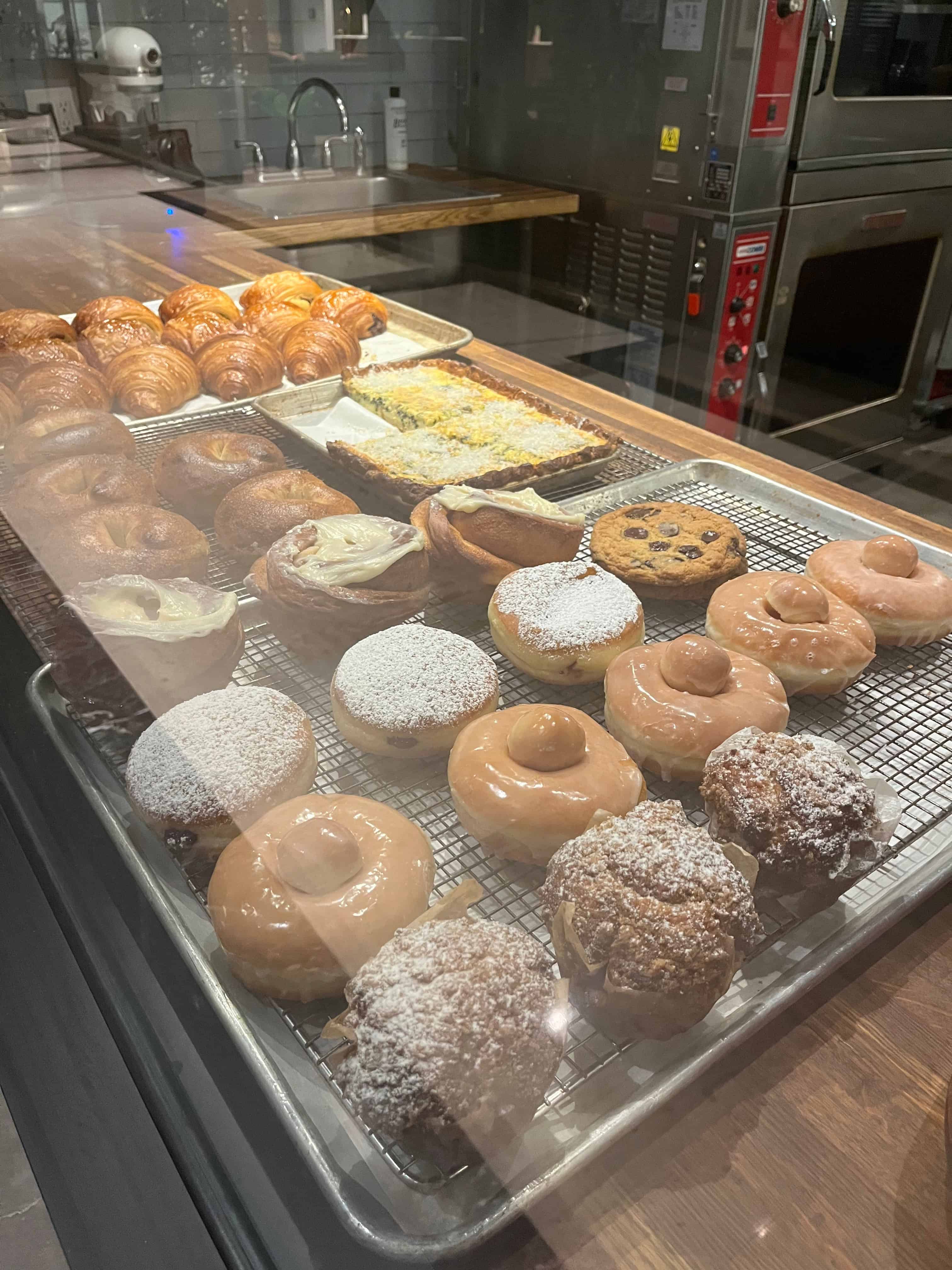
A baking business doesn’t become profitable because of one perfect product or one correct price.
It becomes sustainable when:
• pricing is grounded in real cost
• value is clear to the customer
• the process supports the work
• products work together as a system
Some products bring people in.
Some generate profit.
Some make production easier.
Understanding the difference is what allows you to move from guessing… to building something intentional.
Pocket Baker Perspective
In baking and pastry, there is a method behind almost everything.
A way to approach the work so that results are consistent, repeatable, and reliable.
The same is true for running a baking business.
The goal isn’t just to make an item that sells.
It’s to build a system that works.