


Introduction
At some point, most bakers run into the question:
How should I price cakes?
And unlike cookies or cupcakes, the answers tend to vary widely.
$40
$80
$150+
If your pricing feels inconsistent - or hard to explain - you’re not alone.
Many cottage bakers:
- estimate a price
- adjust based on what others charge
In cake pricing, cost still matters - but it’s only part of the equation.
👉 because cakes don’t behave like standard baked goods
They’re often made for:
- birthdays
- celebrations
- weddings
- custom events
👉 labor and value play a much larger role
And that changes how pricing works.
If you want pricing that makes sense - both to you and your customers - you need to understand how all three work together.
Jump to:
- Introduction
- Quick Answer: How Should You Price Cakes?
- The Basic Bakery Pricing Formula
- Step 1: Calculate Your True Cost (Cake)
- Example (Custom Birthday Cake - Serves ~30)
- Your Estimated True Cost
- Step 2: Why Cost Alone Doesn’t Work for Cakes
- What Drives Cake Pricing
- Step 3: Choosing a Price
- So What Should You Actually Charge?
- Why Cake Pricing Feels So Different (Professional vs Cottage Baking)
- Common Cake Pricing Questions
- Pricing System (Start Here)
- Final Thoughts
- Pocket Baker Perspective
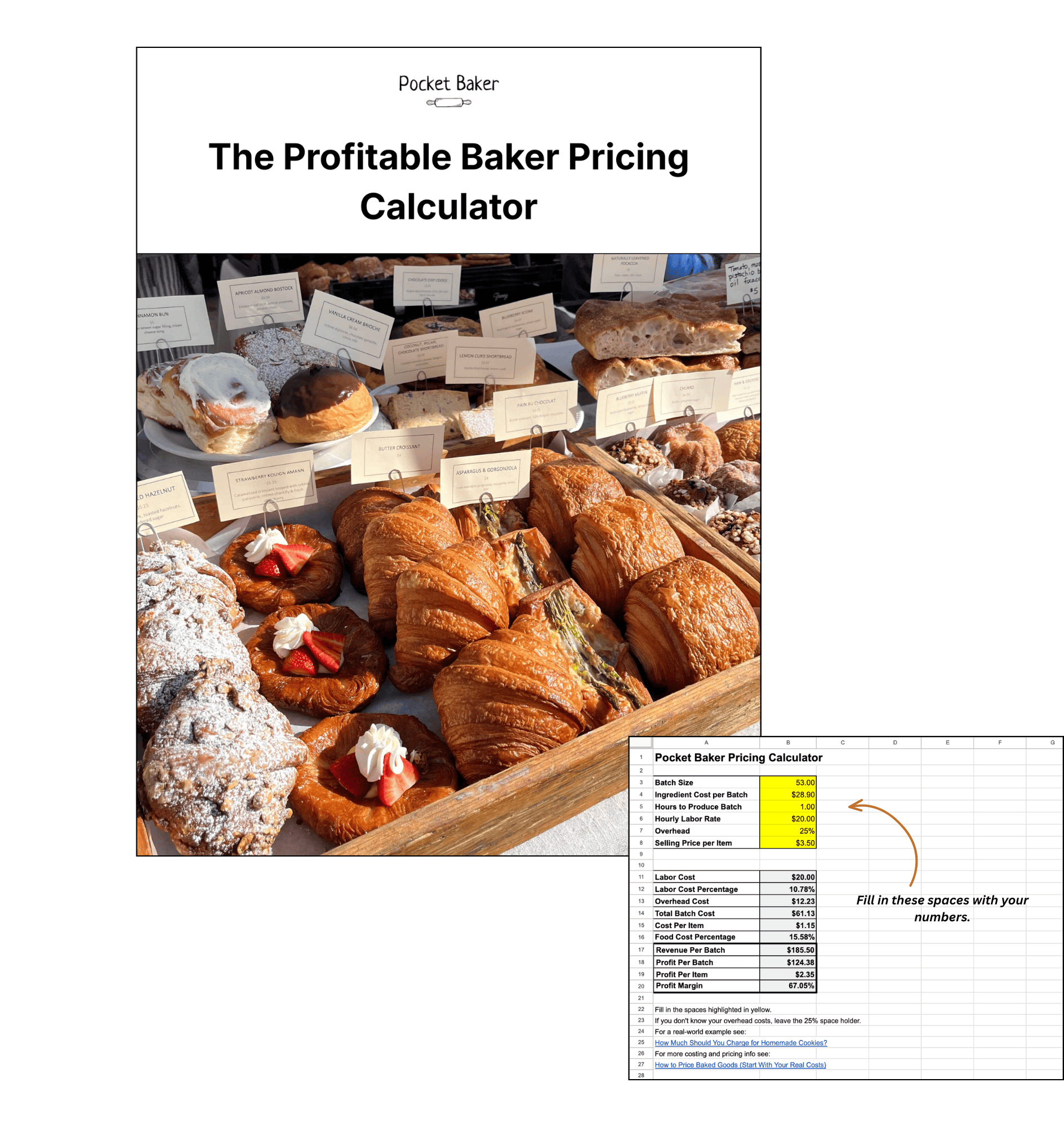
- Get the FREE Profitable Baker Pricing Calculator
Quick Answer: How Should You Price Cakes?
Cakes are typically priced based on:
- total cost (ingredients, labor, overhead)
- complexity of design
- level of skill required
- occasion and perceived value
In many U.S. markets:
- simple cakes may start around $40-$80
- custom cakes often range from $80-$200+
- specialty or wedding cakes can go significantly higher
But the correct price always starts with your true cost - and is then adjusted based on labor and value.
The Basic Bakery Pricing Formula
Even for custom cakes, the foundation remains:
Ingredients + Labor + Overhead = Total Cost
👉 How to Price Baked Goods (Start With Your Real Costs)
This gives you your minimum.
👉 If you price below this, you are not covering your costs.
Step 1: Calculate Your True Cost (Cake)
👉 What Is Food Cost in Baking?
👉 How to Calculate Labor Cost in Baking
👉 What Is Overhead in a Baking Business?
Even though cakes vary, the process stays the same:
- calculate ingredient cost
- estimate labor
- include overhead
Example (Custom Birthday Cake - Serves ~30)
Ingredient Cost
Base recipe (standard chocolate cake + buttercream):
👉 ~$12.25 per batch
Additional components for a custom cake:
- cake boards / piping bags / other support materials → ~$6.00
Total Ingredient Cost
👉 ~$18.25
👉 This is the minimum price needed to cover your cost before profit.
Labor
Custom cakes typically require:
- baking cake, preparing buttercream
- assembly (layering, filling, crumb coat)
- final coating and smoothing
- decorating and finishing
For this example:
- 2 hours @ $25/hour = $50
👉 This reflects both:
- total time
- level of skill required
Add Overhead (25% Placeholder)
Ingredients + Labor:
$18.25 + $50 = $68.25
25% overhead:
👉 ~$17.00
Your Estimated True Cost
👉 ~$85 per cake
👉 This is your floor
Step 2: Why Cost Alone Doesn’t Work for Cakes
Two cakes with similar ingredient costs can sell for very different prices.
Because cakes are evaluated differently.
👉 Cost tells you what it takes to produce
👉 Labor reflects both the time required and the level of skill involved
👉 Value determines what customers are willing to pay
👉 Cost vs Value Pricing for Baked Goods
What Drives Cake Pricing
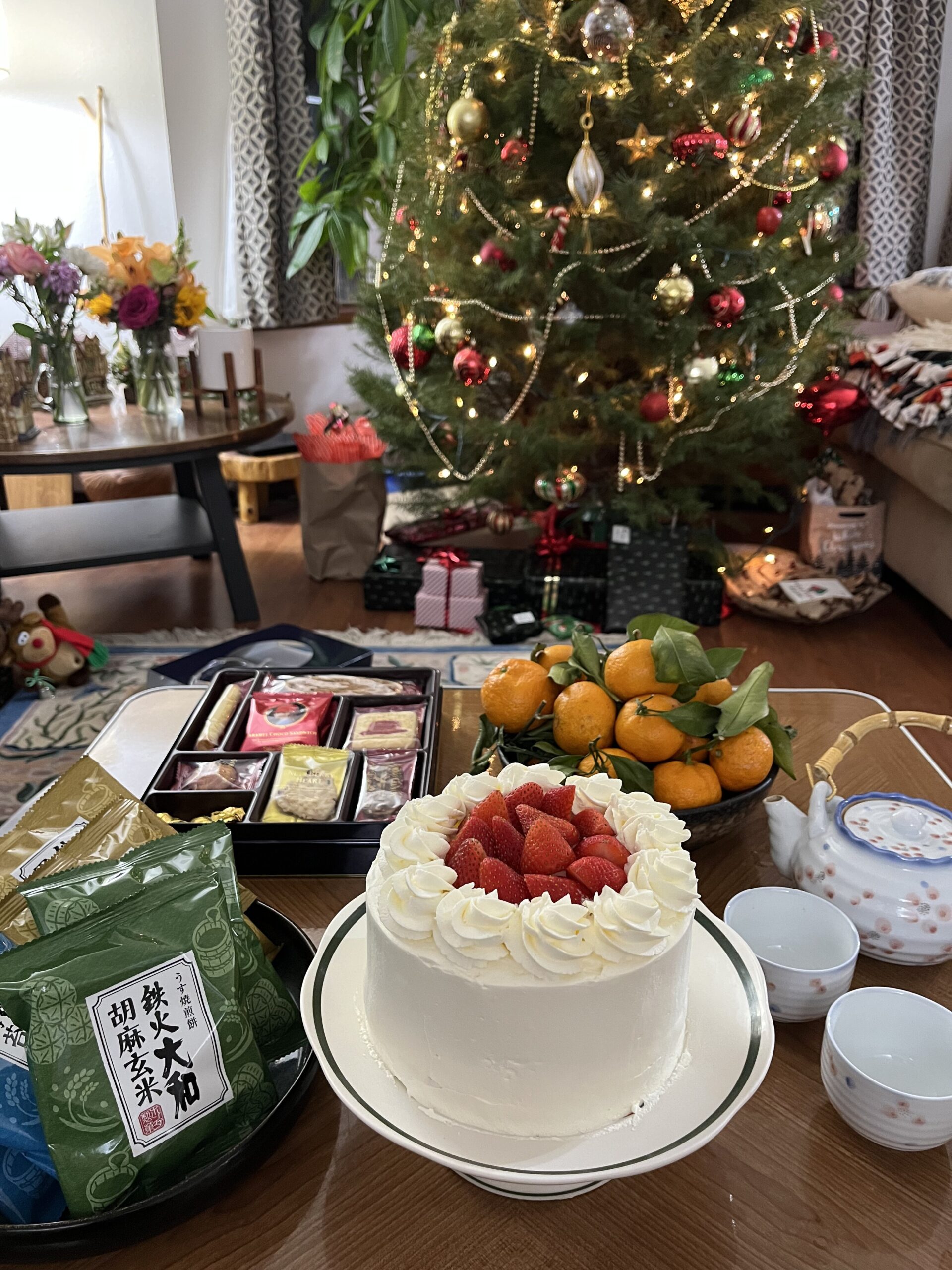
1. Occasion Matters
A cake for:
- a casual gathering
- a birthday
- a wedding
…is not valued the same way.
Customers expect to pay more for:
- milestone events
- one-time purchases
- meaningful celebrations
2. Design Complexity
Simple cakes:
- minimal decoration
- shorter production time
Custom cakes:
- multiple components
- detailed finishes
- time-intensive work
👉 complexity increases both labor and value
3. Skill & Execution (Labor Increases with Skill)
Customers pay more for:
- clean finishes
- consistency
- professional execution
But skill doesn’t just increase value - it increases labor.
Higher-skill work often means:
- more time spent finishing
- slower, more precise execution
- higher expectations for consistency
👉 This means both:
- more hours
- higher-value hours
👉 This is one of the biggest differences between cakes and other baked goods.
4. Customization & Risk
Custom cakes introduce:
- planning time
- communication
- higher expectations
- limited margin for error
Mistakes are more costly - both financially and reputationally.
👉 Pricing should reflect that risk
5. Perceived Value (What the Customer Sees)
Customers don’t evaluate cakes based on cost breakdowns.
They evaluate:
- appearance
- detail
- how important the event is
👉 value is based on experience, not ingredients
Step 3: Choosing a Price
Once you know your cost:
👉 you are not asking:
“What should I charge?”
You are asking:
👉 “What price makes sense for this cake?”
Example
If your cost is:
👉 $85
A more complex cake might increase labor:
👉 bringing cost closer to $100-$120+
From there, pricing might look like:
- $150-$200+ for custom work
- higher for detailed or specialty designs
👉 This increase comes primarily from additional labor and design complexity.
So What Should You Actually Charge?
There is no single number for cakes.
That’s normal.
But there is a structure:
- Know your cost
- Understand the labor involved
- Adjust based on value
👉 This is what makes cake pricing feel less random - and more intentional
Why Cake Pricing Feels So Different (Professional vs Cottage Baking)
One of the most confusing parts of cake pricing is how different prices can be - even for similar work.
Part of this comes down to how labor is structured.
In professional kitchens, labor is not calculated one cake at a time.
Bakers are typically working on multiple components at once:
- baking several cakes in batches
- preparing fillings ahead of time
- making buttercream in larger quantities
- decorating multiple orders within the same workflow
This kind of batching allows labor to be spread across many products.
👉 which lowers the labor cost per cake
It also allows bakeries to work more efficiently - producing more in less time, while maintaining consistency.
Why This Matters for Pricing
Because labor is more efficient, professional bakeries can often:
- keep pricing more consistent
- offer competitive pricing on standard cakes
- maintain sustainable margins
Where Cottage Baking Feels Different
Cottage bakers are often working differently.
Many are:
- producing one order at a time
- making components as needed
- handling each project individually
This means:
- more time per cake
- less overlap in workflow
- higher labor per item
👉 which naturally increases the price
And That’s Not a Problem
This doesn’t mean one approach is better than the other.
It simply reflects different types of work.
Highly customized, skill-driven cakes:
- take more time
- require more attention
- support higher pricing
👉 and customers expect that
Where Challenges Can Come Up
The difficulty usually appears when:
- production is done one cake at a time
- but pricing is expected to match high-efficiency bakeries
This is where pricing can start to feel:
- too high for standard products
- or unsustainable for the baker
What This Means for Your Pricing
Understanding how your time is used matters just as much as how much time you spend.
If you’re working:
- one project at a time → pricing will need to be higher
- in batches or systems → labor cost per item decreases
👉 This is why cake pricing isn’t just about time or ingredients
It’s about how efficiently that time is used - and how the final product is positioned.
Common Cake Pricing Questions
Why are cake prices so different?
Because cakes vary widely in:
- labor
- skill
- design
- occasion
Should I charge by size or by design?
Most bakers use both:
- size sets a baseline
- design adjusts the price
Why does cake pricing feel inconsistent?
Because cost alone doesn’t determine price.
👉 labor and value play a much larger role
Pricing System (Start Here)
If you’re unsure where to begin, start with the core pricing guide below.
Step 1: Understand Your Costs
Know exactly what it costs to produce your products.
- 👉 What Is Food Cost in Baking?
- 👉 How to Calculate Labor Cost in Baking
- 👉 What Is Overhead in a Baking Business?
Step 2: Build Your Pricing
Turn your costs into a price that actually works.
- 👉 Core Guide: How to Price Baked Goods (Start With Your Real Costs)
- 👉 Cost vs Value Pricing for Baked Goods
- 👉 Build a Menu That Works (Product Mix)
Step 3: Apply It to Your Products
Use your numbers to price specific items.
- 👉 How Much Should You Charge for Homemade Cookies?
- 👉 How Much Should You Charge for Homemade Cupcakes?
- 👉 How to Price Cakes for Profit
Step 4: Improve Profit Over Time
Refine your pricing as your business grows.
Final Thoughts
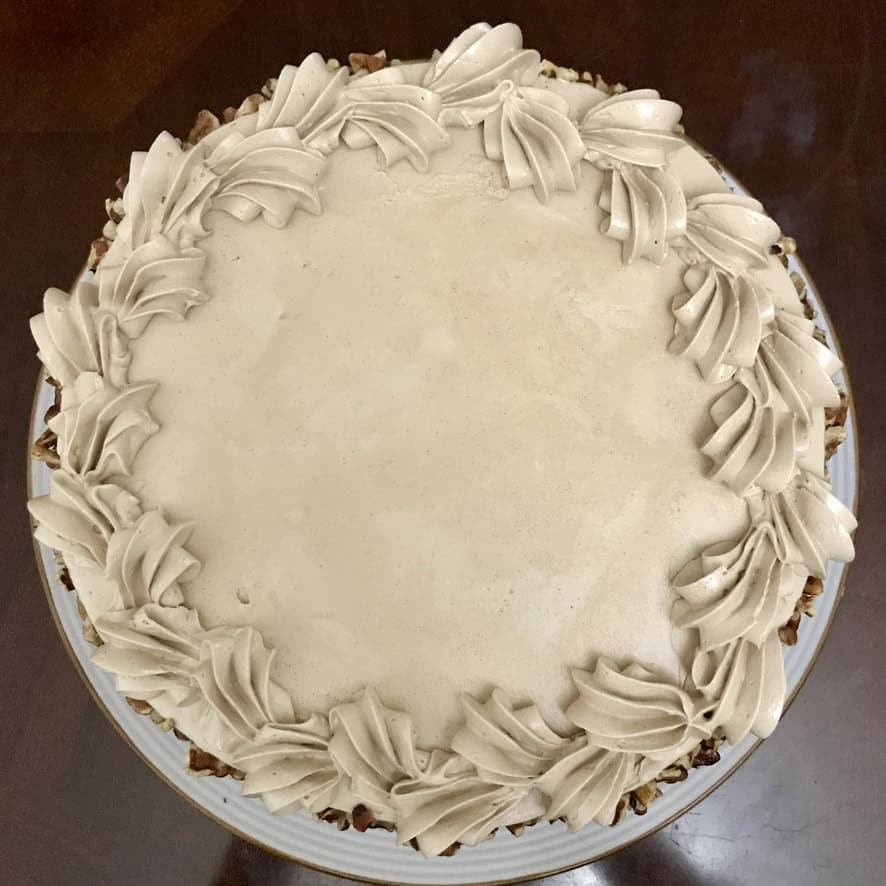
Cakes are not priced like standard baked goods.
They are:
- labor-driven
- skill-dependent
- value-based
Understanding your cost gives you a foundation.
Understanding labor and value allows you to price with confidence.
👉 Which is why pricing them using a simple hourly or ingredient-based approach often falls short.
Pocket Baker Perspective
In professional kitchens, cake pricing isn’t based on guesswork or what someone else charges.
Bakers start by understanding their costs - ingredients, labor, and overhead - and then choose prices that reflect the time and skill required to produce the cake.
Because with cakes, labor and value often matter more than ingredients.
Pricing is about knowing your numbers, understanding the value of your work, and building a customer base that’s willing to pay for it.