








Introduction
If you've searched for pizza dough recipes, you've probably noticed something confusing.
One recipe says to let the dough rise for two hours.
Another says to refrigerate it overnight.
Then you find recipes recommending 48 or even 72 hours.
So...which one is right?
The answer is that they're all capable of producing good pizza - they're simply producing different results.
An overnight fermentation doesn't magically make pizza dough "better." Instead, it changes the dough's flavor, handling characteristics, and the texture of the finished crust. Whether those changes are desirable depends on the style of pizza you're making and what you're hoping to achieve.
Understanding what happens during a longer fermentation makes it much easier to choose the right approach for your next pizza.
Jump to:
- Introduction
- Quick Answer: Should You Ferment Pizza Dough Overnight?
- What Happens During an Overnight Fermentation
- How Overnight Fermentation Changes Your Pizza
- Does Every Pizza Benefit from Overnight Fermentation?
- Which Pizza Styles Commonly Use Overnight Fermentation?
- Can You Make Great Pizza Without Overnight Fermentation?
- How Do You Decide?
- Continue Learning: Pizza & Bread Dough Fundamentals
- FAQ
- Final Thoughts
- Pocket Baker Perspective
- Get the FREE Profitable Baker Pricing Calculator
Quick Answer: Should You Ferment Pizza Dough Overnight?
Overnight fermentation changes several characteristics of pizza dough, including:
- Flavor development
- Dough extensibility (how easily it stretches)
- Gluten relaxation
- Gas retention
- Crumb texture
Many pizza styles commonly use overnight fermentation because these changes help create the texture and flavor associated with that style. Others are frequently made with shorter fermentation times.
Neither approach is automatically better - it's simply a matter of matching the dough to the pizza you're trying to make.
What Happens During an Overnight Fermentation
Even after you've mixed the dough, the yeast continues working.
As the dough rests - particularly in the refrigerator - several things happen at the same time.
The yeast slowly produces carbon dioxide, helping build the internal structure of the dough.
Enzymes continue breaking down starches into sugars, providing food for the yeast while also contributing to browning during baking.
Meanwhile, the gluten network gradually relaxes, making the dough easier to stretch without constantly shrinking back.
At the same time, fermentation creates organic acids and other flavor compounds that give the crust a deeper, more complex flavor than a quick-rise dough.
These changes happen gradually, which is why time can be just as important as ingredients.
How Overnight Fermentation Changes Your Pizza
Flavor
This is usually the first difference people notice.
A same-day dough often has a clean, straightforward wheat flavor.
An overnight dough develops a more complex flavor that's slightly nuttier, richer, and more aromatic.
How much that matters depends on the style of pizza and how prominent you want the crust to be.
Dough Handling
One of my favorite benefits of overnight fermentation has nothing to do with flavor.
The dough often becomes noticeably easier to stretch.
Instead of constantly springing back toward the center, a well-fermented dough generally feels more relaxed and cooperative.
That doesn't mean every overnight dough is easy to work with - hydration, mixing, and dough temperature all play a role - but fermentation often makes shaping easier.
Texture
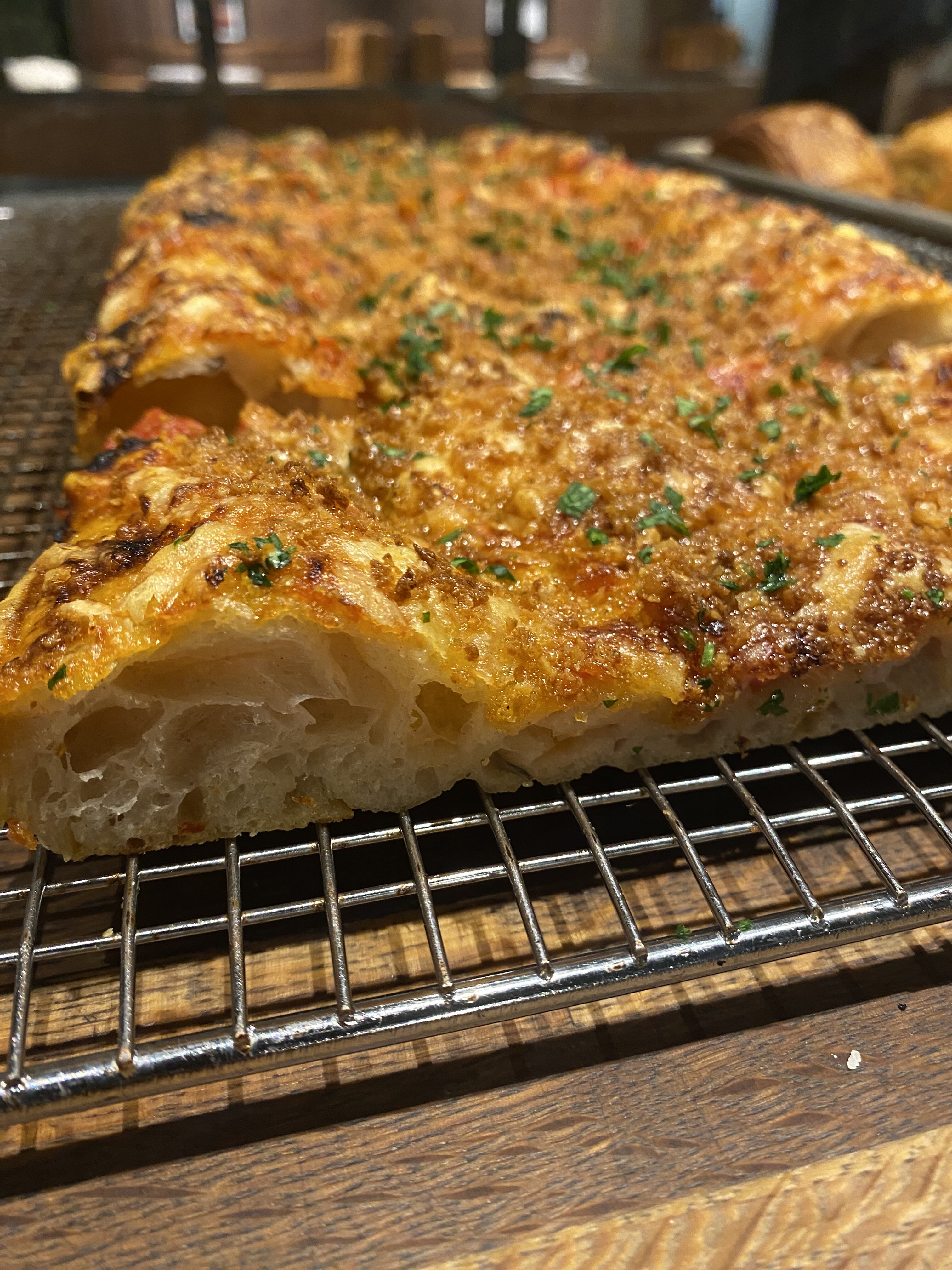
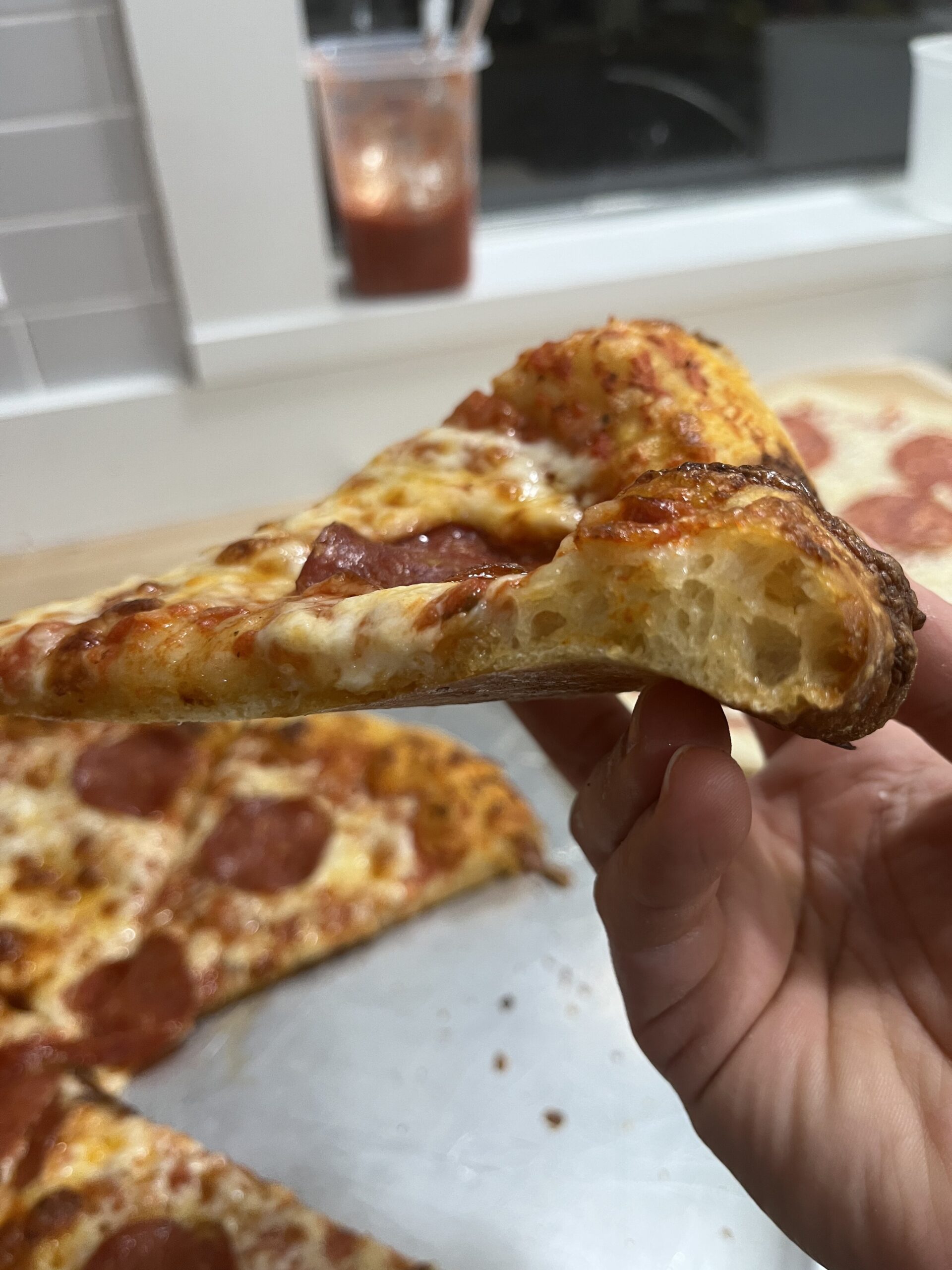
Longer fermentation can also influence the finished crumb.
Because the dough has more time to develop and retain gas, many overnight-fermented doughs bake with a lighter, more open interior.
Again, this isn't guaranteed - hydration, shaping, and baking all influence crumb structure - but fermentation is one piece of the puzzle.
Browning
As enzymes continue converting starches into sugars, there are often more sugars available for browning during baking.
That's one reason longer-fermented doughs frequently develop richer color in the oven.
Does Every Pizza Benefit from Overnight Fermentation?
Not necessarily.
This is where many home pizza makers get tripped up.
It's easy to assume that if 24 hours is good, then 72 hours must be even better.
But pizza isn't judged by fermentation time.
It's judged by the finished pizza.
Some styles commonly use extended fermentation because it helps create the chew, flavor, or handling characteristics associated with that style.
Other styles can produce excellent results with much shorter fermentation schedules.
There's no universal rule that says every pizza should spend days in the refrigerator.
Which Pizza Styles Commonly Use Overnight Fermentation?
While every recipe is different, some general patterns emerge.
| Pizza Style | Overnight Fermentation Common? | Why |
|---|---|---|
| Neapolitan | Often | Improves flavor, extensibility, and oven spring. |
| New York | Very common | Develops flavor and contributes to a chewy crust. |
| Detroit | Sometimes | Depends on the recipe and the desired texture. Both shorter and longer fermentations are used successfully. |
| Sicilian | Often | Helps develop flavor while supporting an airy crumb. |
| Tavern Style | Varies | Depends on the recipe and desired texture. |
These aren't rules - they're simply common approaches you'll encounter as you explore different styles.
Can You Make Great Pizza Without Overnight Fermentation?
Absolutely.
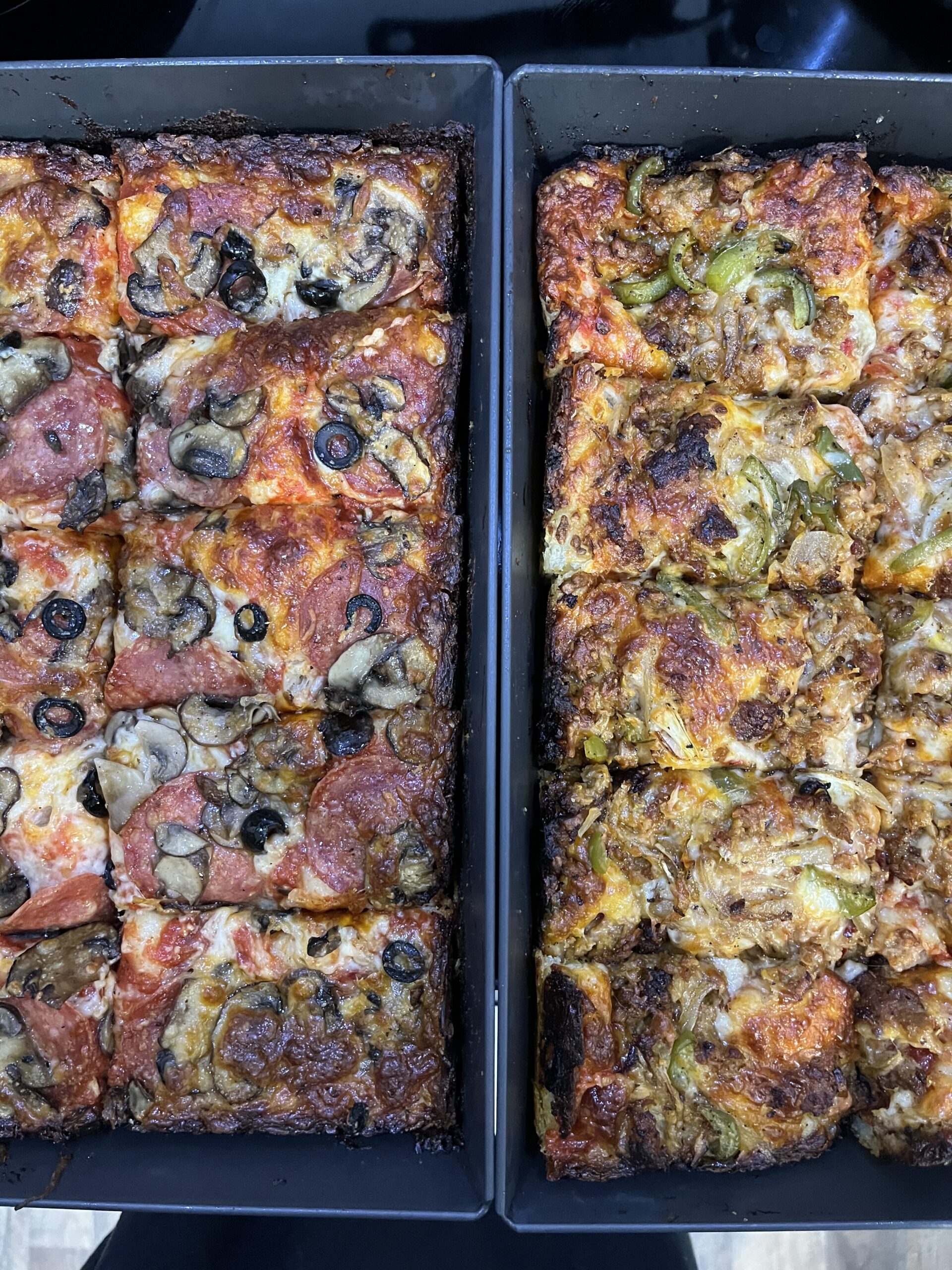
A well-made same-day dough can produce excellent pizza.
You may notice:
- A less complex flavor
- Slightly less extensibility
- A somewhat tighter crumb
- Softer interior
But that doesn't make it inferior.
Many excellent pizza recipes are designed specifically to be mixed, fermented, and baked in a single day.
The best fermentation schedule is the one that produces the pizza you're trying to make.
How Do You Decide?
When choosing between a same-day and overnight dough, ask yourself a few questions.
- Am I looking for a deeper, more developed crust flavor?
- Do I want a dough that's easier to stretch?
- Am I trying to recreate a style that commonly uses longer fermentation?
- Do I simply want fresh pizza tonight?
There's no wrong answer.
The fermentation schedule should support your goal - not the other way around.
Continue Learning: Pizza & Bread Dough Fundamentals
If you're just getting started, these guides will help you build a strong foundation before moving on to more advanced techniques.
👉 How to Make Pizza Dough Ahead of Time (Refrigerate, Freeze or Par-Bake)
👉 What Temperature Should Pizza Be Baked At? (By Pizza Style)
Build Better Pizza Dough
Pizza dough follows many of the same principles as bread dough. Learning how dough develops will improve both your bread and your pizza.
👉 How to Knead Dough Properly (And How to Know When It's Ready)
👉 Why Is My Dough Sticky? (And How to Fix It)
👉 Why Is My Dough Not Smooth or Elastic? (And How to Fix It)
Understand Fermentation
Fermentation affects flavor, texture, oven spring, and structure - whether you're making a loaf of bread or a pizza crust.
👉 Do You Really Need to Proof Yeast? (Instant vs. Active Dry Explained)
👉 How Long Should Bread Proof? (And How to Know When It's Ready)
Troubleshoot Your Dough
Many pizza problems begin long before the dough reaches the oven.
👉 Why Is My Bread Dense? (6 Common Causes and How to Fix Them)
👉 Can You Overknead Dough? (Why It's Less Common Than You Think)
Learn the Bread-Making Process
If you'd like to understand why dough behaves the way it does, this guide walks through each stage from mixing to baking.
FAQ
Is overnight pizza dough always better?
No. It simply produces different characteristics. Whether those changes are desirable depends on the style of pizza you're making and the result you're trying to achieve.
Can I leave pizza dough in the refrigerator for more than one night?
Many recipes successfully use 48- or even 72-hour fermentation schedules, but longer isn't automatically better. Follow the recipe's recommendations and adjust based on the flavor and texture you're looking for.
Does overnight fermentation make pizza dough easier to stretch?
Often, yes. As gluten relaxes during fermentation, the dough generally becomes more extensible and easier to shape.
Does every pizza style require overnight fermentation?
No. While it's common for many styles, excellent pizza can be made using both same-day and overnight doughs.
Final Thoughts
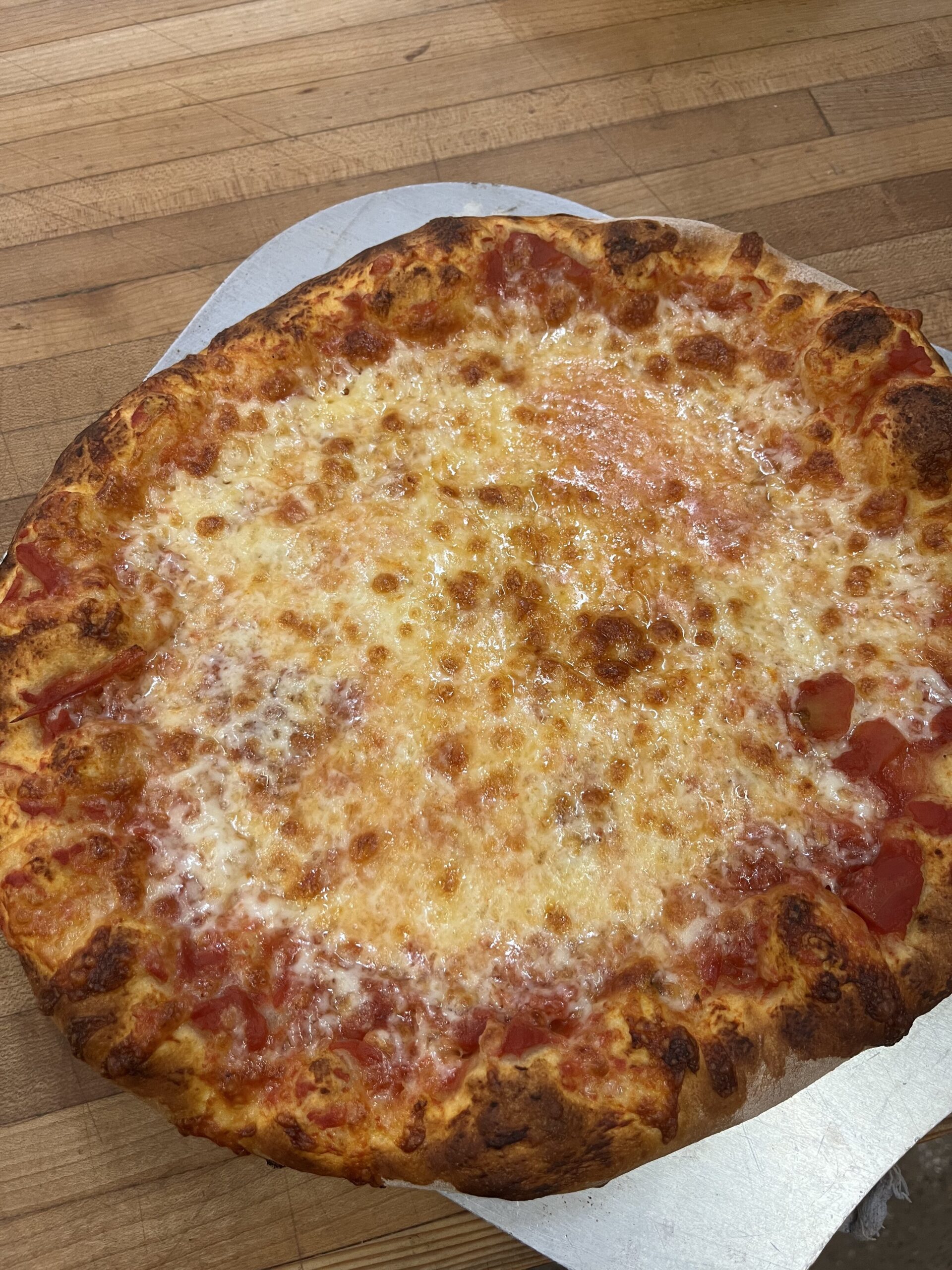
Many pizza recipes recommend fermenting the dough overnight, and for good reason.
But longer fermentation isn't automatically the best choice. Like hydration, mixing, and baking temperature, it's simply one variable you can adjust to achieve a particular result.
A longer fermentation can improve flavor, make the dough easier to stretch, and contribute to a lighter, more open crumb. But those benefits aren't equally important for every style of pizza - or every baker.
Rather than asking whether overnight fermentation is "better," a more useful question is:
What kind of pizza am I trying to make?
Once you know the answer to that, choosing the right fermentation schedule becomes much simpler.
Pocket Baker Perspective
As a professional baker, I managed pizza dough production for two very different operations: a wood-fired Neapolitan pizzeria and a café that served light, airy Detroit-style pizzas. We also produced pizza-style focaccia for the bakeshop and spent time testing New York-style pizzas.
One thing became clear very quickly: there wasn't a single "correct" fermentation schedule.
At the pizzeria, running out of dough simply wasn't an option. Our dough was designed to hold up in the refrigerator for several days, giving us flexibility during busy service while still producing excellent pizza.
The Detroit-style dough followed a completely different approach. It was intentionally mixed, proofed, and par-baked the same day to create the soft, airy crumb we were after.
Our focaccia had its own timeline as well. We found it baked best within about three days. Beyond that, the dough gradually lost strength, producing a flatter, less airy finished product.
At home, my approach changes again. If I haven't planned ahead, I'll often mix a simple same-day pan pizza dough so I can still have homemade pizza on the table by dinner.
That's why I don't think of overnight fermentation as a rule.
I think of it as a tool.
Longer fermentation can improve flavor, dough handling, and crumb structure, but those benefits aren't always the goal. The best fermentation schedule depends on the style of pizza you're making, the workflow you're using, and the result you're trying to achieve.