





Introduction
Most people picture professional bakeries as places where everything is mixed, shaped, baked, and finished fresh every morning.
It certainly looks that way from the customer side.
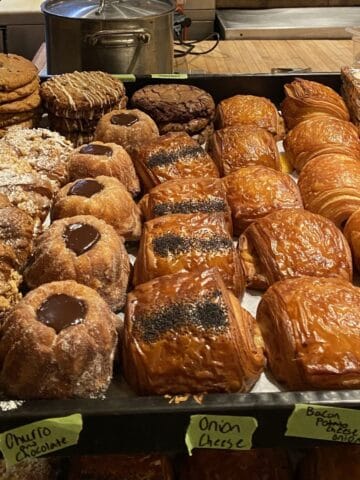
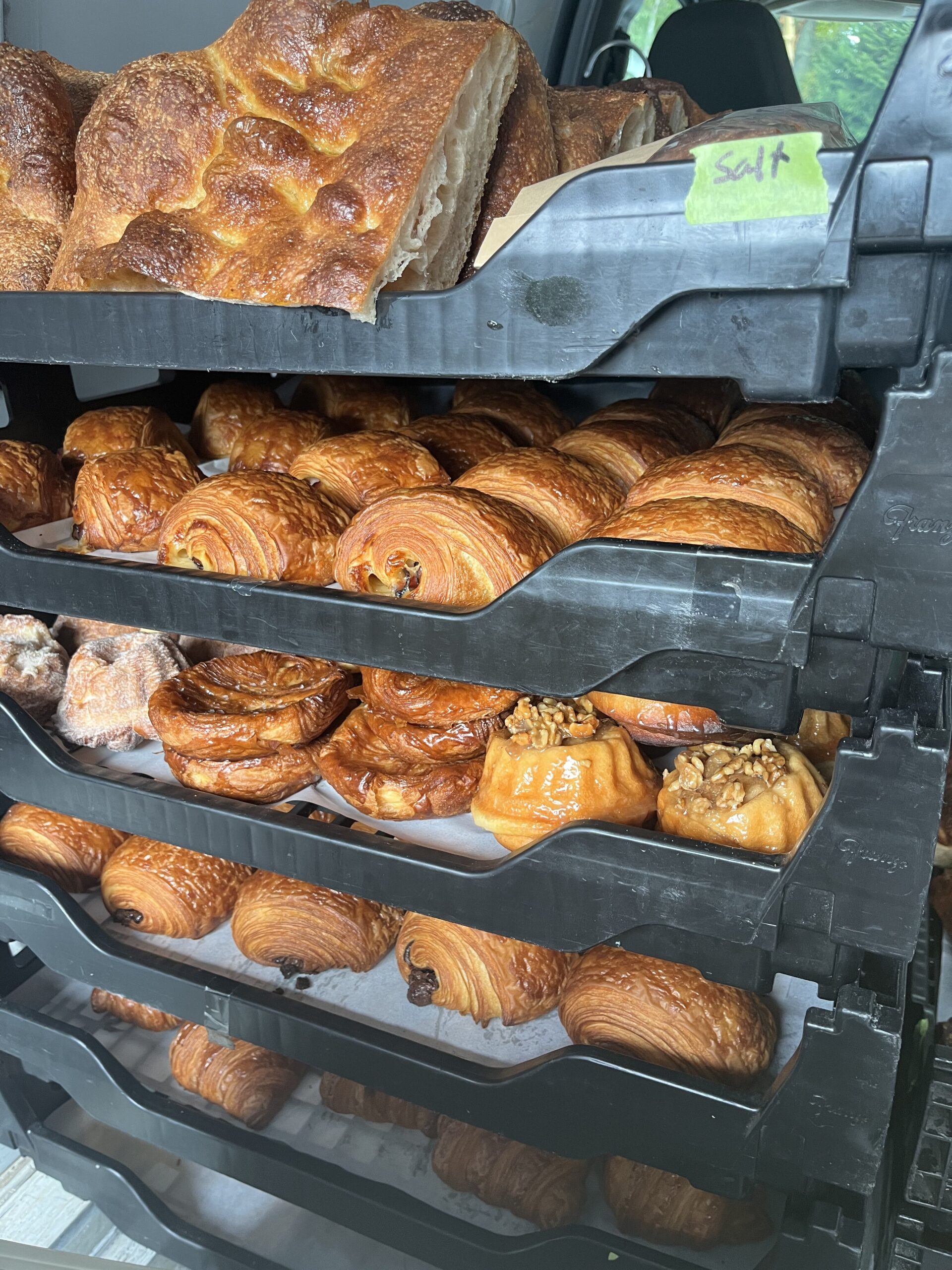
Walk into a bakery at 8 A.M. and the bread is warm, the croissants are golden, the cinnamon rolls are glazed, and the pastry case is completely stocked.
It feels like everything must have been made that morning.
The surprising part?
Very little of it actually was.
Professional bakeries rarely complete every product from start to finish in a single day. Instead, production is spread across several days so each stage happens when it makes the most sense.
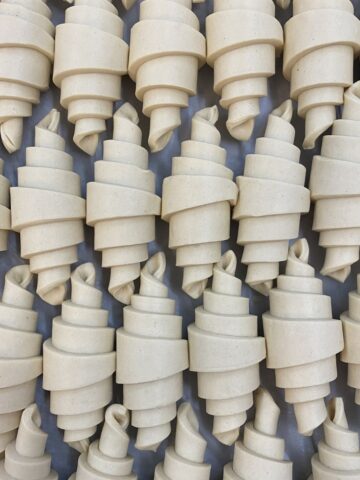
Dough may be mixed one day, shaped the next, refrigerated or frozen, then proofed and baked when needed. Fillings, icings, and garnishes are often prepared before bake day ever begins.
Once you understand this way of working, you'll realize you don't have to complete every bake in one exhausting marathon session either.
Jump to:
- Introduction
- Quick Answer: How Do Professional Bakeries Produce So Much?
- Why This Matters
- Work Backward From Bake Day
- Bake Day Isn't Production Day
- Every Product Moves Through Stages
- What This Could Look Like in a Cottage Bakery
- Use Refrigeration and Freezing as Production Tools
- Questions to Ask Before You Bake
- Workflow & Efficiency: Start Here
- Final Thoughts
- Pocket Baker Perspective
- Get the FREE Profitable Baker Pricing Calculator
Quick Answer: How Do Professional Bakeries Produce So Much?
👉 Professional bakers rarely start from scratch every morning.
Instead, they divide production into smaller stages - preparing, mixing, fermenting, shaping, holding, baking, and finishing - so bake day becomes organized and far less stressful.
It's a system that works just as well in a home kitchen or cottage bakery as it does in a professional bakery.
Why This Matters
Imagine waking up at 2 A.M. to mix cinnamon roll dough for a morning market.
While the dough rises, you might have enough time to mix and bake a batch of cookies. Then the cinnamon rolls still need to be rolled, proofed, baked, cooled, iced, packaged, and loaded.
Even with experience, you'll spend the entire morning reacting to what's happening in front of you.
The challenge isn't simply that it's a long day.
It's that every decision still has to be made while you're baking.
Professional kitchens remove many of those decisions before bake day ever begins. Dough is already mixed. Cookies are already portioned. Fillings are already prepared. Pans are ready. Ingredients for anything that must be mixed that morning have already been weighed.
Bake day becomes less about planning and more about execution.
Work Backward From Bake Day
One of the biggest differences between home and professional baking isn't speed.
It's the question being asked.
Many home bakers ask:
"What do I need to bake today?"
Professional kitchens are more likely to ask:
"What can we finish today that makes tomorrow easier?"
That simple shift changes everything.
Instead of treating each product as one large project, professional bakers divide it into smaller stages that can be completed whenever time, equipment, and storage are available.
The amount of work doesn't necessarily change.
The amount of pressure does.
Bake Day Isn't Production Day
When I managed bakery production, the morning rarely started with mixing.
By the time we arrived, much of the work had already been completed.
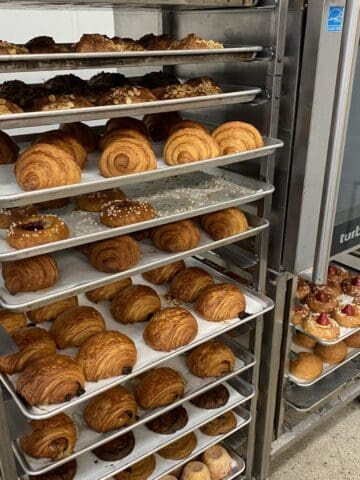
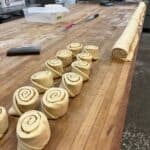
Croissants, brioche, and cinnamon rolls moved from the refrigerator into the proofer.
Bread doughs came out of the cooler and continued fermentation at room temperature while waiting on the oven.
Cookies and scones, already on sheet pans, became the first products in the oven.
Icings, glazes, pastry creams, and fillings had already been prepared. Many desserts needed little more than a simple garnish.
Only one product - our Japanese milk bread - was regularly mixed, baked, and finished entirely on market day - and even then, the ingredients had already been weighed the day before so everything could go directly into the mixer.
From the outside, it looked like everything was being made at once.
In reality, almost every product was simply moving into its next stage.
Every Product Moves Through Stages
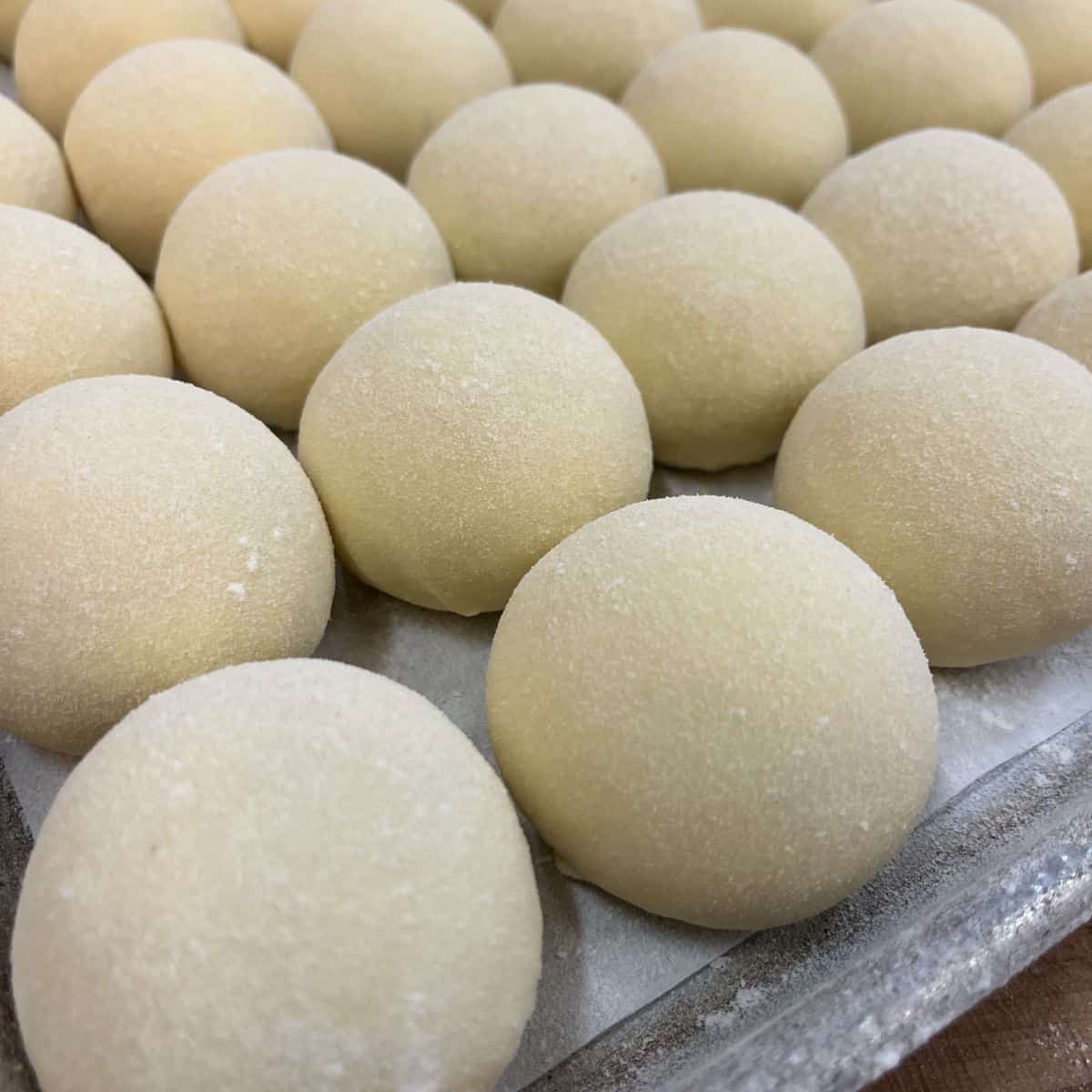
Whether you're making bread, pastries, pies, or cookies, most products follow the same general production cycle.
| Stage | Examples |
|---|---|
| Preparation | Scale ingredients, prepare pans |
| Mixing | Doughs, batters, fillings |
| Resting | Refrigeration, fermentation |
| Shaping | Roll, divide, form |
| Holding | Refrigerate or freeze |
| Baking | Bake when needed |
| Finishing | Fill, glaze, decorate, garnish |
The difference is that these stages don't all need to happen on the same day.
A croissant might take three days from mixing to baking.
Cookie dough can be portioned and frozen weeks in advance.
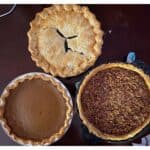
Pie dough should be and mixed and rested before it's needed and can be rolled out and frozen for later use.
Freshly baked doesn't necessarily mean everything was mixed from scratch that morning.
What This Could Look Like in a Cottage Bakery
Every bakery is different, but here's an example of how a small cottage bakery might spread production across several days instead of trying to accomplish everything at once.
| Product | Wednesday | Thursday | Friday | Saturday |
|---|---|---|---|---|
| Cinnamon Rolls | Measure ingredients. Make cinnamon sugar filling | Mix. Make cream cheese frosting | Roll out and shape. Refrigerate | Proof and bake |
| Chocolate Chip Cookies | Mix and scoop | Rest in fridge | Rest in fridge | Bake |
| Sourdough Bread | Build starter | Build starter, measure dough ingredients | Mix, shape, fridge | Pull from fridge and bake |
| Hand Pies | Mix pie dough. Refrigerate | Roll out/cut circles, freeze | Make filling | Pull from freezer, assemble and bake |
| Scones | Mix, cut and freeze | Pull from freezer | Bake |
This is only one possible workflow.
The exact schedule depends on your products, available time, refrigerator and freezer space, and how well each item holds.
The important part is that Saturday is no longer the day everything begins.
It's simply the day many products reach their final stage.
Use Refrigeration and Freezing as Production Tools
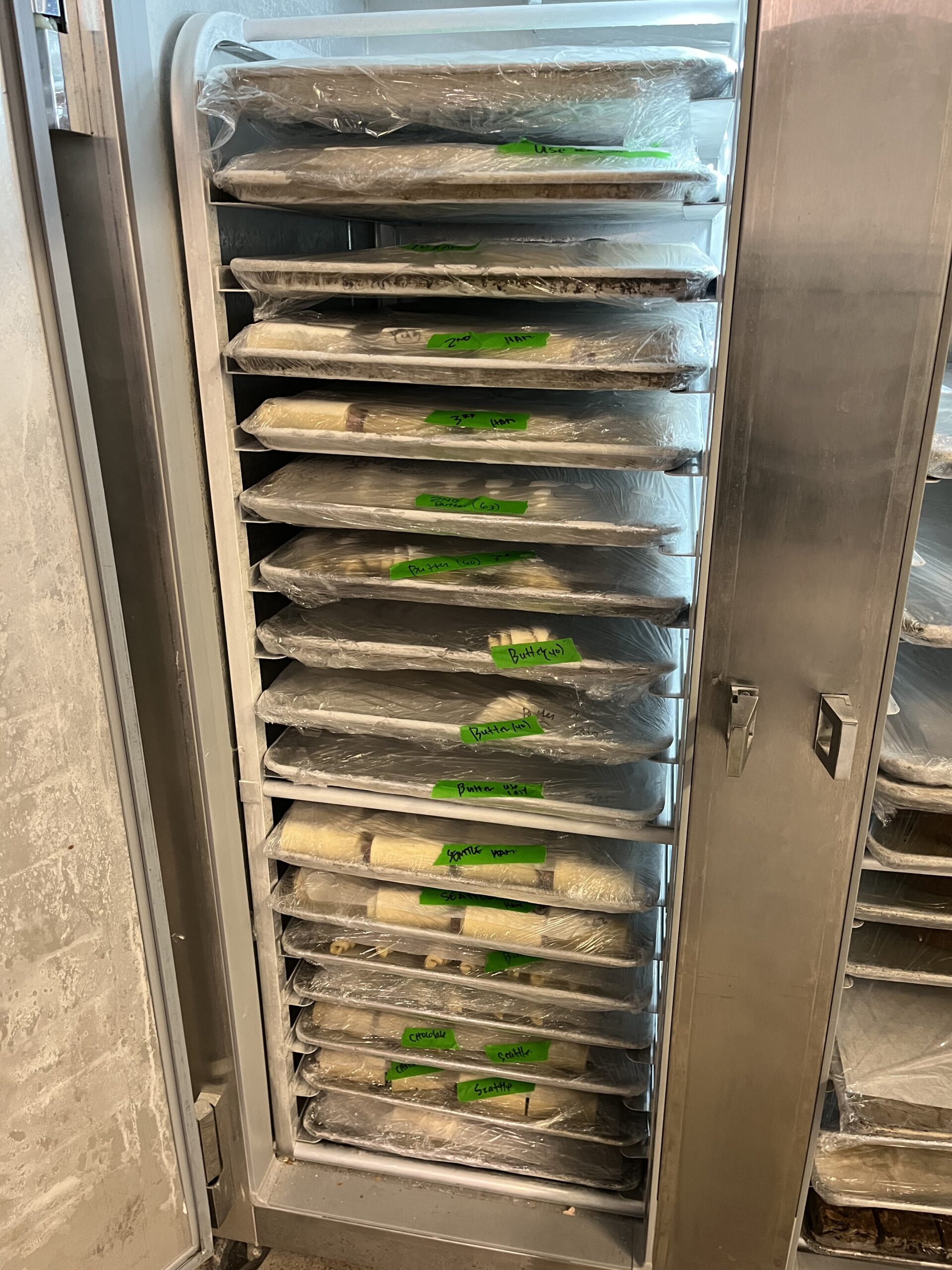
One of the biggest mindset shifts for new bakers is realizing that refrigeration and freezing aren't just for storage.
They're production tools.
Refrigeration allows fermentation to slow until you're ready for the next step.
Freezing lets you separate labor-intensive tasks across several days - or even weeks.
That flexibility means dough can be mixed when you have time, shaped when it's convenient, and baked when it's needed.
Rather than asking:
"How far ahead can I make this?"
Ask:
"Which stage can I finish today?"
That small shift creates a calmer, more predictable workflow.
Questions to Ask Before You Bake
Instead of asking:
"What should I bake today?"
Try asking:
- What can I prepare today?
- What can be refrigerated?
- What can be frozen?
- What can be portioned?
- What can be baked later?
- What can be finished just before serving?
Those questions naturally turn recipes into production plans.
Workflow & Efficiency: Start Here
Understanding Your Business
Creating Better Workflow
- 👉 Freezer-Friendly Workflow - The Professional Baker's Approach
- 👉 10 Tips for Consistent Baking Success (Bake Like a Pro at Home)
- 👉 How to Store Cakes (And Why Freezing Actually Improves Them)
- 👉 Freeze Pie Dough Like a Pro
- 👉 Can You Free Croissants
Making Sure the Numbers Work
Final Thoughts
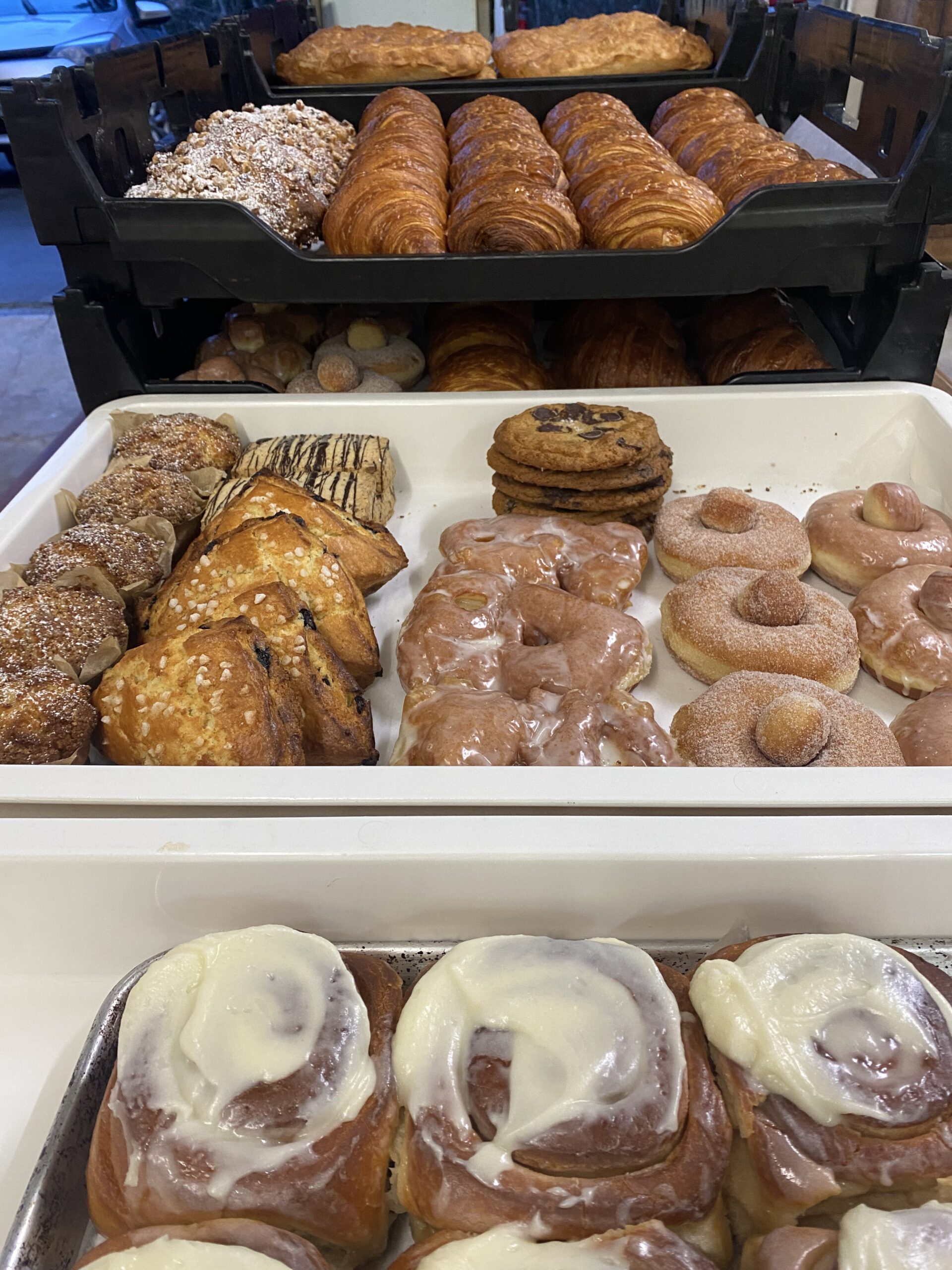
One of the biggest misconceptions about professional baking is that professional bakers simply work faster.
Experience certainly makes many tasks quicker, but speed alone isn't how a small team fills a pastry case with hundreds - or sometimes thousands - of baked goods.
The real advantage is planning.
Instead of trying to complete every product in a single day, professional bakers spread production across multiple stages, allowing each task to happen when it's most efficient.
That's a mindset any baker can adopt.
Whether you're baking for your family, preparing for Thanksgiving, or filling orders for a cottage bakery, the goal isn't to do everything today.
It's to make tomorrow easier.
Pocket Baker Perspective
When I was building a bakeshop, someone I had just hired asked how the two of us were ever going to produce all the pastries I had planned.
At the time, the menu was actually quite small - a handful of pastries, desserts, and breads that we'd supply to restaurants within our group while we built enough momentum to start selling at farmers markets.
To my new baker-in-training, even that seemed like far too much work for two people.
What she hadn't experienced yet was the idea of working ahead.
Eventually, the two of us were producing pastries for two restaurants, bread for three restaurants, and enough product to run a Saturday market from the same bakeshop.
We didn't accomplish that by becoming dramatically faster.
We accomplished it by making almost nothing from start to finish on the day it was needed.
I've also worked in cafés where most baked goods were mixed, baked, and served the same day. That isn't inherently wrong. Not every kitchen has the refrigerator space, freezer capacity, staffing, or equipment to spread production over several days.
The goal isn't to copy another bakery's production system.
It's to build one that works within the limits of your own kitchen.
For us, that meant mixing, shaping, portioning, freezing, and preparing components ahead of time so bake day remained manageable.
From the customer's perspective, the pastry case simply looked full.
Behind it were several days of thoughtful planning and production.