



Introduction
Fresh cinnamon rolls are one of the most rewarding things you can pull from the oven.
They can also be time-consuming.
Between mixing the dough, allowing it to ferment, rolling, filling, shaping, proofing, baking, and frosting, making cinnamon rolls from start to finish can easily take half a day.
Because of that, I often see home bakers asking the same question:
"How do I make cinnamon rolls without waking up at 2 or 3 A.M.?"
I also see another piece of advice repeated just as often:
"Don't refrigerate or freeze shaped cinnamon rolls - they won't turn out the same."
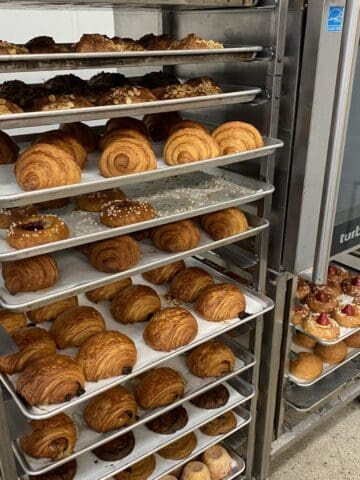
As a professional baker, that simply wasn't my experience.
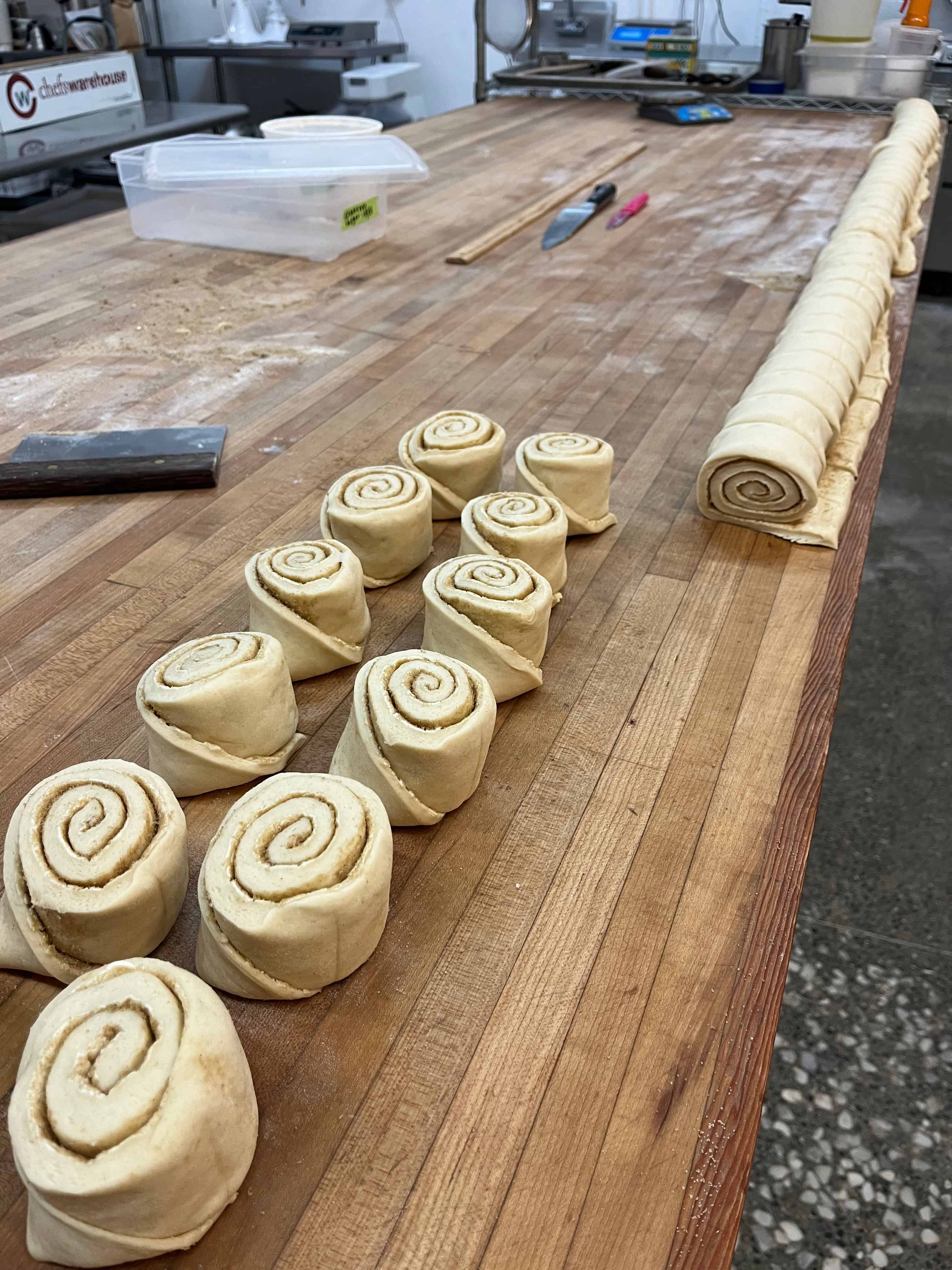
I've refrigerated dough after bulk fermentation, refrigerated shaped cinnamon rolls overnight, and frozen trays of shaped, unproofed rolls to bake throughout the week.
Once a week, I'd mix a large batch of dough, allow it to ferment, roll it out, fill it, shape it, and freeze enough cinnamon rolls to sell over several days.
The cinnamon rolls were still baked fresh.
The difference was that the most labor-intensive work had already been completed.
That's how many professional bakeries make fresh cinnamon rolls practical - and it's a workflow that works just as well at home.
Jump to:
- Introduction
- Quick Answer: Can You Make Cinnamon Rolls Ahead of Time?
- The Best Time to Make Cinnamon Rolls Ahead Depends on Your Schedule
- Why Make Cinnamon Rolls Ahead?
- Before You Choose a Make-Ahead Method
- Option 1: Refrigerate the Dough After Bulk Fermentation
- Option 2: Refrigerate Shaped Cinnamon Rolls Overnight
- Option 3: Freeze Shaped, Unproofed Cinnamon Rolls
- Option 4: Freeze Baked Cinnamon Rolls
- Which Method Is Best?
- Do You Need Extra Yeast When Freezing Cinnamon Rolls?
- Cinnamon Rolls: Start Here
- FAQ
- Final Thoughts
- Pocket Baker Perspective
- Get the FREE Profitable Baker Pricing Calculator
Quick Answer: Can You Make Cinnamon Rolls Ahead of Time?
👉 Yes.
Cinnamon rolls can be prepared ahead at several stages, including:
- refrigerating the dough after bulk fermentation
- refrigerating shaped rolls overnight
- freezing shaped, unproofed rolls
- freezing baked cinnamon rolls
Each method offers different advantages depending on your schedule.
For most home bakers, refrigerating shaped cinnamon rolls overnight is the simplest way to enjoy fresh cinnamon rolls the next morning.
For longer storage, freezing shaped rolls usually provides the greatest flexibility.
The Best Time to Make Cinnamon Rolls Ahead Depends on Your Schedule
| If you want... | Best method |
|---|---|
| Fresh cinnamon rolls tomorrow morning with minimal work | Refrigerate shaped rolls overnight |
| More flexibility the next day or need to save refrigerator space | Refrigerate dough after bulk fermentation |
| To prepare several days or weeks ahead | Freeze shaped, unproofed rolls |
| To batch production for markets or a larger menu | Freeze shaped, unproofed rolls |
| The quickest option for busy mornings or leftovers | Freeze baked cinnamon rolls |
Every one of these methods can produce excellent cinnamon rolls.
The difference isn't quality - it's when the work happens.
Why Make Cinnamon Rolls Ahead?
Most people think making cinnamon rolls ahead is simply about saving time.
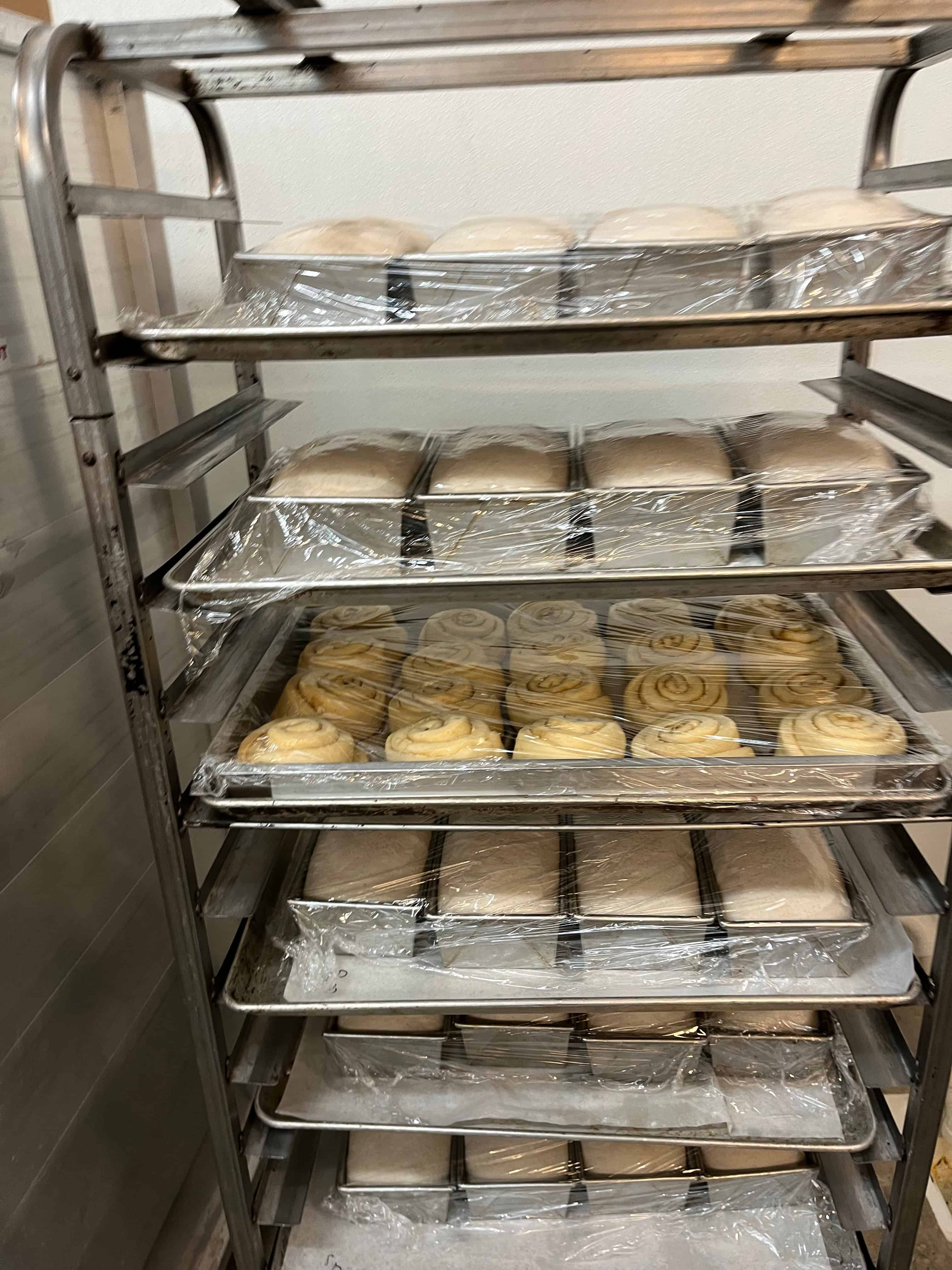
In professional kitchens, it's really about workflow.
Working ahead allows you to:
- spread production across several days
- avoid starting work in the middle of the night
- reduce stress on bake day
- fit baking around your schedule
- enjoy fresh cinnamon rolls with far less last-minute work
Rather than trying to complete every step in one long baking session, professional bakers separate production into stages and decide when each stage should happen.
That's the real advantage of planning ahead.
Before You Choose a Make-Ahead Method
One misconception worth clearing up is that refrigeration or freezing somehow produces inferior cinnamon rolls.
In most cases, that's not the problem.
A refrigerator can't fix dough that wasn't properly mixed or fermented in the first place.
Before slowing fermentation, make sure the dough has been:
- mixed until well developed
- kept within an appropriate final dough temperature
- allowed to complete the stage of fermentation you're planning to stop
If the dough is underdeveloped, excessively warm, or underproofed, refrigeration and freezing simply preserve those problems.
When the dough is properly prepared, however, all of the methods below can produce excellent results.
👉 Related: Why Your Cinnamon Rolls Turn Out Dense, Dry, or Flat
Option 1: Refrigerate the Dough After Bulk Fermentation
Best for: Bakers who want flexibility.
Once the dough has completed its first rise, transfer it to the refrigerator.
You can either:
- leave it in its bulk fermentation container, or
- roll it into a rectangle first if that better fits your refrigerator space.
The next day:
- roll (if needed)
- spread the filling
- shape
- proof
- bake
Why Choose This Method?
Refrigerating the dough in bulk works especially well when:
- you're short on time the first day and want to finish production later
- cinnamon rolls are a major part of your cottage bakery menu and you'll be shaping a larger quantity at once
- refrigerator or freezer space is limited and storing full trays of shaped rolls isn't practical
Cold dough is also firmer and often easier to roll and handle, which can reduce the amount of additional flour needed during shaping.
For larger batches, refrigerating in bulk also takes up considerably less space than storing multiple pans or sheet trays of shaped cinnamon rolls.
Things to Keep in Mind
This method leaves more work for the following day. The dough still needs to be rolled, filled, shaped, proofed, and baked, so it's best when storage space or production flexibility matters more than minimizing work on bake day.
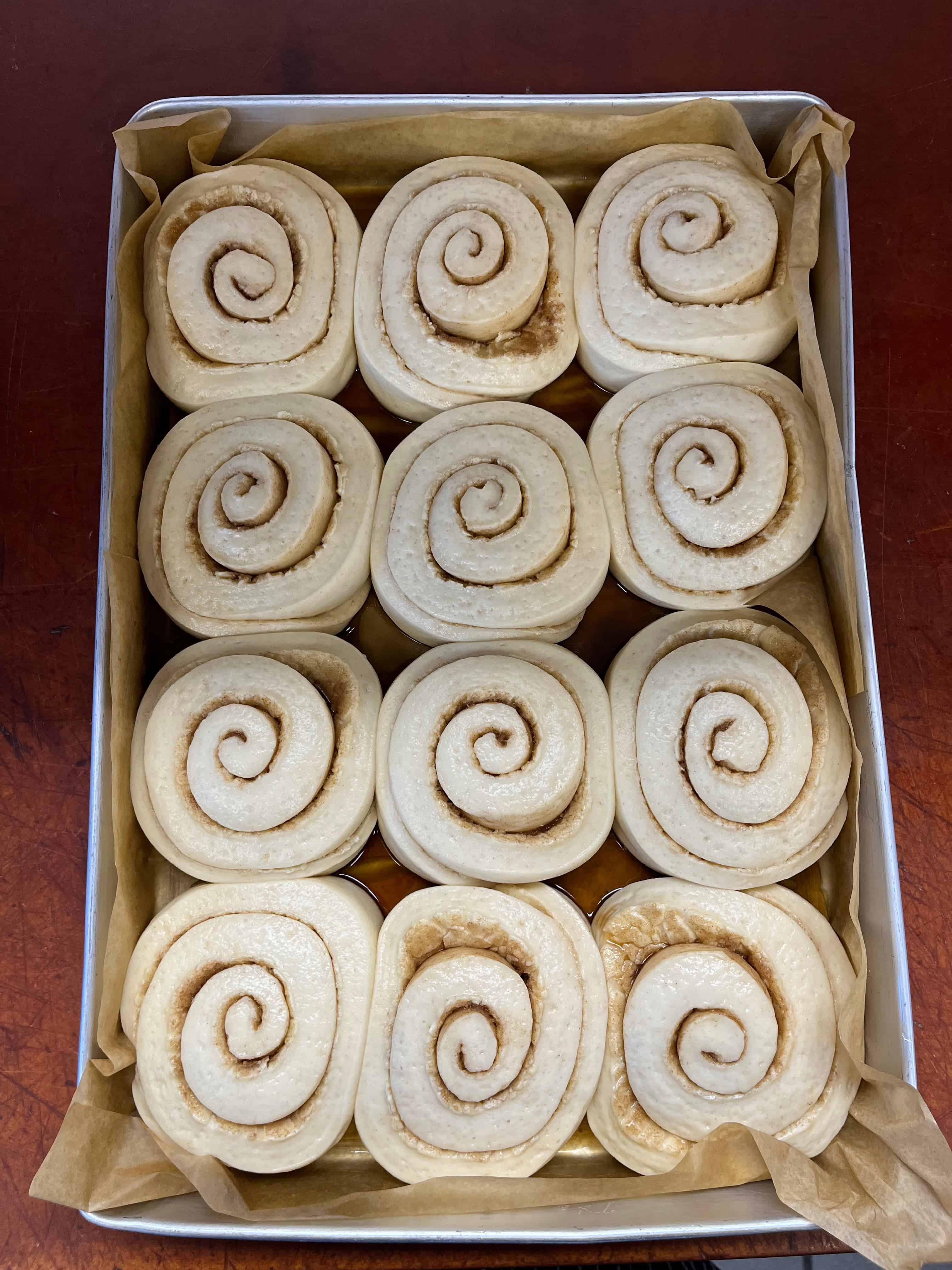
Option 2: Refrigerate Shaped Cinnamon Rolls Overnight
Best for: Fresh cinnamon rolls the next morning with minimal work.
This is the method I recommend most often for home bakers.
After shaping:
- arrange the rolls in the baking pan
- cover well
- refrigerate overnight
The next morning:
- allow them to finish proofing
- bake
- frost
Why Choose This Method?
Nearly all of the active work has already been completed.
Instead of mixing, fermenting, rolling, filling, and shaping dough first thing in the morning, you're simply allowing the rolls to finish proofing before they're baked.
For holidays, weekend breakfasts, and family gatherings, this is one of the easiest ways to serve freshly baked cinnamon rolls without starting hours ahead of time.
Things to Keep in Mind
Cold dough takes longer to proof than dough that has just been shaped, so refrigerated cinnamon rolls will usually need additional time at room temperature before baking.
Exactly how long depends on the temperature of the dough, your refrigerator, and the temperature of your kitchen.
Rather than relying on a specific amount of time, watch the rolls themselves. They should be noticeably puffy and well proofed before going into the oven.
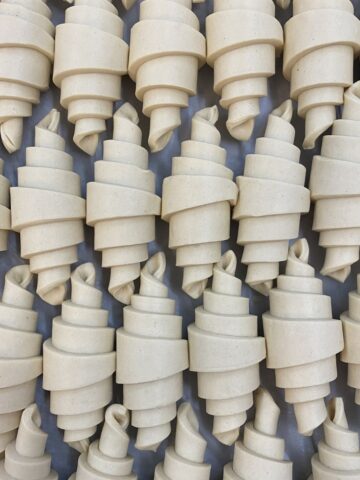
Option 3: Freeze Shaped, Unproofed Cinnamon Rolls
Best for: Holidays, markets, and baking several days or weeks later.
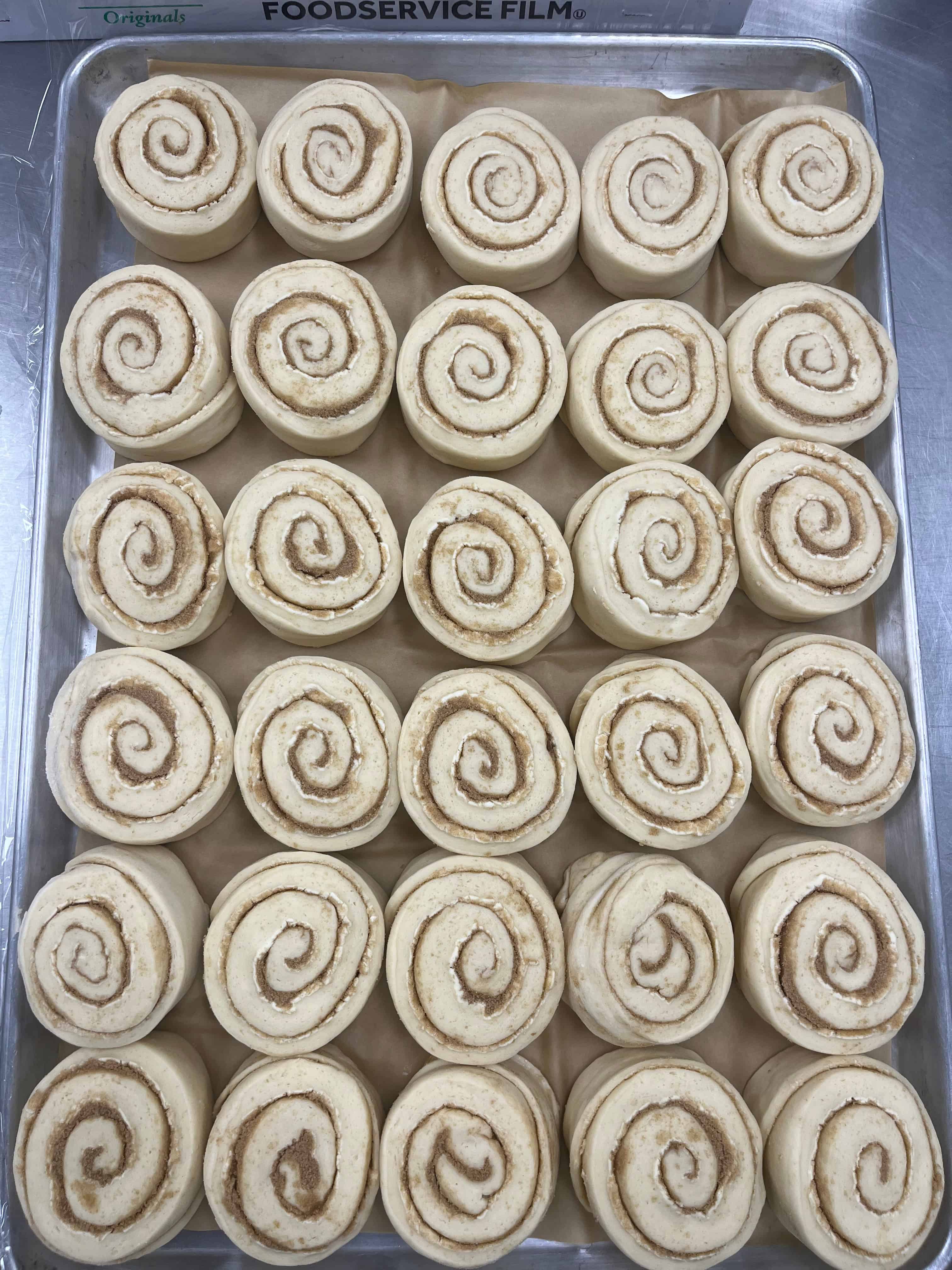
After shaping:
- place the rolls in the pan or on a sheet tray
- wrap well
- freeze before proofing
When ready to bake:
- thaw overnight in the refrigerator
- allow the rolls to proof until noticeably puffy
- bake
- frost
Why Choose This Method?
This was my preferred method whenever I wanted cinnamon rolls available throughout the week.
The most labor-intensive part of the process had already been completed. I could prepare a larger batch at once, freeze the shaped rolls, and pull only what I needed for each bake.
When I was ready to use them, all that remained was thawing, proofing, baking, and frosting.
This method is especially useful for cottage bakers with several products on the menu because it separates cinnamon roll production from bake day.
Things to Keep in Mind
Proper wrapping is essential.
Poorly wrapped rolls may:
- dry out
- develop freezer burn
- proof unevenly
- produce less volume
Frozen cinnamon rolls also need enough time to thaw before they can proof properly. Thawing overnight in the refrigerator brings them back gradually, but they'll still be cold when they come out.
Cold dough ferments more slowly, so expect the final proof to take longer than it would with freshly shaped cinnamon rolls. The exact amount of time will depend on the temperature of the rolls and the environment they're proofing in.
Don't rush this stage or assume the yeast was damaged because the rolls aren't rising quickly. Give the dough time to warm up and watch for the same signs of proper proofing you would with freshly made rolls: the rolls should become noticeably puffy and expanded before baking.
For best quality and yeast performance, try to use frozen rolls within a few weeks.
Option 4: Freeze Baked Cinnamon Rolls
Best for: Leftovers, meal prep, and quick breakfasts.
After baking:
- cool completely
- wrap well
- freeze
When ready to enjoy:
- thaw
- warm gently
- frost after warming, if desired
Why Choose This Method?
This is the quickest option.
Although nothing quite matches a cinnamon roll baked that morning, baked cinnamon rolls freeze surprisingly well and make busy mornings much easier.
Things to Keep in Mind
If using cream cheese frosting, it's recommended to frost after reheating for the freshest texture and appearance.
Which Method Is Best?
| Method | Best For |
|---|---|
| Refrigerate after bulk fermentation | Flexibility the next day, larger batches, or when refrigerator/freezer space is limited. Bulk dough takes up less room than trays of shaped rolls. |
| Refrigerate shaped rolls | Fresh cinnamon rolls the next morning with minimal work. Allow extra time for the cold rolls to finish proofing before baking. |
| Freeze shaped, unproofed rolls | Holidays, markets, cottage bakeries, or preparing several days or weeks ahead. Thaw overnight, then allow plenty of time for the cold dough to proof fully. |
| Freeze baked rolls | Leftovers, quick breakfasts, or when convenience matters more than baking fresh. |
There isn't one "right" answer.
The best method depends on your schedule, your available refrigerator and freezer space, and how much work you'd like left on bake day.
Do You Need Extra Yeast When Freezing Cinnamon Rolls?
Not necessarily.
You'll sometimes see recommendations to increase the amount of yeast in dough that will be frozen because some yeast activity can be lost during frozen storage.
For cinnamon rolls that are properly wrapped, frozen for a relatively short period, thawed gradually, and given adequate time to proof, I've never found additional yeast necessary.
More often, the issue is simply temperature.
After thawing overnight in the refrigerator, the rolls are still cold. Cold dough ferments slowly, so the final proof may take considerably longer than it would with freshly shaped rolls.
Don't assume the yeast has been damaged simply because the rolls aren't rising quickly. Allow the dough to warm and judge the proof by how the rolls look and feel rather than by the clock.
For the best performance, wrap the rolls thoroughly to prevent drying and freezer burn, and avoid storing them frozen for extended periods.
Cinnamon Rolls: Start Here
If you want to make better cinnamon rolls - or make them fit more easily into your schedule - it helps to understand how the dough develops, how to recognize when it's ready, and where you can work ahead.
Step 1: Understand the Bread-Making Process
Cinnamon roll dough follows the same basic stages as other yeast-raised breads.
👉 Bread Making Explained: The 12 Steps That Matter
Step 2: Build a Well-Developed Dough
Proper gluten development gives cinnamon rolls the structure they need to rise while maintaining a soft, light texture.
👉 How to Knead Dough Properly (And How to Know When It's Ready)
👉 Can You Overknead Dough? (Why It's Less Common Than You Think)
Step 3: Understand Fermentation & Proofing
Whether you're baking cinnamon rolls the same day, refrigerating them overnight, or freezing them, proper fermentation and proofing still matter.
👉 How Long Should Bread Proof? (And How to Know When It's Ready)
👉 Do You Really Need to Proof Yeast? (Instant vs Active Dry Explained)
Step 4: Troubleshoot Your Cinnamon Rolls
If your cinnamon rolls turn out dense, dry, flat, or don't rise as expected, start by looking at the dough and the process - not just the recipe.
👉 Troubleshooting Cinnamon Rolls (Fix Dense, Dry or Flat Rolls)
👉 Are All Cinnamon Roll Recipes Basically the Same? (Here's What Actually Matters)
Step 5: Plan Your Production
Once you understand the dough, you can use refrigeration and freezing to make cinnamon rolls fit your schedule rather than completing the entire process at once.
👉 Why Professional Bakers Rarely Start From Scratch Every Morning
👉 Freezer-Friendly Workflow – The Professional Baker's Approach
FAQ
Can I refrigerate cinnamon roll dough overnight?
Yes. After bulk fermentation, refrigerate the dough and continue rolling, shaping, proofing, and baking the next day.
Can I refrigerate shaped cinnamon rolls overnight?
Absolutely.
This is one of the easiest ways to enjoy fresh cinnamon rolls without waking up before dawn.
Should cinnamon rolls be proofed before freezing?
No.
Freeze them after shaping and before the final proof.
Can I freeze baked cinnamon rolls?
Yes.
Allow them to cool completely before wrapping.
How long do raw cinnamon rolls last in the freezer?
For best quality, use them within a few weeks, although they'll remain safe longer if properly wrapped.
Why didn't my frozen cinnamon rolls rise?
Common causes include:
- inadequate wrapping
- freezer burn
- freezing too long
- insufficient thawing
- underproofing after thawing
Final Thoughts
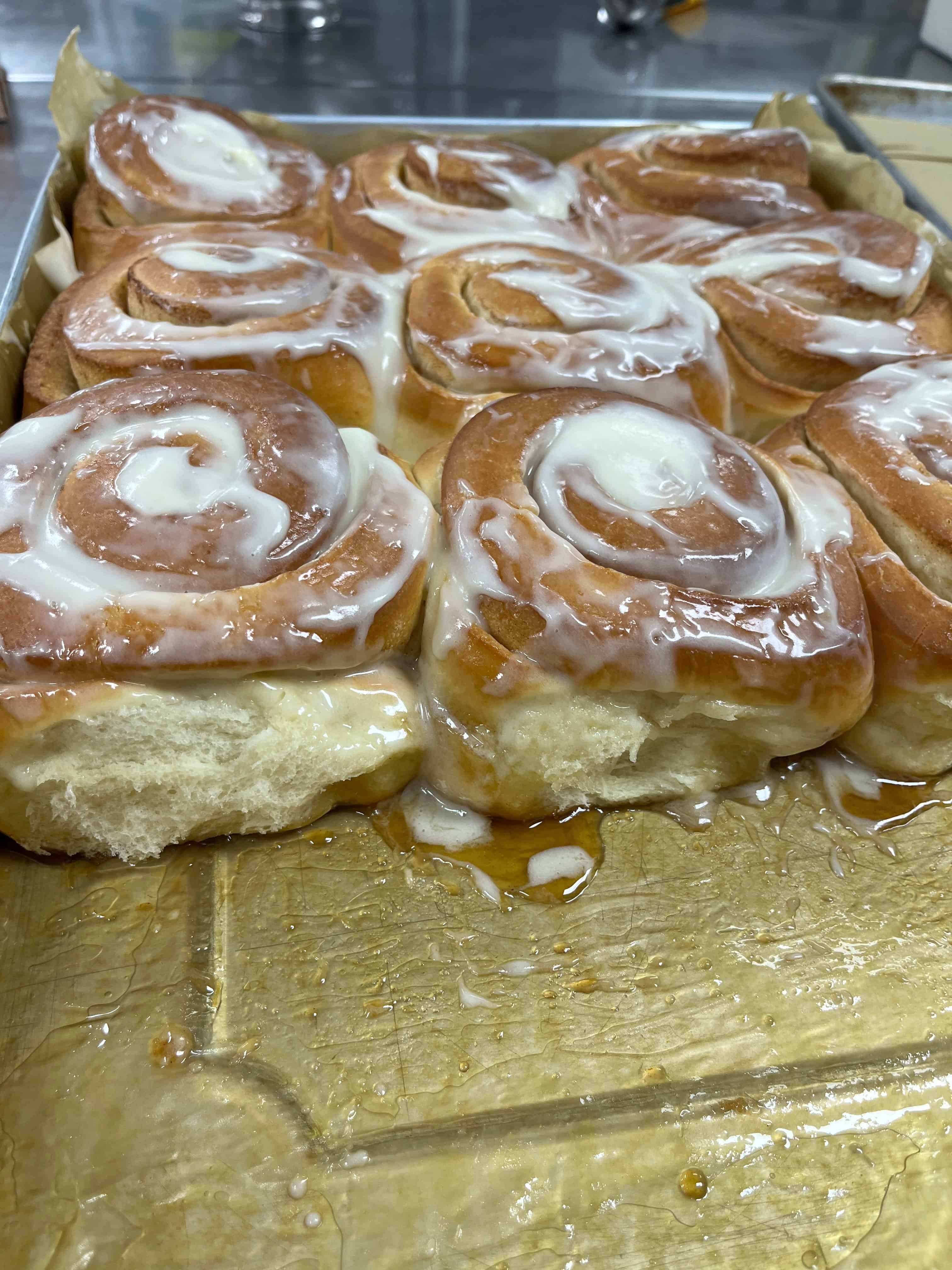
Making cinnamon rolls ahead of time isn't about taking shortcuts.
It's about separating production from baking.
Whether you refrigerate the dough after bulk fermentation, shape the rolls the night before, freeze them for a future bake, or keep baked rolls in the freezer for busy mornings, each method solves a different scheduling challenge.
The best method is the one that fits your schedule, your kitchen, and the way you like to bake.
Pocket Baker Perspective
One of the biggest differences between professional bakers and home bakers isn't the recipe - it's how we think about time.
Recipes are far more flexible than they first appear.
They're simply a series of stages that can often be paused, slowed, or continued later if you understand what the dough is doing.
For professional bakers, the refrigerator and freezer aren't just places to store food. They're production tools used to control fermentation and spread work across several days.
If your bakery focuses primarily on cinnamon rolls, refrigerating dough after bulk fermentation and rolling it fresh each day may be the most efficient system. Refrigerator space is often easier to come by than freezer space.
My bakery was different.
We produced breads, pastries, desserts, and other viennoiserie every day. Freezing shaped cinnamon rolls allowed us to mix one large batch, complete the most labor-intensive work all at once, and bake only what we needed throughout the week.
And if you're baking at home, maybe your goal is simply to enjoy fresh cinnamon rolls on Christmas morning without waking up at 2 A.M. In that case, shaping the rolls the day before and letting them finish proofing the next morning may be the perfect solution.
There usually isn't one "correct" production method.
There's the method that best fits your schedule, your equipment, and the way you like to bake.