


introduction
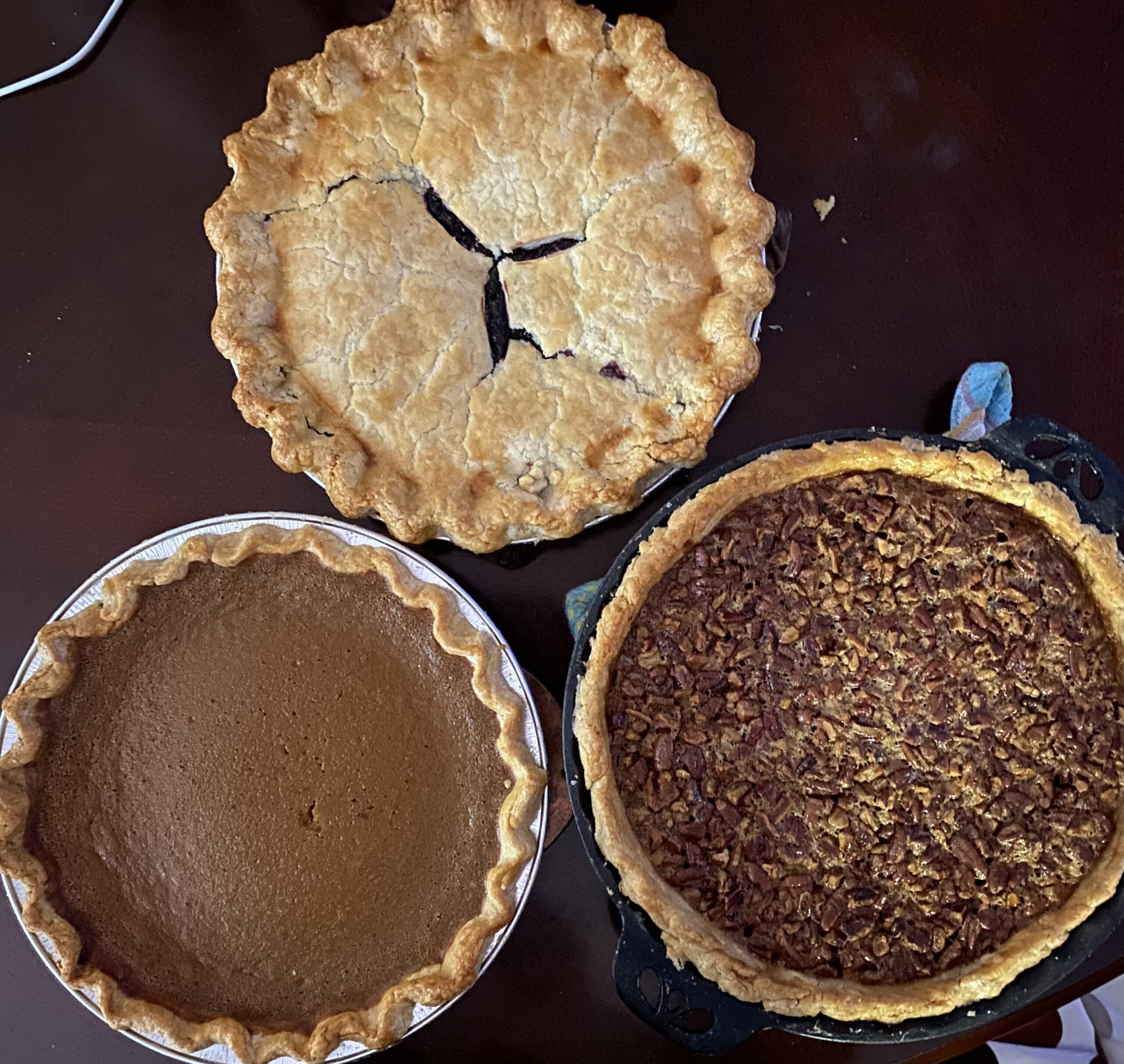
If you're anything like me, you have grand plans for Thanksgiving dinner. Scratch-made pies and dinner rolls are always on my list, and if you're hosting, you may also want a few extra treats or breakfast items for the guests staying in your house.
But alongside everything else that goes into preparing Thanksgiving dinner - not to mention entertaining guests - it can be overwhelming to think about fitting in all that baking too.
What if you could still make the Thanksgiving menu you want without doing most of the labor-intensive baking during Thanksgiving week?
You can.
Professional bakeries rarely complete every product from start to finish in a single day. Instead, production is spread across several days - or even weeks - so each stage happens when it makes the most sense.
I've used this approach throughout my professional baking career, and it works just as well when you're planning Thanksgiving at home.
Here, I'm going to show you how to think like a professional baker: we'll start with the menu, break each bake into stages, and work backward from Thanksgiving Day to create a production schedule that leaves very little baking for the holiday itself.
Want to understand the system behind it first? Read Why Professional Bakers Rarely Start From Scratch Every Morning.
Jump to:
- introduction
- Quick Answer: How Far Ahead Can You Start Thanksgiving Baking?
- Start With What You Actually Want to Bake
- Think in Stages, Not Finished Products
- Work Backward From Thanksgiving Day
- Use the Freezer to Separate Production From Baking
- Make the Schedule Fit Your Kitchen
- Make One Batch Do More
- Build Your Own Thanksgiving Baking Schedule
- Create Your Thanksgiving Baking Production Calendar
- Final Thoughts
- Pocket Baker Perspective
- Holiday Baking & Production: Start Here
- Get the FREE Profitable Baker Pricing Calculator
Quick Answer: How Far Ahead Can You Start Thanksgiving Baking?
👉 Much earlier than Thanksgiving week.
Pie dough, shaped dinner rolls, portioned cookie dough, scones, breads, and even some assembled pies can all be prepared at different stages ahead of time.
The goal isn't to make everything as early as possible.
It's to identify which stages can be completed ahead without sacrificing quality, then move those jobs away from the days when you'll already have plenty to do.
If you're new to this approach, my Freezer-Friendly Workflow explains how professional bakers use the freezer as part of production rather than simply as long-term storage.
Start With What You Actually Want to Bake
Before you decide when to bake anything, decide what you actually want to serve.
That's a fair amount of baking.
But looking at the finished menu can be misleading because it makes each product look like one large job.
It isn't.
Once we break those products into stages, the workload becomes much easier to spread across the month.
Think in Stages, Not Finished Products
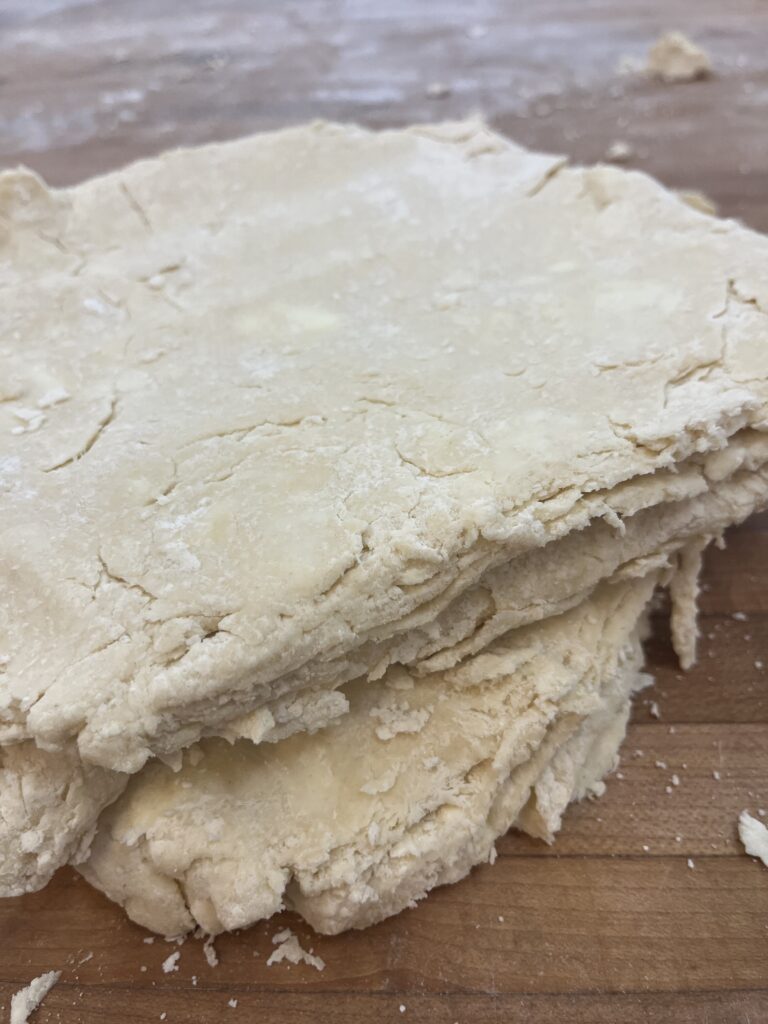
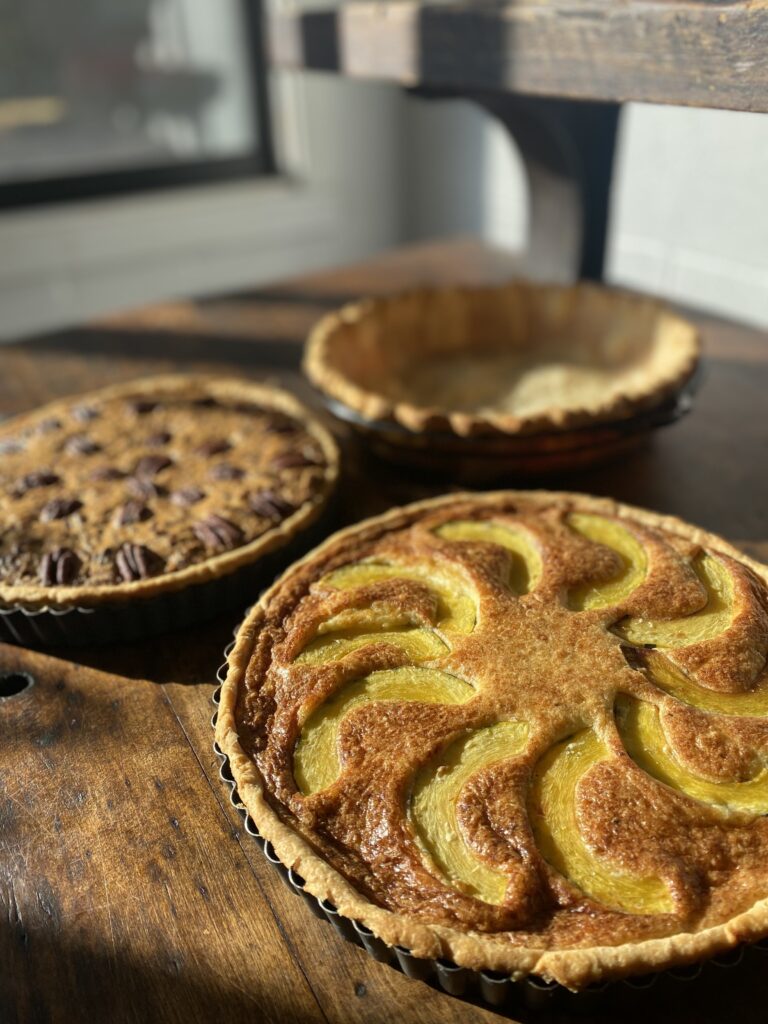
Take pie as an example.
“Make pie” might actually mean:
Make dough → rest → roll → shape → prepare filling → assemble → bake → cool
There's no rule that says all of those stages have to happen on the same day.
You might make pie dough one weekend and freeze it. An apple pie might be assembled and frozen ahead, while pumpkin and pecan pie components are prepared separately and brought together closer to Thanksgiving.
If pie is part of your menu, Freeze Pie Dough Like a Pro goes into the different stages at which pie dough can be frozen and when each method makes sense.
The same production thinking applies to other baked goods.
Cookie dough can be mixed and portioned before it's frozen. Dinner rolls can be shaped and frozen so much of the labor is already finished. Bread that will eventually become toast, sandwiches, or stuffing can be baked, sliced and frozen well ahead.
For the individual methods, see:
The important idea for this schedule is simpler:
Instead of asking, "When should I make this" ask, "When should I complete each stage?"
Work Backward From Thanksgiving Day
Once you know what you're making and which stages can happen ahead, start with the date you need everything and work backward.
For this menu, that date is Thursday, November 26.
Here's how I spread the production across November.
Thanksgiving Baking Calendar — November 2026
This example shows how Thanksgiving baking can be spread across the month, leaving only a few finishing tasks for Thanksgiving Day.
The empty days are just as important as the busy ones.
A large portion of the baking has already been handled by the middle of November. November 23 and 24 are completely free of baking tasks, and by Thanksgiving Day, most of the production is finished.
That's what a useful production schedule should do.
The goal isn't to fill every available day with work. It's to use the days when you do have time so the busiest part of the holiday doesn't require you to do everything at once.
Use the Freezer to Separate Production From Baking
A large part of this schedule works because the freezer allows us to pause production at useful stages.
Sometimes that means freezing a completely finished product. Other times, it means freezing something before it's baked.
In this example, milk bread can be baked, sliced, and frozen because it will eventually become toast and sandwiches. Cornbread can be baked and frozen because it will later become stuffing.
But dinner rolls, scones, and cookie dough can be frozen earlier in production so they can be baked closer to when they're served.
That's an important distinction:
Freshly baked doesn’t mean made from start to finish that day.
If you want to go deeper into choosing what to freeze before or after baking, see Freezer-Friendly Workflow — The Professional Baker's Approach.
Make the Schedule Fit Your Kitchen
My calendar is an example, not a schedule you need to copy.
Your menu will be different. So will your available time, refrigerator space, freezer space, and equipment.
Storage is especially easy to overlook.
A tray of shaped rolls takes considerably more space than a ball of dough. An assembled pie takes more freezer space than disks of pie dough. And refrigerator space becomes particularly valuable during Thanksgiving week when everything else for dinner begins competing for room.
So when deciding which stage to complete ahead, consider both time and space.
If you have plenty of freezer room but little time during Thanksgiving week, completing more production early may make sense.
If freezer space is limited, you may choose to hold something at an earlier stage and finish it later.
There isn't one correct production schedule.
The best plan is the one that works with your menu, your time, and the kitchen you actually have.
Make One Batch Do More
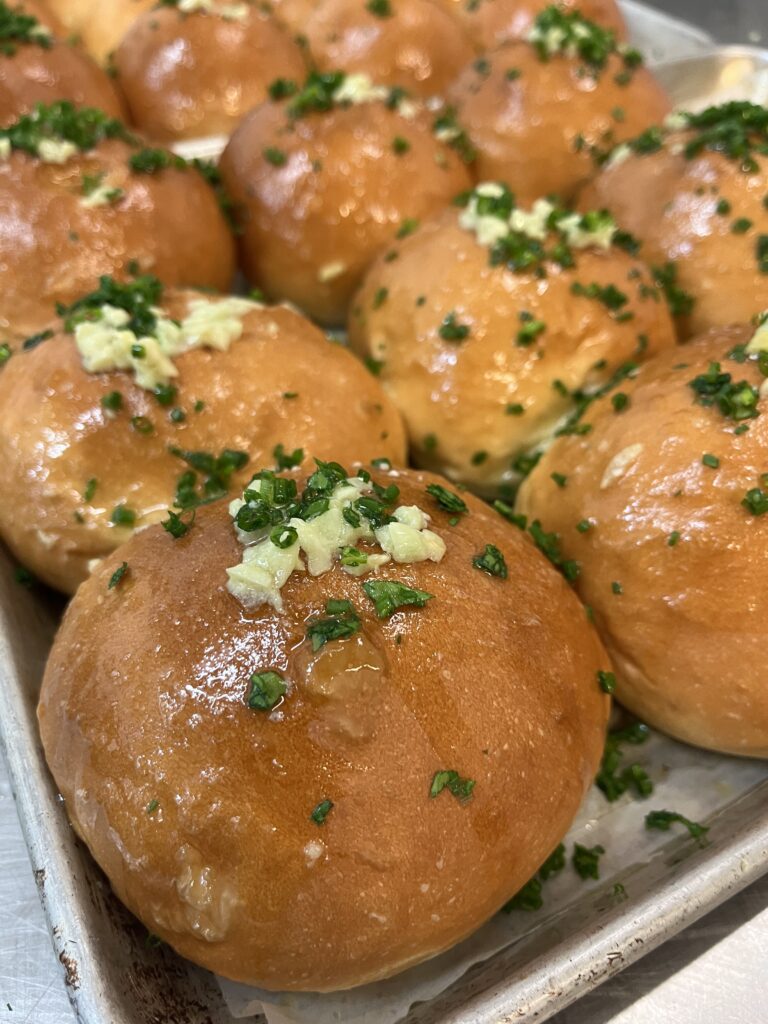
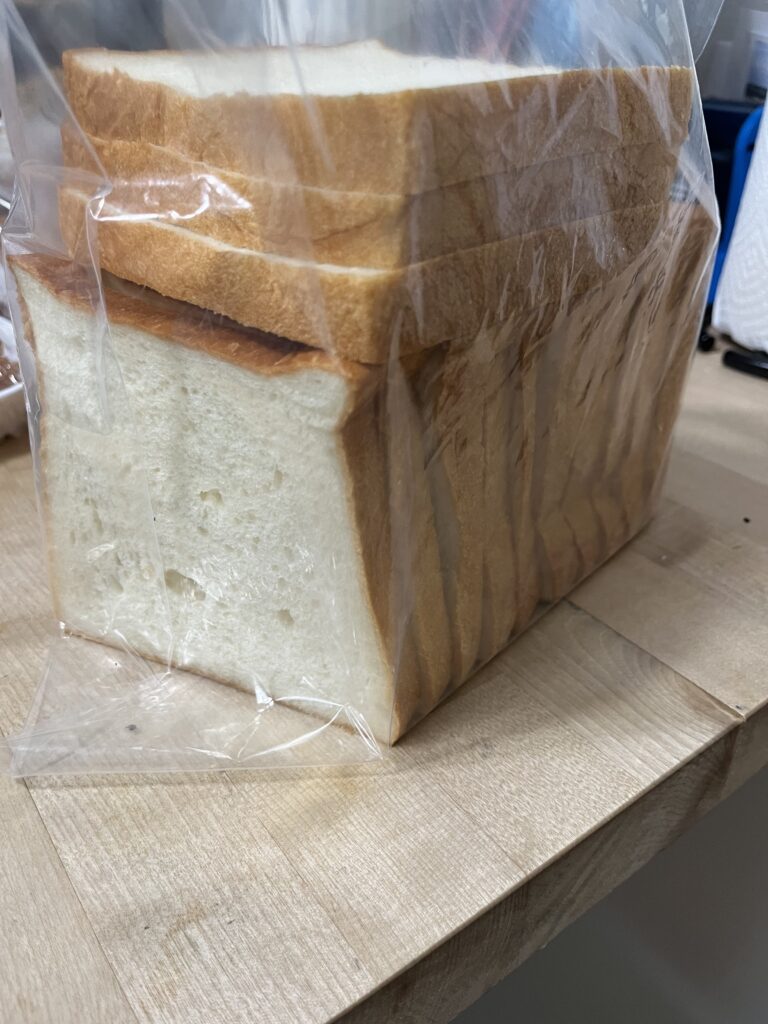
There's another reason I included milk bread, scones, and cookies in this menu.
Thanksgiving dinner isn't the only time people need to eat - especially when you're hosting overnight guests.
But that doesn't mean you need to create an entirely separate breakfast and snack menu.
The milk bread you're already producing can become dinner rolls, toast for breakfast, and Thanksgiving leftover sandwiches.
Frozen pumpkin scones give you an easy breakfast option. Portioned molasses cookie dough lets you bake a few cookies when you want them rather than starting another dessert from scratch.
This is something I consider when planning production professionally, too: if I'm already doing the work, how else can that production be useful?
One production session can solve several needs later.
Build Your Own Thanksgiving Baking Schedule
Now you can apply the same process to your own menu.
Start with what you want to serve. Then break each item into stages and work backward from Thanksgiving.
As you plan, ask:
- What can I completely finish ahead?
- What can I partially prepare and freeze?
- What genuinely benefits from being baked closer to serving?
- How much refrigerator and freezer space will each option require?
- What can I move off Thanksgiving week entirely?
You don't need to make your schedule look like mine.
You may have one pie instead of three. Maybe you don't make bread. Perhaps Saturdays are your only available production days.
The purpose of the schedule is to make your menu fit your life, not to make your life fit someone else's schedule.
Create Your Thanksgiving Baking Production Calendar
Use the planner below to add your own baking tasks. Choose the date and mark each job as Prep, Freeze, or Bake so you can see how the work is distributed before Thanksgiving.
Build Your Thanksgiving Baking Schedule
Start with the day you need everything, then work backward. Add each task to your calendar and mark it as Prep, Freeze, or Bake.
November 2026
“Make the pie” may actually mean make the dough, roll the crust, prepare the filling, assemble, freeze, and bake—and those jobs don't have to happen on the same day.
Final Thoughts
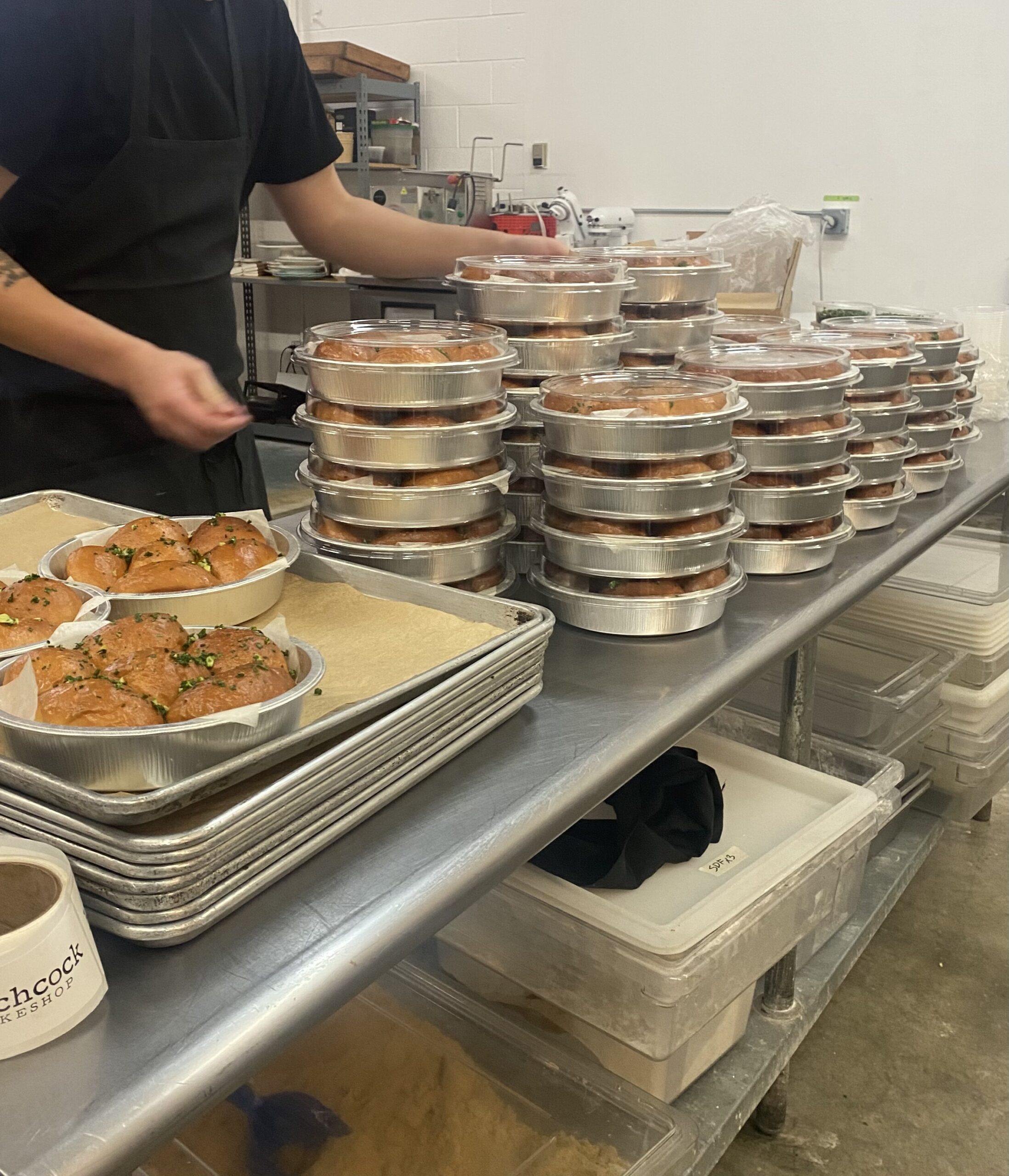
Preparing Thanksgiving baking ahead isn't about seeing how early you can make everything.
It's about deciding when each stage makes the most sense.
Some things can be completely finished weeks ahead. Others are better prepared and frozen so they can be baked fresh. Larger projects can be divided into components and spread across several days.
Once you stop treating every bake as one start-to-finish job, Thanksgiving baking becomes much easier to fit around everything else you're doing.
Pocket Baker Perspective
When I worked in professional bakeries, as you can imagine, Thanksgiving and Christmas were two of our busiest times of the year.
There was simply no way two people could produce all the pies, rolls, breads, breakfast pastries, cookies, and everything else we needed in the span of a few days.
So we didn't.
Depending on staffing and the size of production, holiday prep in a professional bakeshop can begin weeks - sometimes even a month - before the holiday. We might add just one or two extra tasks to our normal production each week, such as mixing pie dough or rolling and shaping crusts.
Little by little, the work gets done.
Then, as the holiday gets closer, we're not suddenly faced with producing everything at once. Much of the labor-intensive work has already been completed, leaving only the stages that make sense to do closer to serving - proofing, baking, and finishing.
As a home or cottage baker, you can apply the same principle on a much smaller scale.
You may not need hundreds of pies or dozens of trays of rolls, but the production principle stays the same: don't wait until your busiest days to do work that could have been done earlier.
Spread those tasks across the time you have available, and when Thanksgiving arrives, you're finishing your production plan - not starting it.
Holiday Baking & Production: Start Here
Plan Your Production
👉 Why Professional Bakers Rarely Start From Scratch Every Morning
Learn how professional bakers spread production across multiple days instead of starting every product from scratch.
👉 Freezer-Friendly Workflow — The Professional Baker's Approach
Learn how to use your freezer as part of your production system.
Make Individual Bakes Ahead
👉 Freeze Pie Dough Like a Pro
Choose when to freeze pie dough based on your schedule and available space.
👉 Can You Make Dinner Rolls Ahead of Time?
Compare refrigeration, freezing shaped rolls, and freezing baked rolls.
👉 The Pro Method for Make-Ahead Cookie Dough
Mix and portion cookie dough ahead so baking can happen when you need it.
👉 Can You Make Cinnamon Rolls Ahead of Time?
Useful for holiday breakfasts and overnight guests.