

If your cinnamon rolls turn out dense, dry, or flat - even when you follow the recipe - you’re not alone.
Cinnamon rolls have a reputation for being fussy, but in professional kitchens they’re treated for what they really are: an enriched yeasted dough with a very predictable process.
Most cinnamon roll problems aren’t caused by the recipe - they come from how the dough is handled at each stage.
When cinnamon rolls turn out disappointing, it’s almost never because the recipe itself is bad. Most cinnamon roll recipes are more alike than different. What actually determines success is how the dough is mixed, fermented, shaped, and baked.
That said, troubleshooting any baking issue requires looking at the full picture. Technique is the biggest factor - but your environment, equipment, and ingredients still play a role.
The good news?
Once you can identify where things went off track, fixing the problem becomes far more straightforward.
👉 Are All Cinnamon Roll Recipes Basically the Same? (Here’s What Actually Matters)
Quick Answer: Why Cinnamon Turn Out Dense, Dry Or Flat
Cinnamon rolls usually fail because of technique. The most common issues are under-mixing, under-proofing, and overlooking the role of dough temperature. Once you understand how each stage of the process affects the dough, making consistently soft, well-risen cinnamon rolls becomes much easier.
Jump to:
- Quick Answer: Why Cinnamon Turn Out Dense, Dry Or Flat
- How Professional Bakers Think About Cinnamon Roll Problems
- 1. Ingredient Considerations (Small Details That Matter)
- 2. Not Weighing Ingredients (Inconsistent Results Every Time)
- 3. Dough Temperature Matters More Than You Think
- 4. Inadequate Mixing
- 5. Incomplete Bulk Fermentation (First Rise)
- 6. Incomplete Final Fermentation (Final Proof)
- 7. Improper Shaping
- 8. Underbaking
- 9. Leaky Filling
- Professional Efficiency Tips (Make Cinnamon Rolls Easier)
- Bread Making: Start Here
- Final Thoughts
- Pocket Baker Perspective
- Get the FREE Profitable Baker Pricing Calculator
How Professional Bakers Think About Cinnamon Roll Problems
Most cinnamon roll failures are caused by several small process issues - not a bad recipe.
| Problem | Most Common Technique-Related Causes |
|---|---|
| Dense Rolls | Under-mixing, under-proofing, inaccurate measuring, old yeast |
| Dry Rolls | Too much flour, under-mixing, overbaking, over-proofing |
| Flat Rolls | Over-proofing/ under-proofing, under- mixing, old yeast |
| Raw Centers | Underbaking, temperature too high |
| Leaking Filling | Poor dough strength, under-proofing, excess filling |
| Poor Rise | Old yeast, cold dough, under-mixing, short fermentation |
| Inconsistent Results | Volume measuring, temperature variation, inconsistent technique |
1. Ingredient Considerations (Small Details That Matter)
While technique plays the biggest role in cinnamon roll success, ingredients still matter - especially when it comes to structure and consistency.
The goal is to understand what each ingredient contributes and how small changes affect the dough.
Flour: Protein Content Matters
Most cinnamon roll doughs are made with bread flour, which has a higher protein content than all-purpose flour. Higher protein means stronger structure, which help doughs hold their shape and trap gas during fermentation.
That said, all-purpose flour can absolutely be used. The key difference is that AP flour has slightly less protein, which could mean that the dough requires more mixing time, may feel softer or require less liquid.
Aim for a flour protein content around 11-13%.
Yeast: Freshness Is Non-Negotiable
Old or improperly stored yeast can quietly sabotage your dough.
Signs your yeast may be the issue:
- sluggish fermentation
- poor rise even with proper proofing time
- dense rolls despite correct technique
Always:
- check expiration dates
- store yeast properly (refrigerated or frozen once opened)
- replace yeast if fermentation seems inconsistent
Ingredient Temperature: Start Consistent, Stay Consistent
Ingredient temperature affects fermentation from the very beginning.
Milk, eggs, butter, and even flour temperature all contribute to final dough temperature. If ingredients are too cold, fermentation slows. If too warm, fermentation accelerates and structure can suffer.
Best practice:
- aim for a final dough temperature around 75–85°F (it should feel slightly warm)
- this can be accomplished by adjusting the temperatures of your ingredients
Consistent ingredient temperatures lead to:
- predictable fermentation
- better dough strength
- easier troubleshooting
2. Not Weighing Ingredients (Inconsistent Results Every Time)
If your cinnamon rolls turn out differently every bake - sometimes dry, sometimes sticky, sometimes perfect - inconsistent measuring may be the culprit.
Volume measurements introduce variability:
- A cup of flour can weigh very different amounts depending on how it’s scooped
- Brown sugar changes dramatically depending on how packed it is
- Even butter and liquids can vary slightly based on temperature and handling
When ingredient amounts aren’t consistent, dough consistency changes.
How this shows up in cinnamon rolls:
- Dough feels different every time
- Rolls bake unevenly
- Texture swings between dense and soft
How to fix it:
- Weigh ingredients using a digital scale
👉 How to Convert Your Recipes from Cups to Weight
3. Dough Temperature Matters More Than You Think
One of the most overlooked causes of cinnamon roll issues is dough temperature.
If you heat your milk to 90-100°F without considering the temperature of your kitchen, ingredients, or mixer friction, you may already be setting the dough up for problems. By the time mixing is finished, friction from the mixer adds additional heat - often pushing the dough warmer than intended.
As a general guideline, final dough temperature (the temperature of the dough after mixing) should fall between 75-85°F. Once mixed, the dough should ferment in a space that’s comfortable - not cold, not too hot - so yeast activity progresses at a steady pace.
(Sourdough doughs often benefit from slightly cooler temperatures, but enriched doughs do best in this range.)
What Happens When Dough Temperature Is Off
If the dough is too warm:
- Fermentation happens too quickly
- Flavor can become overly fermented or alcoholic
- Dough structure weakens
- Over-proofed dough may collapse or spread
- Finished rolls may lack height and feel fragile
If the dough is too cold:
- Yeast takes longer to activate
- Fermentation slows dramatically
- Dough appears sluggish or inactive
- Proofing takes much longer than expected
- Rolls may bake up dense or heavy
4. Inadequate Mixing
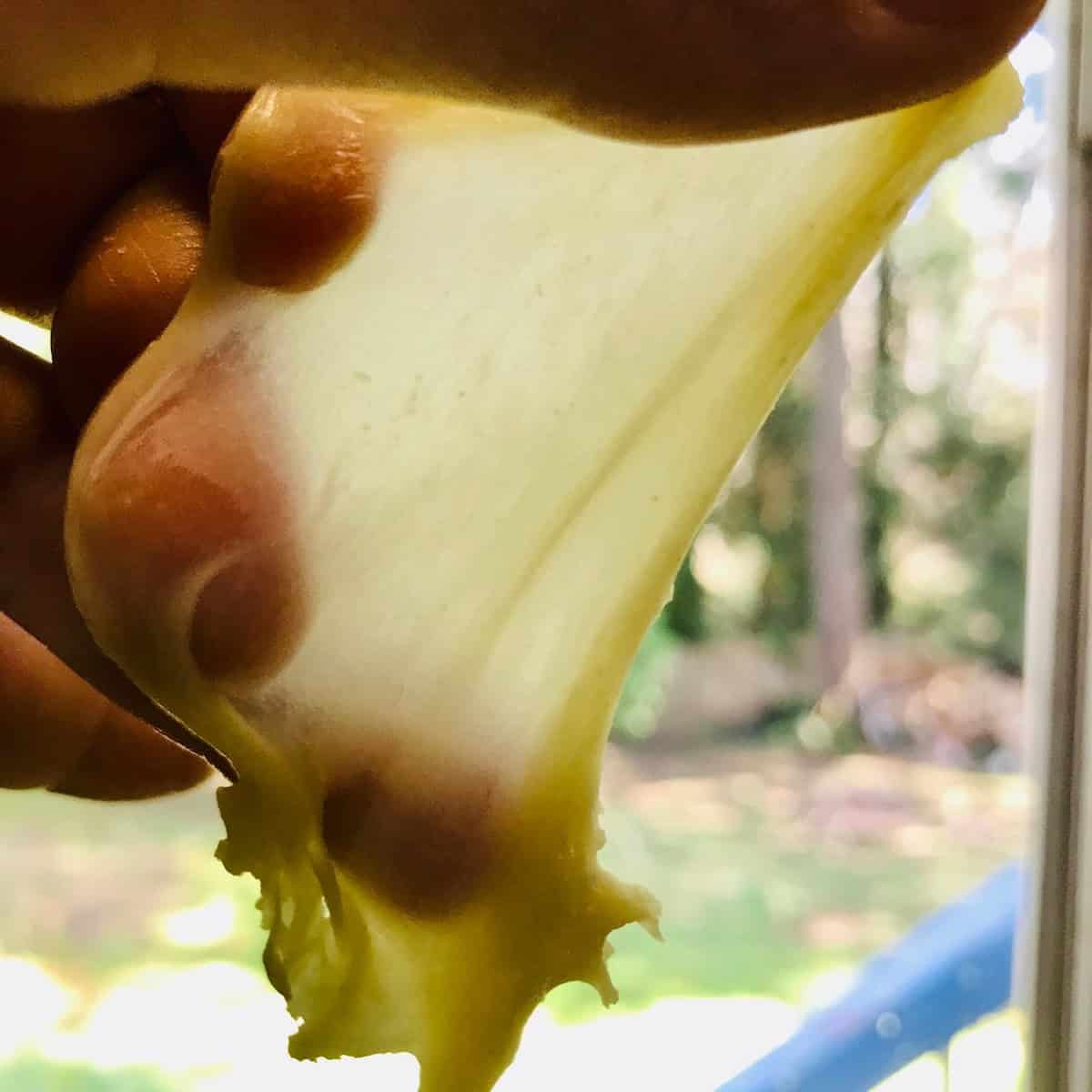
This is the single biggest issue I see with home bakers.
Cinnamon roll dough is enriched - it contains butter, sugar, eggs, and milk. These ingredients weaken gluten, which means the dough actually needs more mixing, not less, to develop proper structure.
Unlike lean doughs (such as baguettes, ciabatta and sourdough), enriched doughs do not rely on long fermentation or stretch-and-folds to build strength. For cinnamon rolls, gluten development should be complete by the end of mixing.
When dough is under-mixed, it can’t trap gas effectively. Even if fermentation happens, the dough simply can’t hold onto it. This same issue is one of the most common causes of dense bread as well - something I explain in more detail here:
👉 Why Is My Bread Dense? (6 Common Causes and How to Fix Them)
Signs of Under-Mixed Dough
- Dough is slack, rough, or lumpy instead of smooth
- Dough tears easily when stretched
- Dough doesn’t double during proofing
- Rolls bake up tight and dense
- Crumb is dry or crumbly
What Properly Mixed Dough Looks Like
- Dough is smooth, shiny, and elastic
- Dough stretches thin without tearing (passes the windowpane test)
- Dough pulls cleanly from the bowl
- Dough doubles during proofing
- Rolls bake up plump with a soft, moist crumb
How to Troubleshoot Mixing Issues
- Allow adequate mixing time - enriched doughs often take 15-20 minutes in a mixer
- If the dough is slow to come together, try mixing without the butter first
- Once the dough smooths out, add softened butter gradually (similar to brioche mixing)
Avoid adding extra flour unless the dough appears separated or soupy. If that happens, double-check your measurements first - improperly measured liquid or flour is often the real issue. Early in mixing, dough almost always feels like it needs more flour because it hasn’t fully absorbed the liquid and the gluten network hasn't formed yet. Adding flour too soon can result in rolls that bake up dense instead of pillowy-soft.
Want to understand how mixing fits into the overall bread-making process? See:
👉 A Guide to Bread Making – 12 Steps for the Home Baker
5. Incomplete Bulk Fermentation (First Rise)
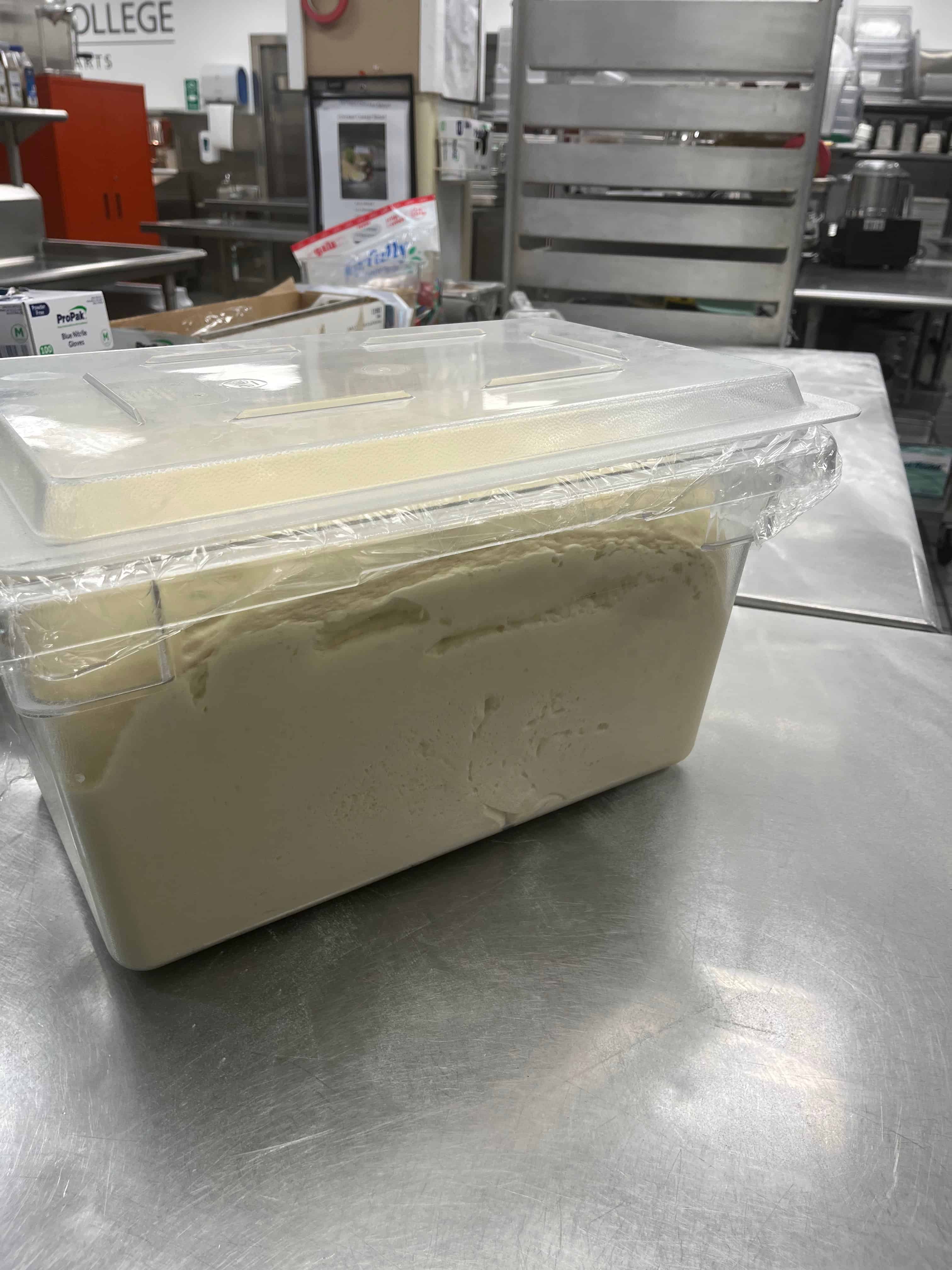
Bulk fermentation isn’t just about making dough “bigger.” It’s about:
- flavor development (especially with lean doughs)
- dough strength
- gas retention
Cutting the first rise short leaves the dough underdeveloped and tight.
Signs of under-fermented dough:
- Less rise
- Finished rolls feel heavy
- Texture inconsistencies in the finished roll
Instead of watching the clock, watch the dough:
- Volume has noticeably increased
- Dough feels lighter and slightly puffy
- Dough passes a gentle poke test
Temperature, yeast quantity, and ingredients all affect timing. The dough decides when it’s ready - not the clock.
6. Incomplete Final Fermentation (Final Proof)
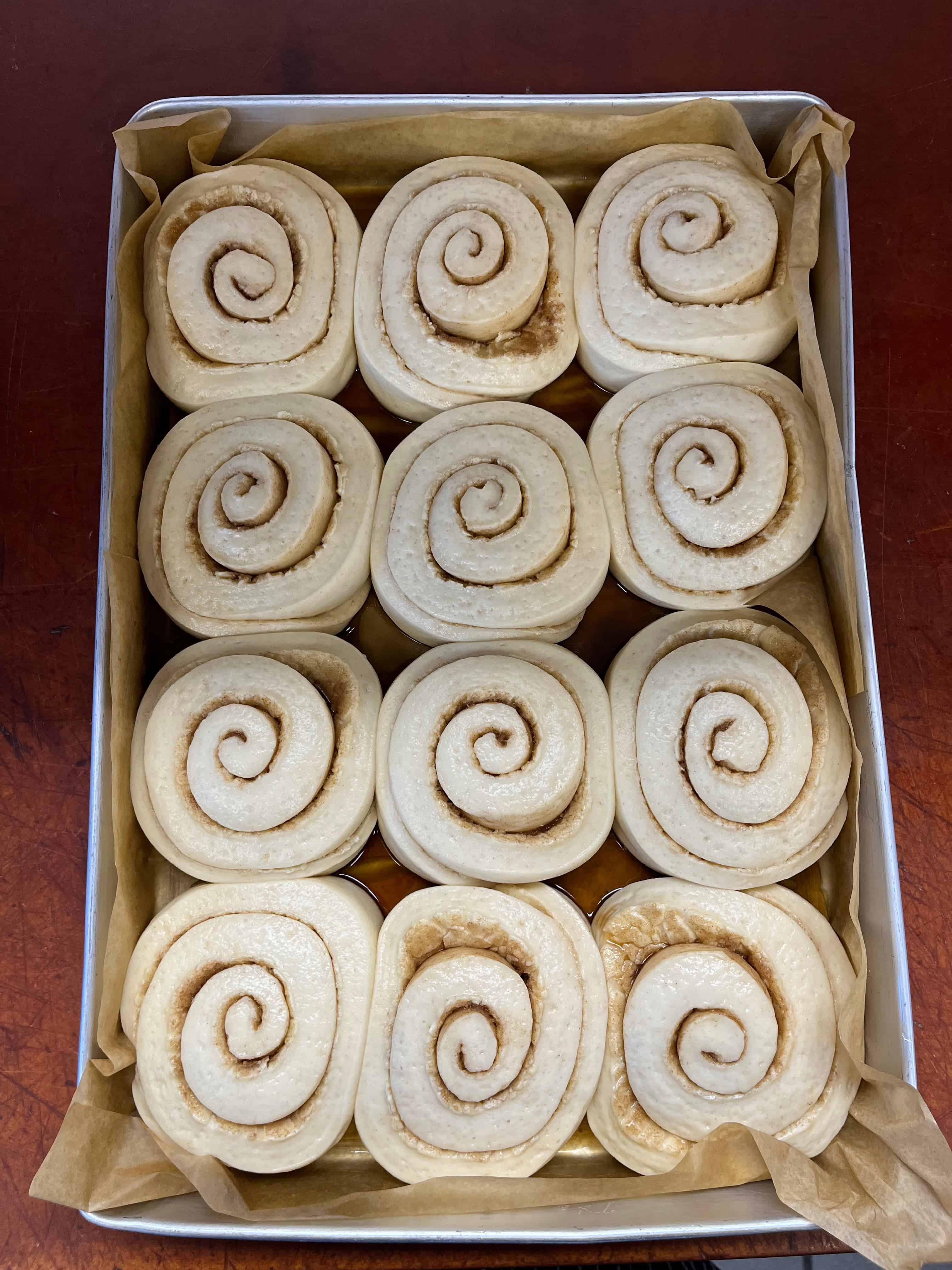
Cinnamon rolls that go into the oven too early won’t expand properly - even if everything before this step was done correctly.
Signs of under-proofed rolls:
- Rolls haven’t increased by about 1.5-2×
- Minimal oven spring
- Finished rolls are dense or heavy
Signs of properly proofed rolls:
- Rolls look noticeably puffy
- Dough springs back slowly or leaves a slight indentation (poke test)
Final proofing often takes longer than expected, especially if the dough is cool. Read the dough, not the clock. 1.5-2.5 hours is completely normal in a moderately warm room.
Want to know how to perform the poke test? Check out...
7. Improper Shaping
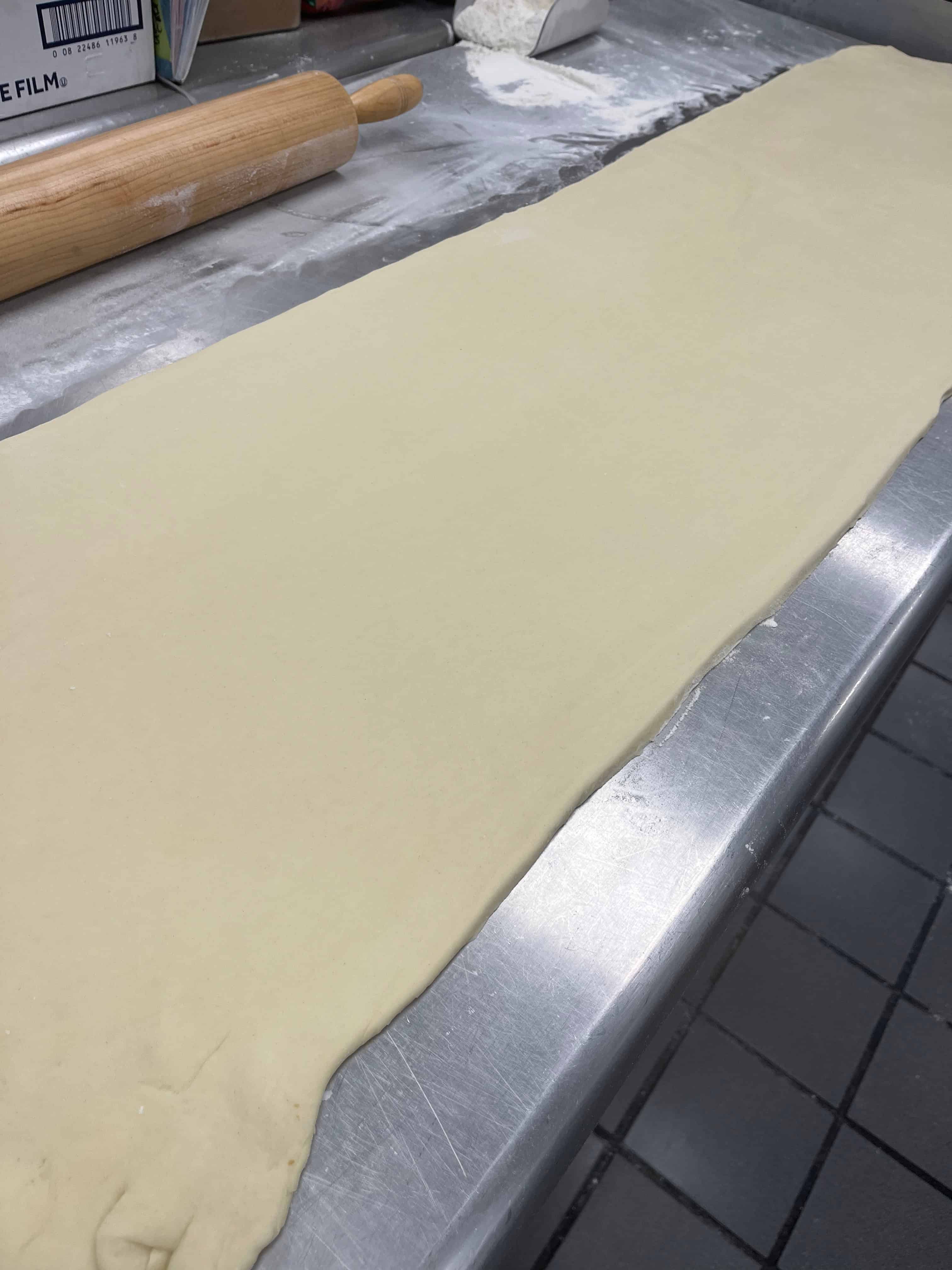
Shaping isn’t just cosmetic - it affects structure, expansion, and filling retention.
Common shaping issues:
- Rolling the dough too thin
- Rolling too tightly (or not tightly enough)
- Uneven cutting
Results:
- Filling leaks
- Rolls unravel or split
- Uneven spirals
How to fix it:
- Roll dough evenly, not paper-thin
- Spread filling consistently
- Roll with gentle tension
- Cut evenly sized rolls using a ruler or scale
8. Underbaking
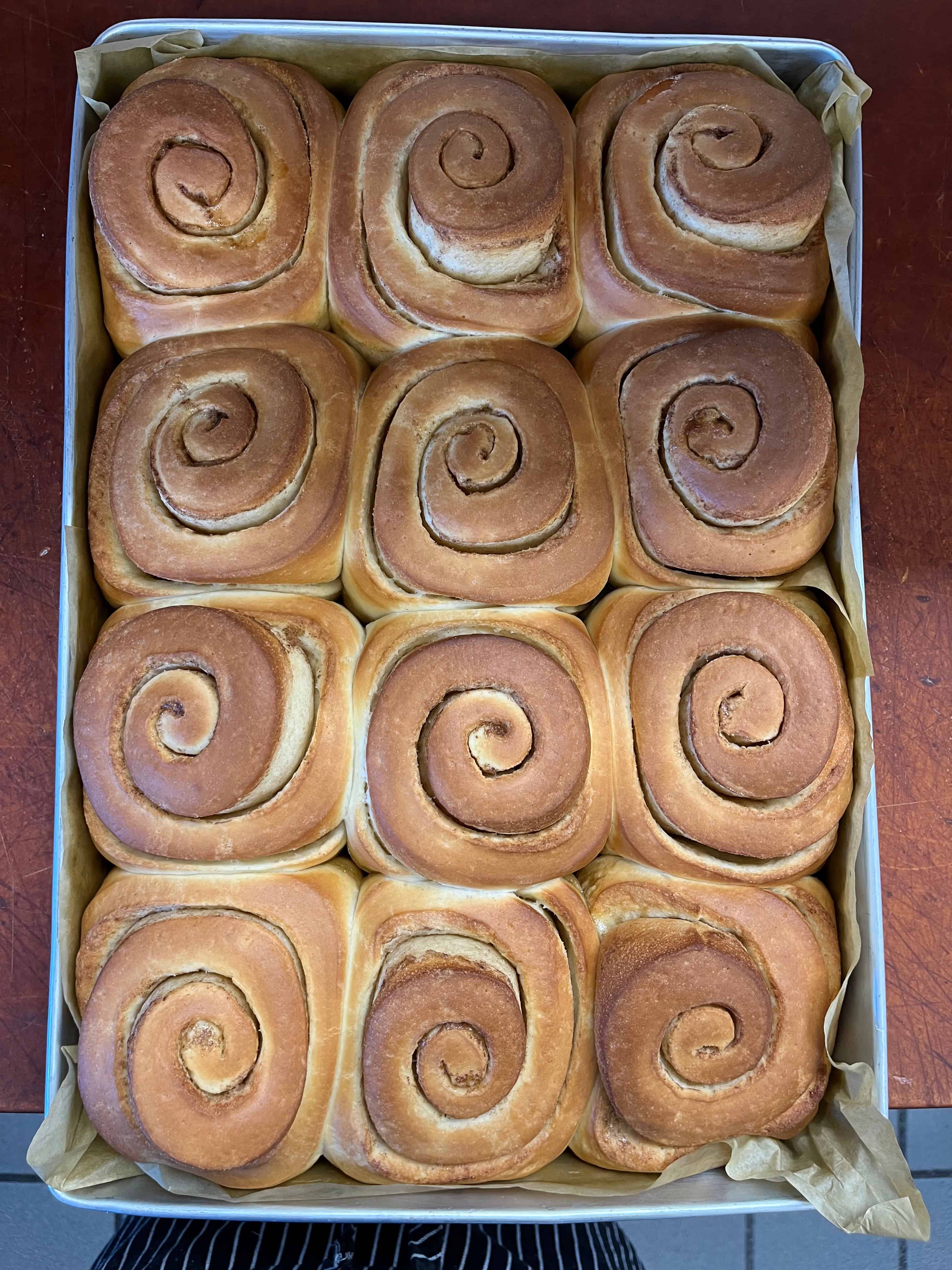
Cinnamon rolls should be soft - not raw.
Because they’re often tightly packed, rolls need adequate time to bake through.
Signs of underbaking:
- Pale tops
- Doughy centers
- Rolls collapse after cooling
How to fix it:
- Bake at 350°F
- Use visual cues and internal temperature (190–200°F)
- Check the center roll and underside for doneness
9. Leaky Filling
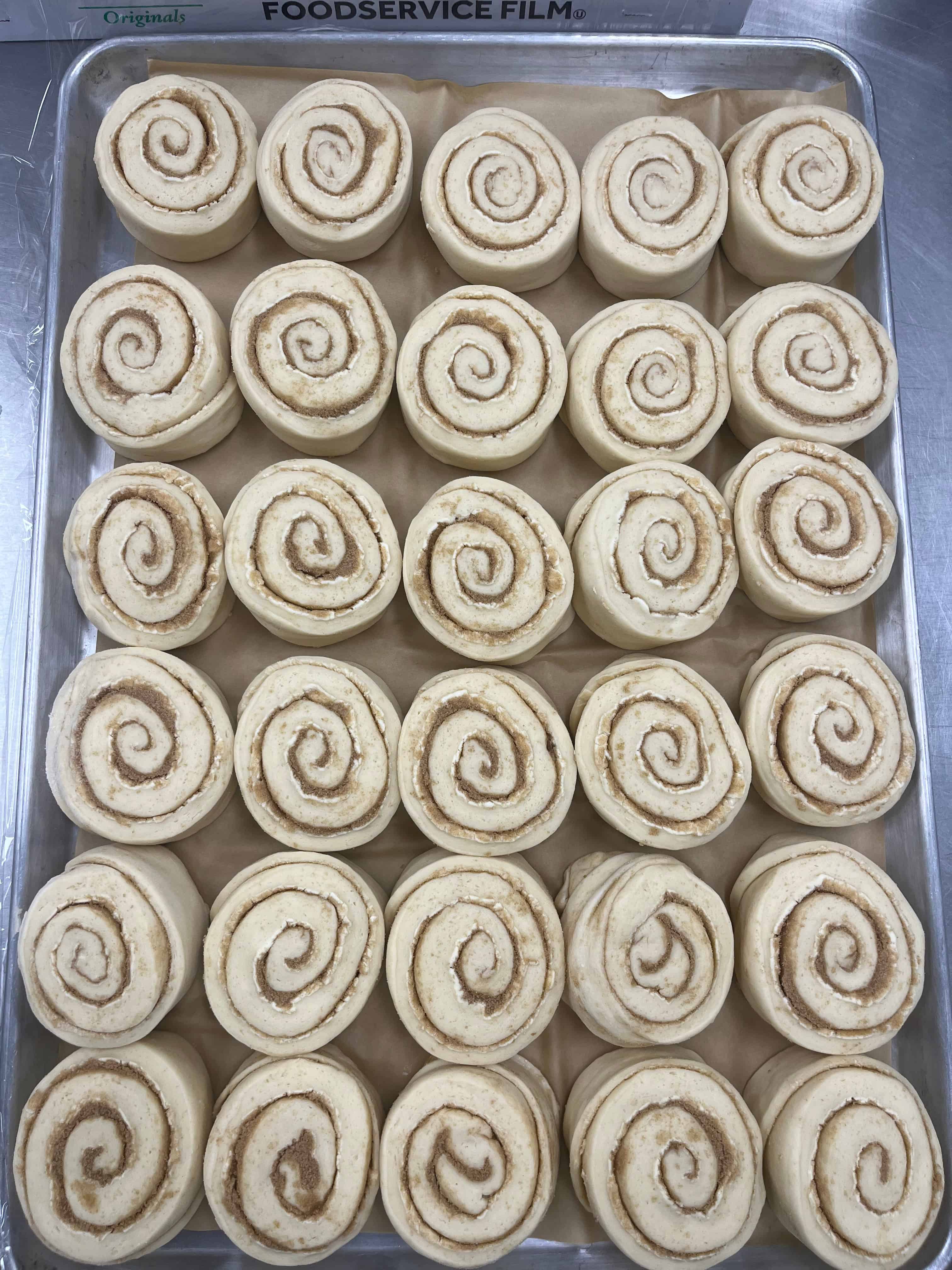
Leaky filling is rarely fixed by changing the filling itself. Creaming butter and sugar, adding flour, or swapping sugars doesn’t address the real issue.
What actually keeps filling in place:
- Properly mixed dough - strong gluten structure allows for dough expansion
- Properly proofed dough - proper expansion traps filling
- Appropriate filling quantity - more isn’t always better
If you want more filling, roll the dough wider to create more spirals rather than piling it on. Just avoid rolling too thin - half the beauty of a cinnamon roll is that soft, plush interior.
Professional Efficiency Tips (Make Cinnamon Rolls Easier)
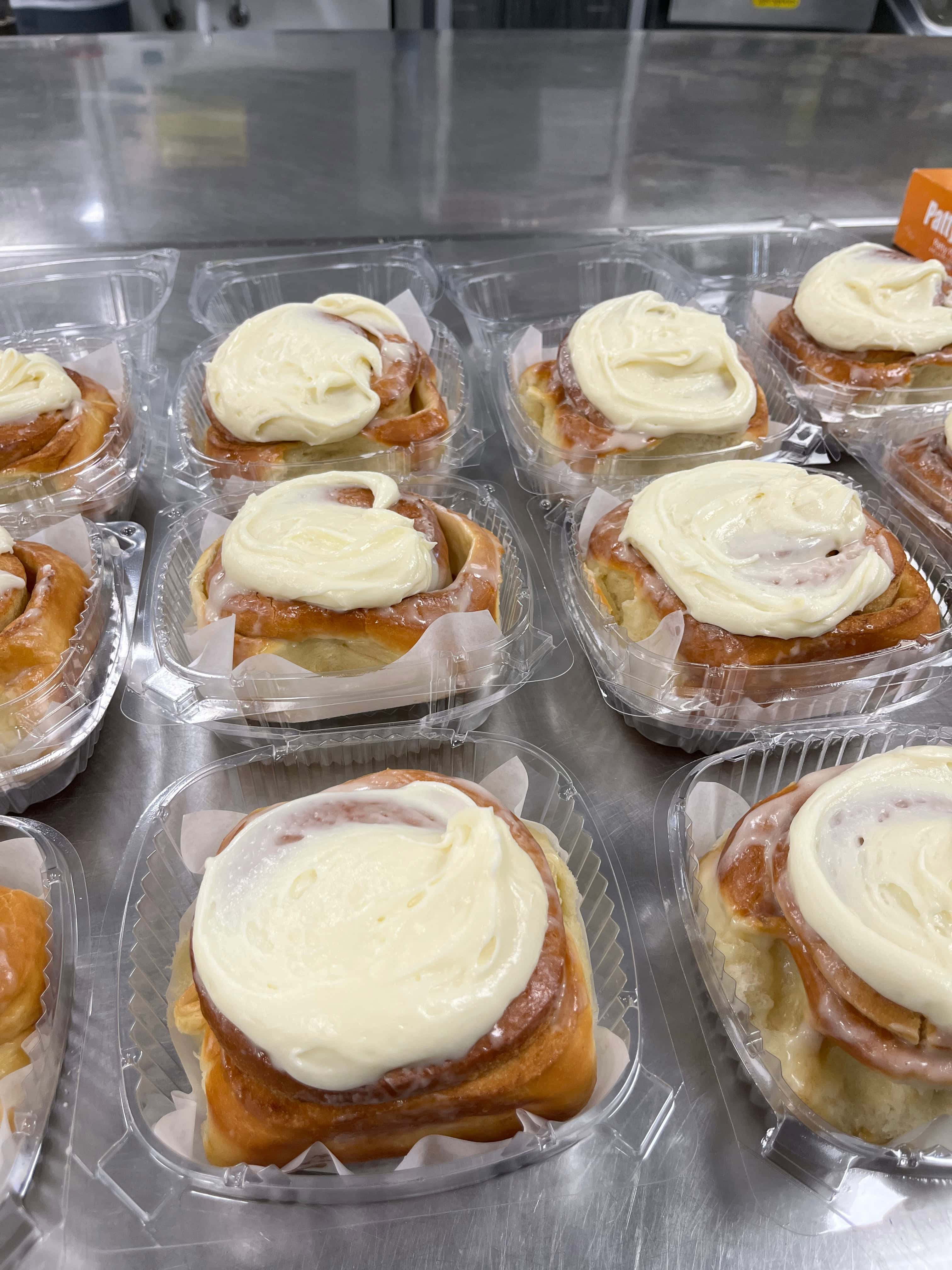
Cinnamon rolls are ideal for make-ahead workflows. Professional kitchens rarely mix, shape, and bake everything in a single day - and you don’t need to either.
You may hear people say that refrigerating or freezing cinnamon roll dough leads to poor results. In practice, that’s rarely the true cause. When make-ahead dough fails, it’s almost always due to one of the technique issues discussed earlier - improper mixing, incorrect fermentation, temperature problems, or dough that wasn’t wrapped well and dried out.
As long as your dough is properly developed, protected from drying, given adequate time to proof, and handled with sound technique, refrigerating or freezing will not compromise your results.
Refrigerate After the First Rise
- Complete bulk fermentation
- Cover and refrigerate
Placing your dough in a rectangular container during bulk fermentation will allow for easier rolling because it's already in a rectangle. Cold dough is less sticky, requires less flour for rolling and cuts cleaner.
Refrigerate Shaped Rolls Overnight
- Shape rolls
- Cover tightly and refrigerate
- Allow extra proofing time the next day
- Bake fresh
Freeze Cinnamon Rolls
- Freeze shaped, unproofed, unbaked rolls
- Wrap well
- Thaw in the refrigerator in their baking pan the day before baking (wrapped)
- Allow extra proofing time the next day
Want to know how professional bakers avoid overwhelm? Check out -
Bread Making: Start Here
If you're trying to become a more confident bread baker, it's helpful to understand how each stage of the process builds on the next.
Step 1: Understand the Bread-Making Process
Start by learning how bread comes together from beginning to end.
👉 Bread Making Explained: The 12 Steps That Matter
Step 2: Build Strong Dough
A well-developed dough is the foundation of good bread.
👉 Why Is My Dough Sticky? (And How to Fix It)
👉 Why Is My Dough Not Smooth or Elastic? (And How to Fix It)
👉 How to Knead Dough Properly (And How to Know When It's Ready)
Step 3: Master Fermentation & Proofing
Learn how yeast, time, and temperature affect your dough.
👉 Do You Really Need to Proof Yeast? (Instant vs Active Dry Explained)
👉 How to Proof Bread in the Oven (Without Overproofing It)
👉 How Long Should Bread Proof? (And How to Know When It's Ready)
Step 4: Troubleshoot Your Bread
If something doesn't turn out as expected, these guides can help.
👉 Why Is My Bread Dense? (6 Common Causes and How to Fix Them)
👉 Can You Overknead Dough? (Why It's Less Common Than You Think)
Step 5: Apply It to Specific Bakes
See how these same principles apply to enriched doughs and specialty breads.
👉 Troubleshooting Cinnamon Rolls (Fix Dense, Dry or Flat Rolls)
👉 Are All Cinnamon Roll Recipes Basically the Same? (Here's What Actually Matters)
Final Thoughts
Cinnamon rolls don’t fail because the recipe is wrong.
They fail because technique was cut short somewhere along the way.
Once you learn to identify which part of the process caused the problem, fixing it becomes straightforward - and repeatable.
That’s why professional bakers care less about chasing new recipes and more about mastering method.
Pocket Baker Perspective
In professional kitchens, consistency rarely comes from a perfect recipe. It comes from understanding fermentation, dough strength, and timing. Once those fundamentals are clear, troubleshooting becomes far easier - and recipes become far more reliable.
When your technique improves, almost any solid recipe will work beautifully.
And cinnamon rolls?
They become predictable, fluffy, soft - and far less stressful.