








Introduction: Why Equipment Choices Matter
Most cottage and micro bakers don’t struggle because they lack skill - they struggle because their setup works against them. The same is true for serious home bakers who want more consistency, organization, and efficiency in their kitchens.
In professional kitchens, equipment isn’t about being fancy or expensive. It’s about flow. The right tools reduce friction, save time, and support consistent, repeatable results. When your setup works with you instead of against you, baking becomes calmer, faster, and more reliable.
Based on years of professional baking experience, this is the small bakery equipment (along with a few disposable non-negotiables) I would prioritize if I were starting a micro bakery, cottage bakery, or small bakeshop today. And if you’re a home baker looking for smoother workflows and better organization, this list applies to you too.
If you want to skip to a collection of links to all of the equipment that I recommend in the order that I list them in this post, you can find them all here:
Jump to:
- A Simple Rule of Thumb
- 1. Organization & Workflow Tools
- 2. Baking Surfaces & Cooling
- Wire Racks
- 3. Measuring & Accuracy
- 4. Mixing, Handling & Dough Tools
- 5. Hand Tools Every Baker Reaches For
- 6. Finishing & Presentation Tools
- Final Thoughts: A Little Pocket of Wisdom
- Get the FREE Profitable Baker Pricing Calculator
How to Use This List
Before diving in, here’s how to approach these recommendations:
- Start small - we’re building a foundation
- Prioritize tools that improve workflow, not just capability
- Add equipment as your production volume grows
You’ll notice I’ve intentionally avoided highly specific tools like bannetons, loaf pans, cake pans, molds, or even mixers. Those purchases should be driven by personal preference and individual baking goals.
This list focuses on tools I’ve relied on consistently throughout my professional baking career - equipment that supports efficiency, consistency, and organization no matter what you bake.
How to Prioritize Equipment Based on Your Production Goals
Not every baker needs the same setup. Buying equipment without a clear purpose is one of the fastest ways to waste money, space, and energy.
In professional kitchens, equipment is prioritized based on what’s being produced, how often it’s produced, and how many units need to move efficiently through the kitchen. The same thinking applies to home and cottage bakeries.
Before you buy anything, ask yourself:
- What is the purpose of my baking - enjoyment, supplemental income, or consistent sales?
- What am I baking most often?
- Am I baking occasionally, weekly, or several times a week?
- Which part of the process feels the most stressful: lack of space, organization, or efficiency?
Your answers should guide what you prioritize.
A Simple Rule of Thumb
If a tool:
- saves time
- reduces mental load
- improves consistency
- removes a repeated frustration
…it’s usually worth the investment.
If it:
- solves a problem you rarely have
- only does one very specific thing
- doesn’t improve overall workflow
…it can wait.
Core Categories
1. Organization & Workflow Tools
The Backbone of Efficiency
These tools keep your kitchen moving smoothly, create usable space, and prevent chaos during production.
Speed Rack
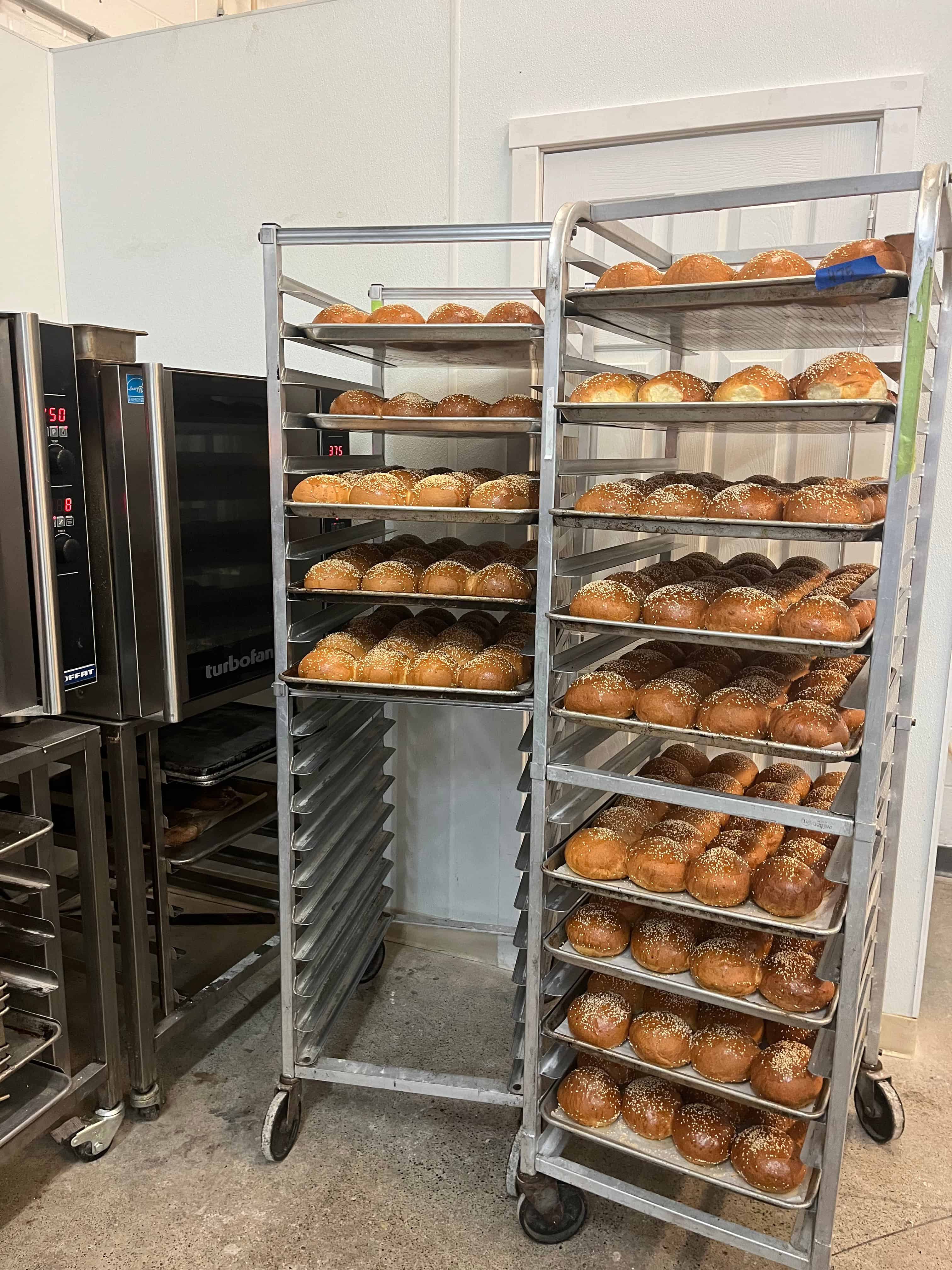
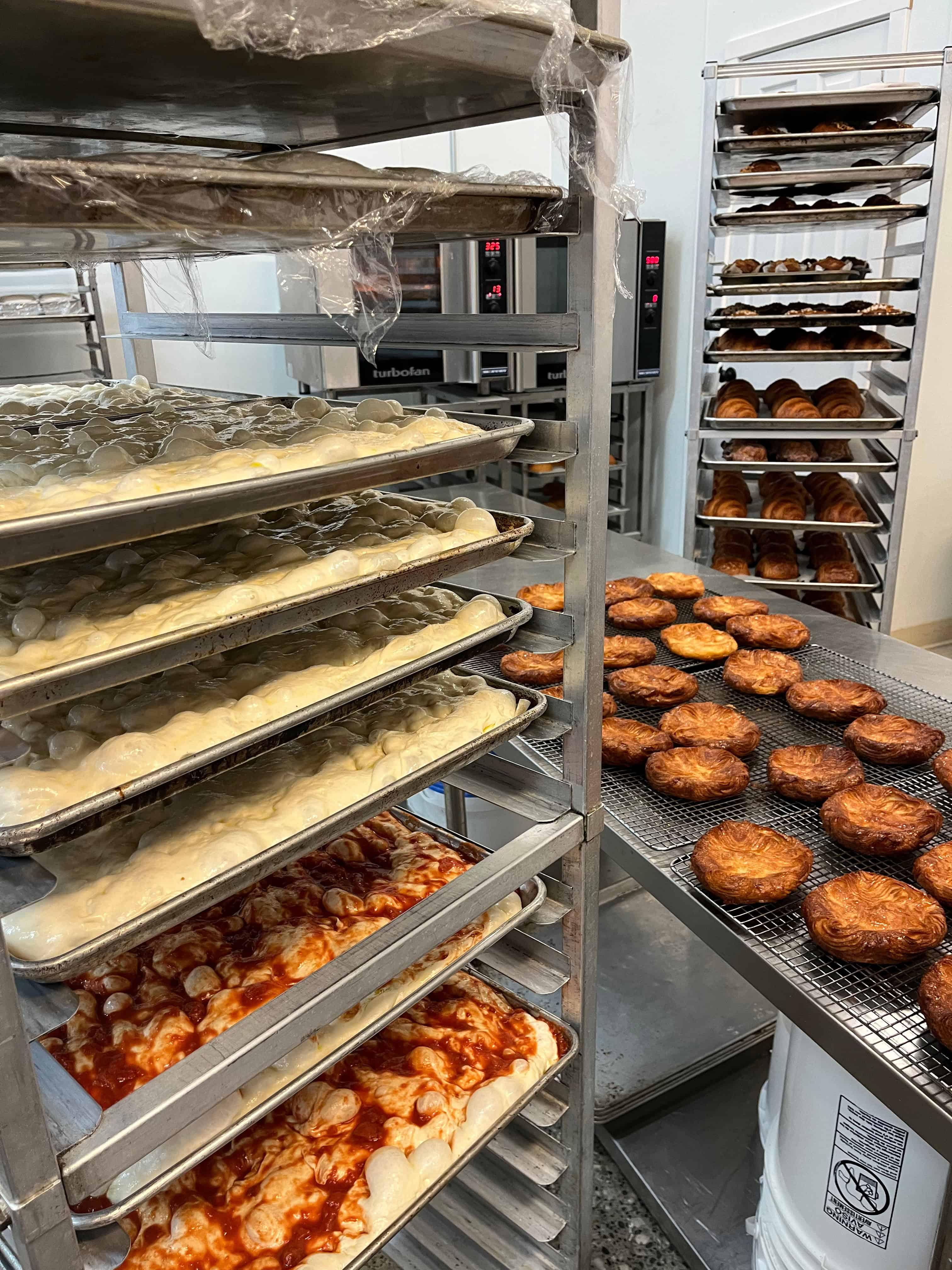
A speed rack is one of the most efficient pieces of “small” equipment in any bakeshop. It allows you to work vertically, takes up very little floor space, and dramatically increases your usable capacity. A full-size speed rack can hold roughly 20 full-sized sheet trays (40 half trays), making it a major efficiency upgrade without expanding your footprint.
Designed to hold half- and full-size sheet trays, a speed rack centralizes everything that lives on a tray - unbaked goods, baked goods, or prep - into one organized, mobile unit.
Why professionals rely on it
Speed racks create instant organization and usable space. They keep production moving, reduce clutter on work surfaces, and can be rolled wherever they’re needed - next to the oven, prep table, or into a walk-in fridge or freezer.
How it improves workflow
Speed racks support nearly every stage of production:
- Staging trays while waiting for oven space
- Cooling baked goods
- Proofing or holding buns, croissants and other shaped doughs
- Holding finished items for storage or packing
- Organizing mise en place stored on sheet trays
If it lives on a sheet tray, it belongs on a speed rack.
Home-friendly alternatives
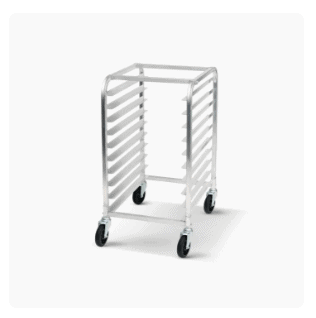
A half-height speed rack or a speed rack with a tabletop offers many of the same benefits in a smaller footprint, making vertical storage and mobile organization accessible in home or cottage kitchens.
A speed rack that I recommend:
Cambros / Lexans (Various Sizes)
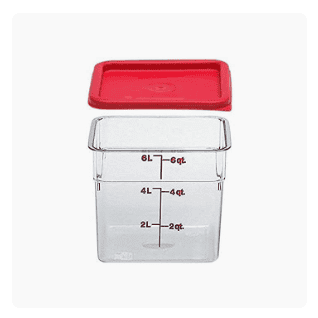
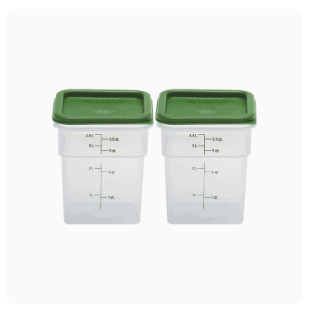
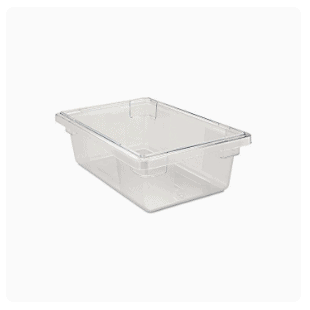
Good containers are foundational to an efficient kitchen. The best ones are stackable, square or rectangular (so they use space efficiently), and have secure, well-fitting lids.
Most professional kitchens rely on Cambro containers because they’re built for production. They’re NSF-certified, available in nearly every size, sturdy, dishwasher safe, stackable, clearly marked with volume measurements, and transparent - so you can see what you have at a glance without opening every lid.
That visibility alone saves time and reduces mental load during production.
What Cambros and Lexans are used for
- Dry storage: flour, sugar, chocolate, nuts, and bulk ingredients
- Refrigerated storage: batters, fillings, creams, fruit, and prepped components
- Dough storage: excellent vessels for bulk fermentation
Cambros/Lexans that I recommend:
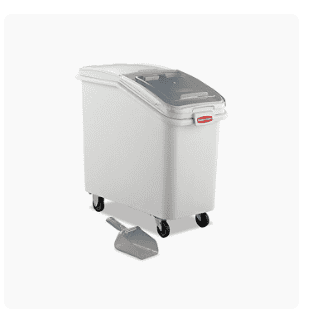
Flour Bins & Scoops
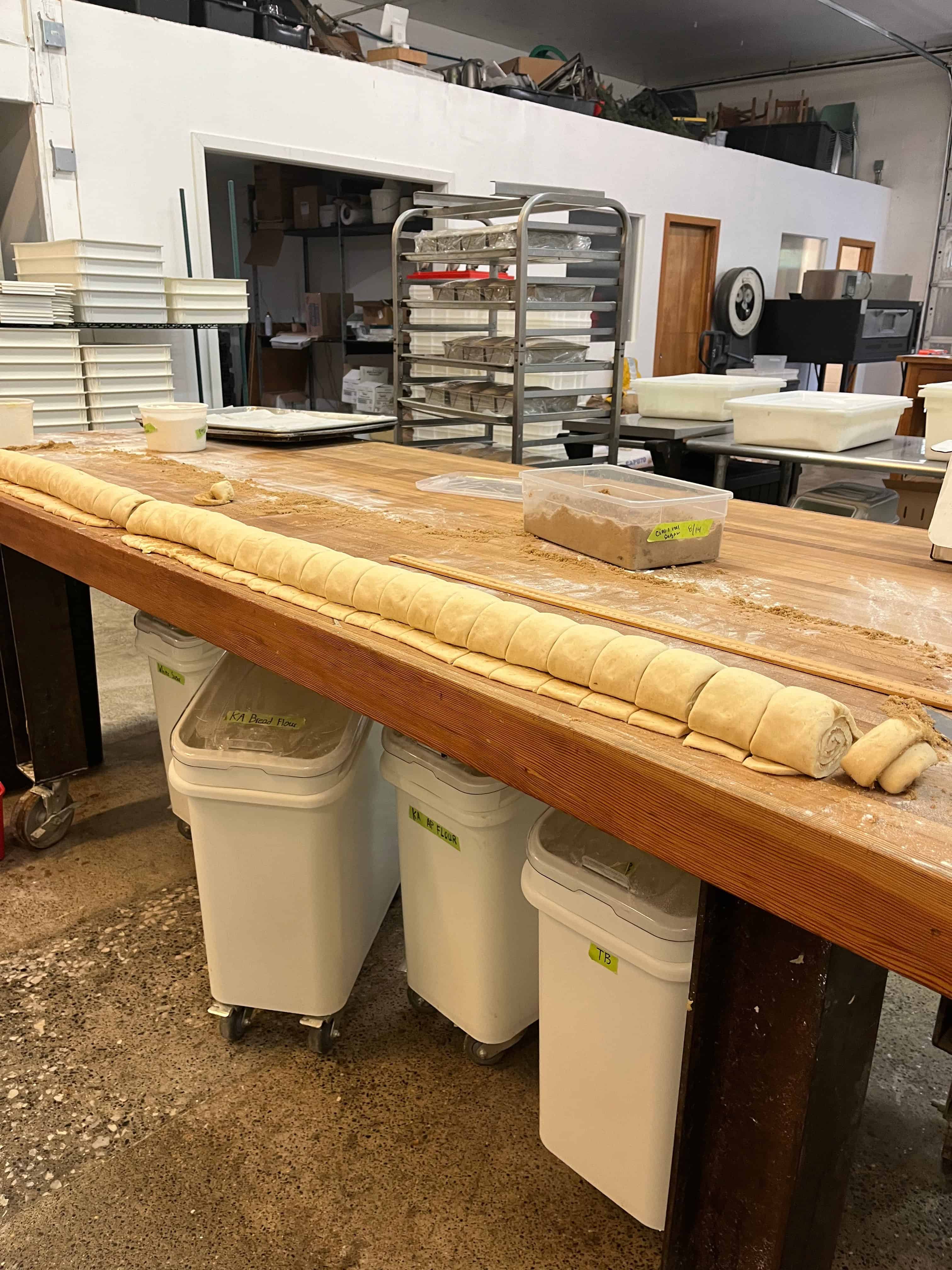
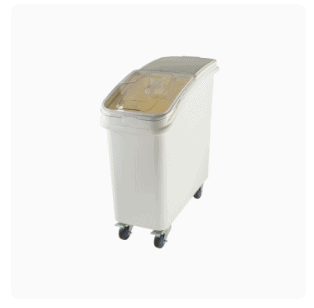
You don’t realize how valuable flour bins are until you’ve worked with them. Flour is usually the most-used ingredient when baking, and if you permanently assign space to any single item, it should be flour.
Flour bins make measuring faster, cleaner, and more consistent - especially when paired with a scale. Scoop, weigh, and move on.
Why flour bins improve workflow
- Faster, cleaner measuring
- Less mess on floors and surfaces
- One designated home for flour
Common sizes
- 21-gallon: ~100 lb flour
- 12-gallon: ~60 lb flour
- 6-gallon: ~30 lb flour
Choose a size that matches your production volume.
Flour Bins that I recommend:
2. Baking Surfaces & Cooling
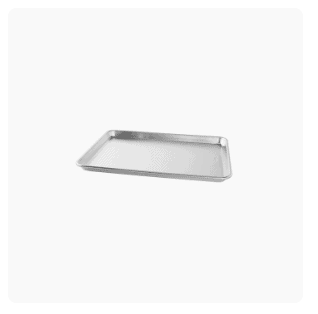
Sheet Trays (Full & Half)
Standardizing sheet tray sizes is one of the simplest ways to improve efficiency and consistency.
When trays are consistent, decisions disappear. You always know how many cookies fit on a tray. You always cut bars and slabs the same way. Portioning becomes automatic. Waste decreases. Results are consistent.
Half-sheet trays are ideal for home and cottage bakers because they fit standard ovens and work seamlessly with professional parchment paper.
Standard sizes
- Full: 18″ × 26″ (commercial ovens)
- Half: 13″ × 18″ (home ovens)
- Quarter: 13″ × 9″
Sheet trays that I recommend:

Wire Racks
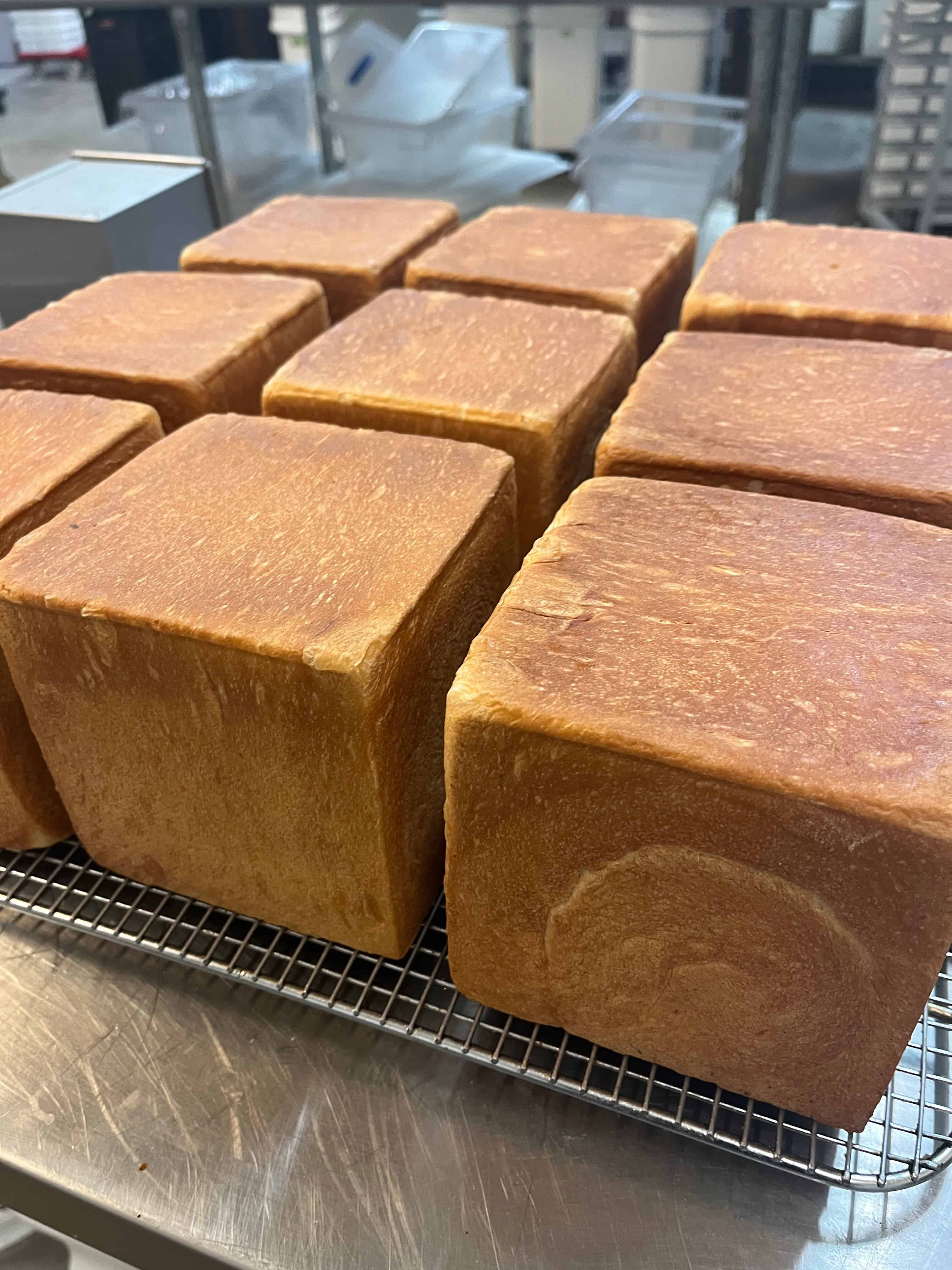
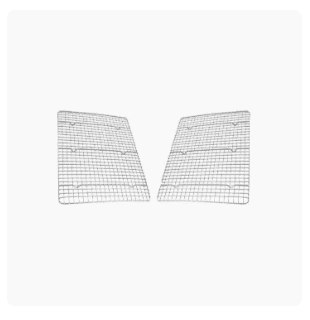
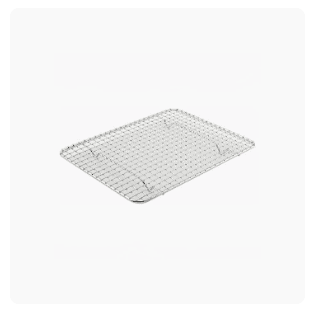
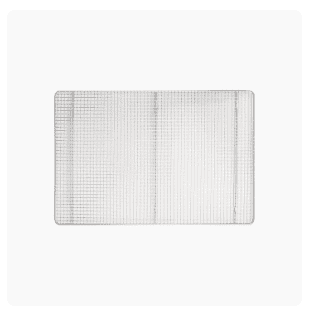
Proper cooling is not optional. Wire racks allow airflow underneath baked goods, preventing soggy bottoms and structural issues.
They also free up sheet trays quickly, keeping production moving without bottlenecks.
A good rule of thumb: enough racks to cool at least one full oven load at a time.
Wire racks that I recommend:
Parchment Paper
Parchment paper is a non-negotiable. It prevents sticking, protects equipment, and drastically reduces cleanup time.
Buy parchment in full sheets from restaurant supply stores - it’s more affordable and can be cut in half to fit half-sheet trays perfectly.
Parchment paper that I recommend:

3. Measuring & Accuracy
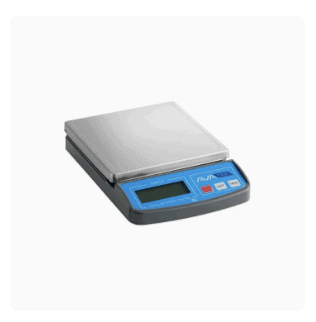
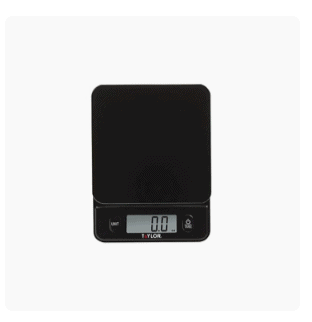
Digital Scale
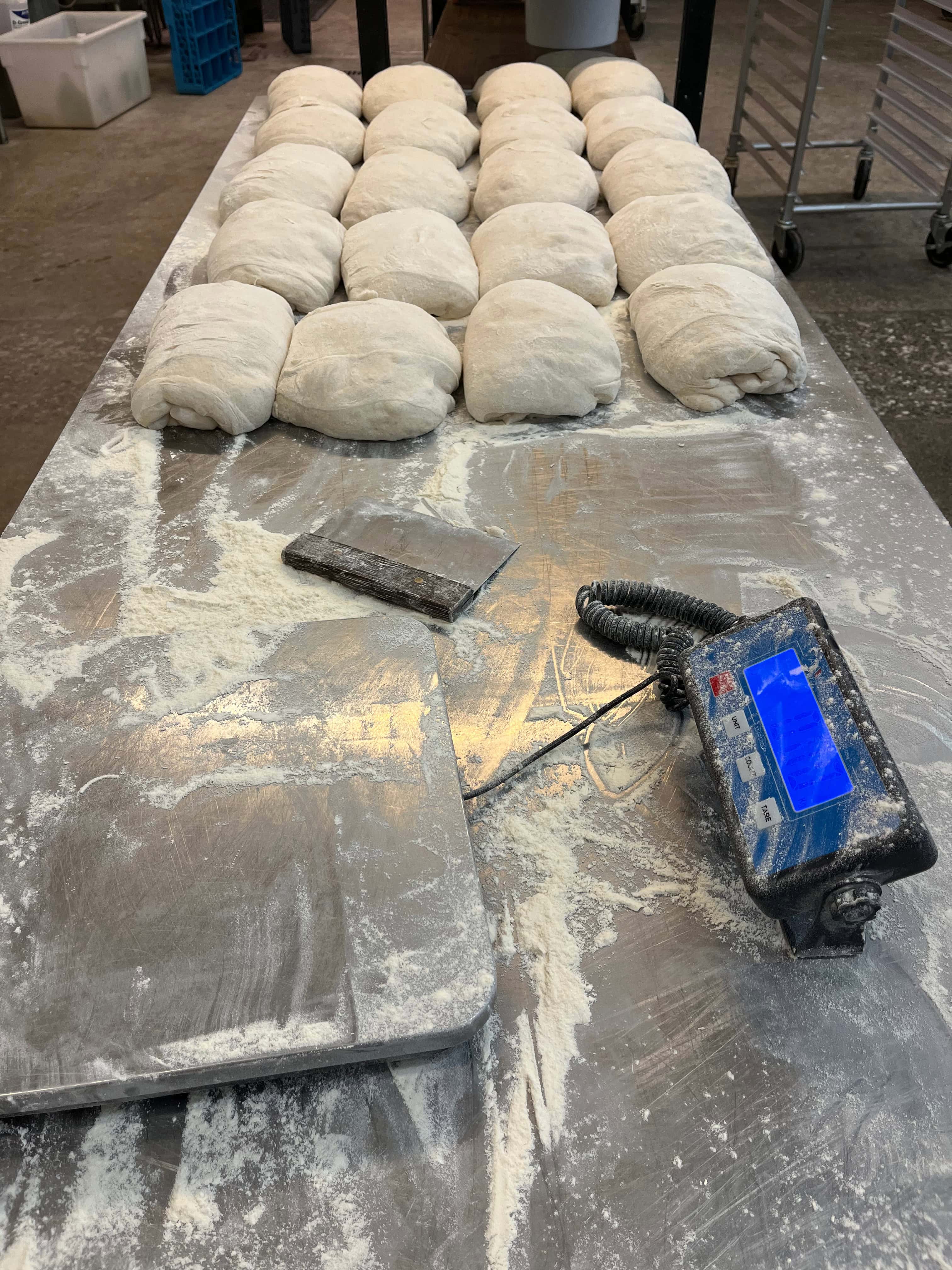
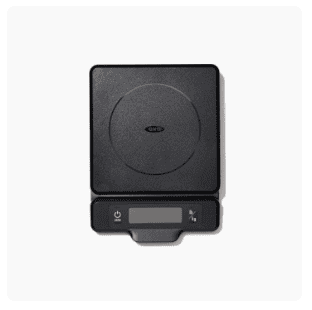
A digital scale is one of the most important tools in a consistent baking setup.
Weight-based measuring is faster, cleaner, and far more accurate than volume - especially as production increases. Scaling recipes becomes effortless, costing becomes possible, and variability disappears.
A good scale quickly becomes the most-used tool on your bench.
Look for:
- Adequate capacity
- Fine increments
- Easy tare function
- Ounces and grams
👉 Why Using Weight Instead of Volume Is Essential for Accurate Recipe Costing
👉 How to Convert Your Recipes from Cups to Weight
Scales that I recommend:
Measuring Spoons
Even in a weight-based kitchen, measuring spoons still matter.
Some quantities - yeast, salt, spices, leaveners - may fall below a scale’s reliable range. Used intentionally, spoons support accuracy rather than undermine it.
4. Mixing, Handling & Dough Tools
Stainless Steel Bowls (Multiple Sizes)
Durable, lightweight, non-reactive, and easy to clean - stainless steel bowls move seamlessly through every stage of production.
Multiple sizes allow the task to fit the bowl, not the other way around.
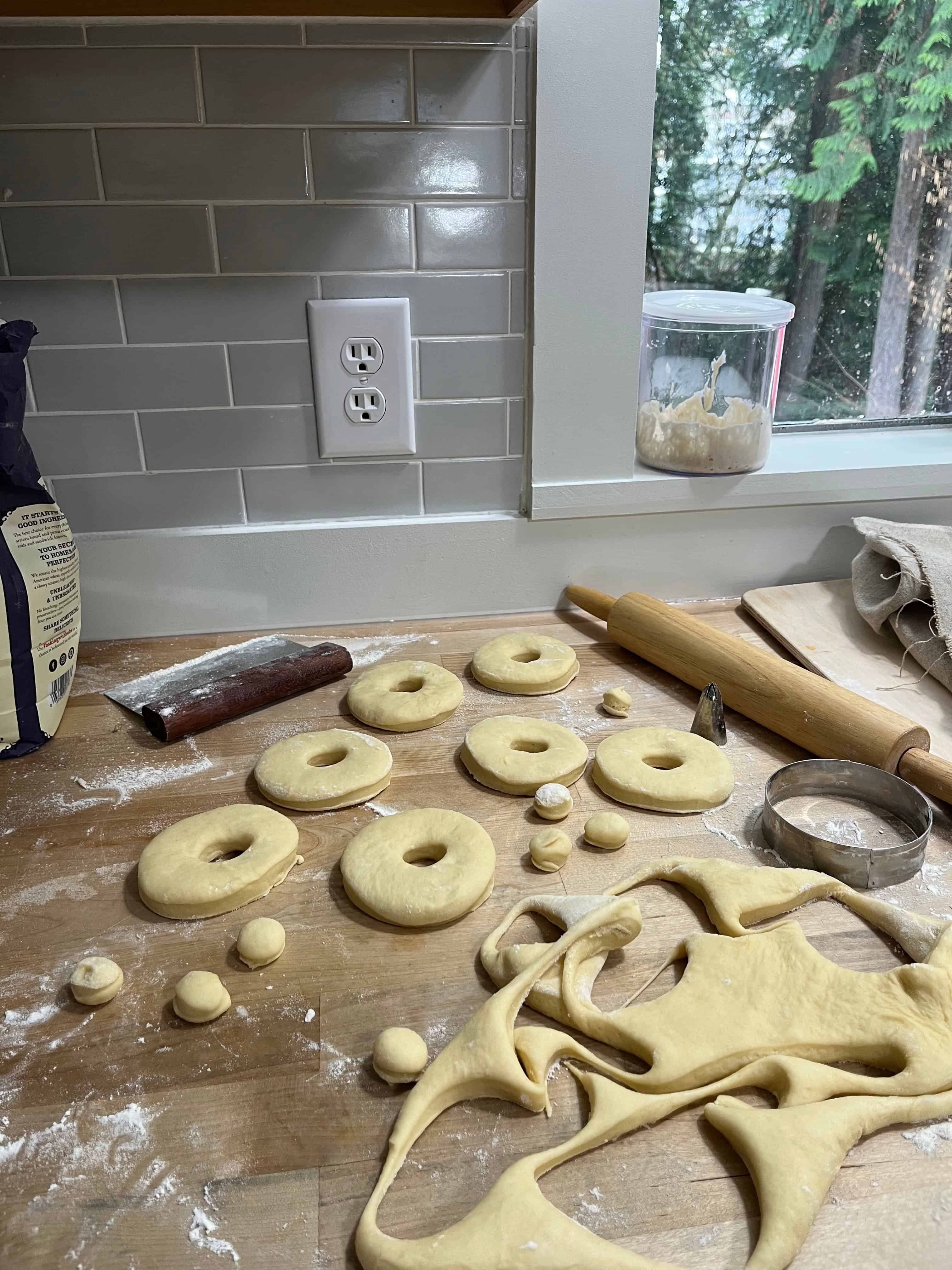
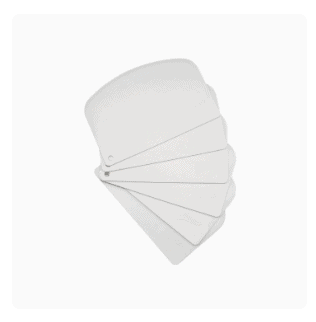
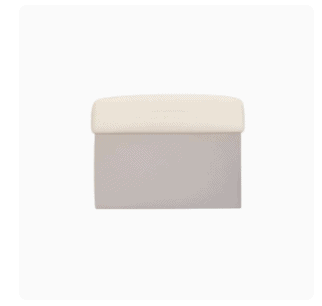
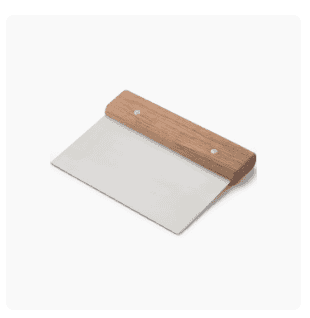
Bench Scraper & Bowl Scraper
Small tools with enormous impact.
They speed up portioning, transferring, and cleanup while reducing waste. Once you use them consistently, it’s hard to imagine baking without them.
Bench & Bowl Scrapers that I recommend:
Rolling Pin
A heavier rolling pin provides control and even thickness with less pressure - resulting in more consistent baking and fewer adjustments.
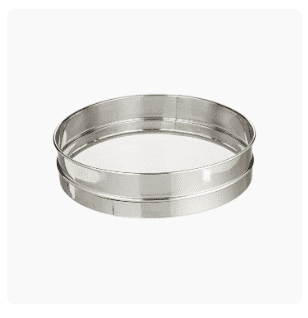
Sifter
Not always necessary, but invaluable for cocoa, powdered sugar, and clumpy dry ingredients. Sifting improves texture and consistency.
Sifter that I recommend:
5. Hand Tools Every Baker Reaches For
This is where speed, efficiency, and muscle memory are built.
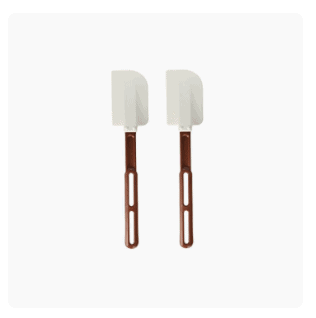
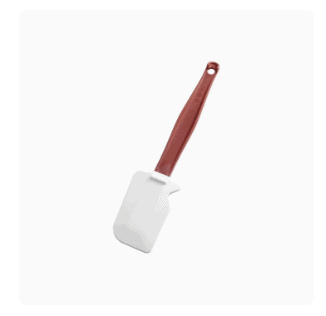
- Silicone spatulas
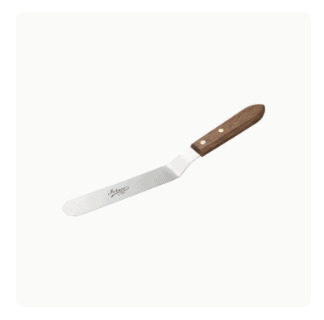
- Offset spatula
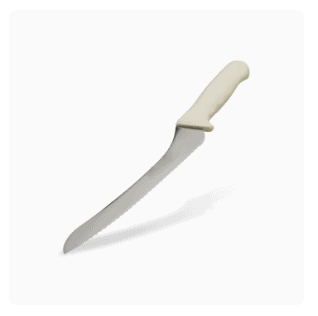
- Long serrated knife
- Chef’s knife
- Paring knife
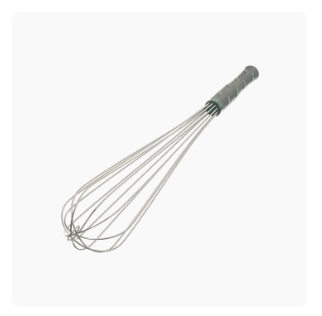
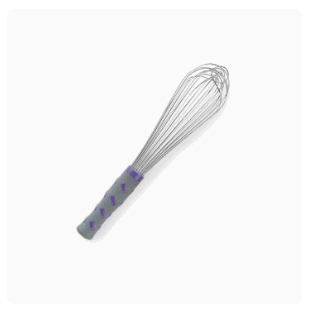
- Whisk
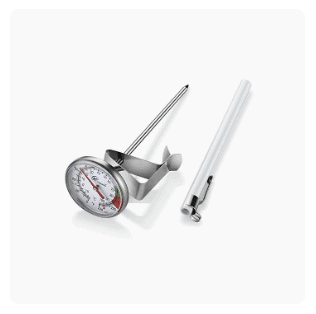
- Thermometer
- Scoops (multiple sizes)
- Pastry brush
- Bench brush
Each tool earns its place by being used often.
Hand tools that I recommend:
6. Finishing & Presentation Tools
Piping Bags & Tips (Large)
In professional kitchens, piping bags are precision tools - not just decoration.
Large bags (21″ is ideal) reduce refilling, speed production, and support consistent portioning. Start with a few bags and a small selection of tips, then expand only as needed.
Choosing What You Actually Need
What you buy should reflect what you bake.
A bread baker doesn’t likely need piping tips. A home baker may not need large flour bins or a speed rack.
Identify where your process feels cramped, slow, or stressful - and choose tools that directly improve that point in the workflow.
Final Thoughts: A Little Pocket of Wisdom
Professional baking isn’t about having more tools - it’s about having the right tools, arranged to support how you work.
When your setup works with you instead of against you:
- your bakes become more consistent
- your kitchen feels calmer
- your production becomes predictable
That’s the real upgrade.