

Introduction
If you’re learning how to cost your recipes for a home bakery or cottage business, there is one principle that will save you hours of frustration:
Always cost using weight, never volume.
Using cups and tablespoons may feel familiar, but when it comes to calculating ingredient cost, portion cost, and final selling price, volume measurements are almost impossible to work with. Weight, on the other hand, gives you precision, consistency, and clean math - the foundations of accurate costing.
Here’s why every professional bakery costs by weight, and why you should too.
Jump to:
- Introduction
- 1. Volume Measurements Are Not Consistent
- 2. Volume Cannot Be Used for Costing or Scaling
- 3. You Can’t Determine Portion Cost Using Volume
- 4. Suppliers Sell Ingredients by Weight - Not Volume
- 5. Weight Makes Your Business More Profitable
- Pricing System (Start Here)
- Final Thoughts
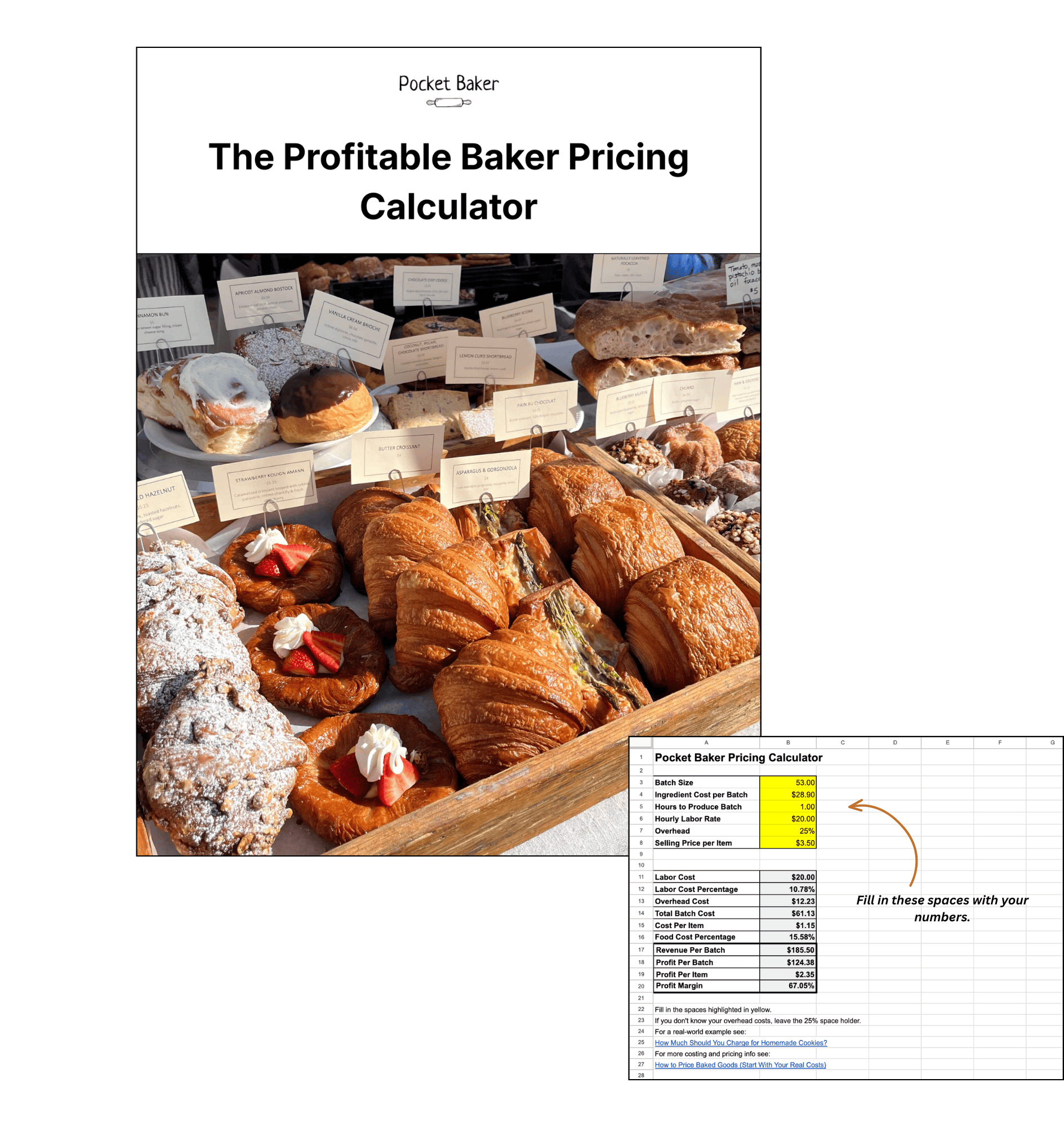
- Get the FREE Profitable Baker Pricing Calculator
1. Volume Measurements Are Not Consistent
A “cup” is only a cup in theory - in practice, it can vary wildly.
A cup of flour can weigh:
- 110g if lightly scooped
- 140g if packed
- 90g if sifted
That's a 50% difference for the same listed measurement.
When you’re trying to calculate the cost of ingredients, that variability makes the math meaningless. If the amount is inconsistent, the cost is inconsistent - and you can’t price your products confidently.
Weight gives you:
✔ exact amounts
✔ repeatable results
✔ a true ingredient cost every time
2. Volume Cannot Be Used for Costing or Scaling
When you cost a recipe, you must know how much of each ingredient you're actually using. Volume makes this extremely difficult.
Take this example:
Your recipe uses:
- 3 cups flour
- 2 cups sugar
- ½ cup cocoa powder
If you wanted to calculate your ingredient cost, you’d first have to figure out how much a “cup” actually weighs for each item.
And they all weigh different amounts.
Now imagine doubling or tripling that recipe.
Or scaling it for wholesale production.
Or converting it to cost per cookie.
With volume, everything becomes guesswork.
Weight solves this instantly.
When your recipe is written like this:
- 480 g flour
- 400 g sugar
- 60 g cocoa
You can:
✔ multiply
✔ divide
✔ scale
✔ convert to cost-per-portion
…in seconds.
If your recipes are still written in cups and tablespoons, start by converting them to weight. This gives you the accurate ingredient amounts you need for both scaling and costing.
👉 How to Convert Your Recipes from Cups to Weight (Ounces or Grams)
Once your ingredients are recorded by weight, you can calculate your actual ingredient cost and use that number to determine your food cost percentage.
👉 What Is Food Cost in Baking?
3. You Can’t Determine Portion Cost Using Volume
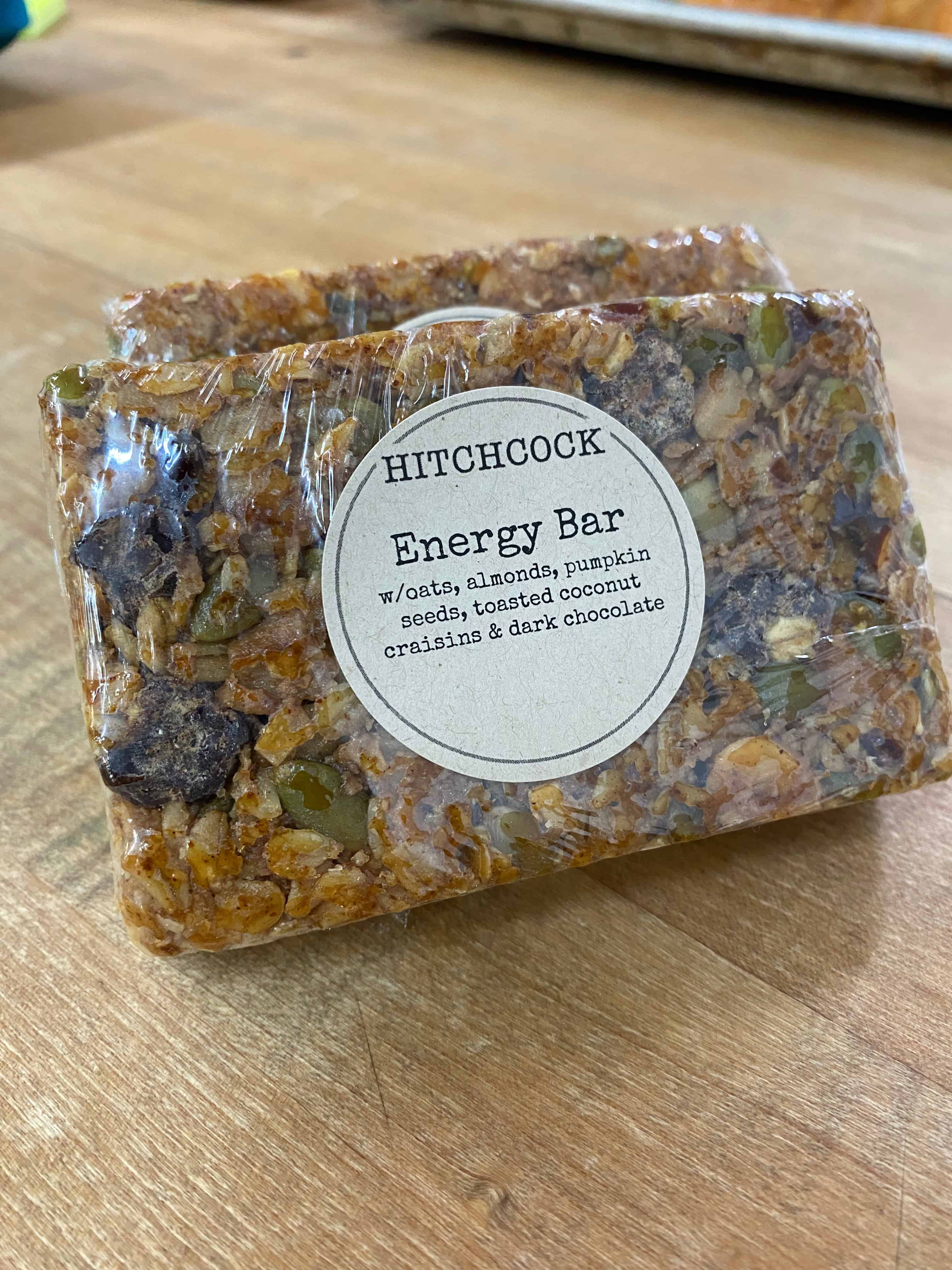
Costing requires you to divide your total ingredient cost by the number of portions.
But portion sizes are never measured in cups.
Customers don’t buy:
- “½ cup of cookie”
- “¾ cup of cake”
- “1 cup of bread”
They buy:
- a 3-ounce cookie
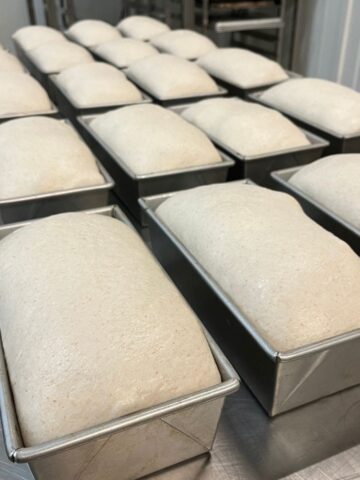
- a 1-pound loaf
- a 4-ounce pastry
This is why volume breaks down completely when you try to cost your products.
You cannot get cost-per-portion from cups.
But you can always get it from ounces or grams.
4. Suppliers Sell Ingredients by Weight - Not Volume
Your ingredient invoices list:
- flour in pounds/kilograms
- butter in pounds/kilograms
- chocolate in pounds/kilograms
- sugar in pounds/kilograms
- vanilla in ounces/grams
- spices in ounces/grams
- cocoa in pounds/kilograms
If your recipe is in cups and tablespoons, you then have to convert everything back and forth between weight and volume just to find your cost.
This creates unnecessary work and increases the chance of error.
When your recipe is in weight to begin with, costing is:
✔ straightforward
✔ accurate
✔ fast
✔ scalable
5. Weight Makes Your Business More Profitable
If you want predictable margins, you need predictable recipes - and predictability comes from consistency.
When you weigh ingredients instead of scooping:
- your batch yield becomes consistent
- your portion sizes stay the same every time
- your cost per portion becomes stable
- your pricing becomes strategic instead of emotional
Consistent measurements lead to consistent results - and consistent results lead to profitable, confident decision-making.
That’s the moment when cottage bakers stop guessing…
and start running their business with intention and authority.
Pricing System (Start Here)
If you’re unsure where to begin, start with the core pricing guide below.
Step 1: Understand Your Costs
Know exactly what it costs to produce your products.
- 👉 What Is Food Cost in Baking?
- 👉 How to Calculate Labor Cost in Baking
- 👉 What Is Overhead in a Baking Business?
Step 2: Build Your Pricing
Turn your costs into a price that actually works.
- 👉 Core Guide: How to Price Baked Goods (Start With Your Real Costs)
- 👉 Cost vs Value Pricing for Baked Goods
- 👉 Build a Menu That Works (Product Mix)
Step 3: Apply It to Your Products
Use your numbers to price specific items.
- 👉 How Much Should You Charge for Homemade Cookies?
- 👉 How Much Should You Charge for Homemade Cupcakes?
- 👉 How to Price Cakes for Profit
Step 4: Improve Profit Over Time
Refine your pricing as your business grows.
Final Thoughts
Volume is perfectly fine for casual home baking.
But if you want to cost your recipes accurately, price your products, and build a sustainable cottage bakery, weight is non-negotiable.
Accurate recipe costing is the foundation of pricing. Once you know what your product actually costs to make, you can add labor and overhead and begin determining an appropriate selling price.
👉 How to Price Baked Goods (Start With Your Real Costs)
Switching from cups to ounces or grams removes all the guesswork.
It gives you clarity, control, and consistency - and consistency is the foundation of every efficient kitchen. When your measurements are reliable, your results are reliable… and so is your pricing.
Weights let you repeat success every single time.
Cups can’t do that.
Make the switch, and your future self (and your business) will thank you.