



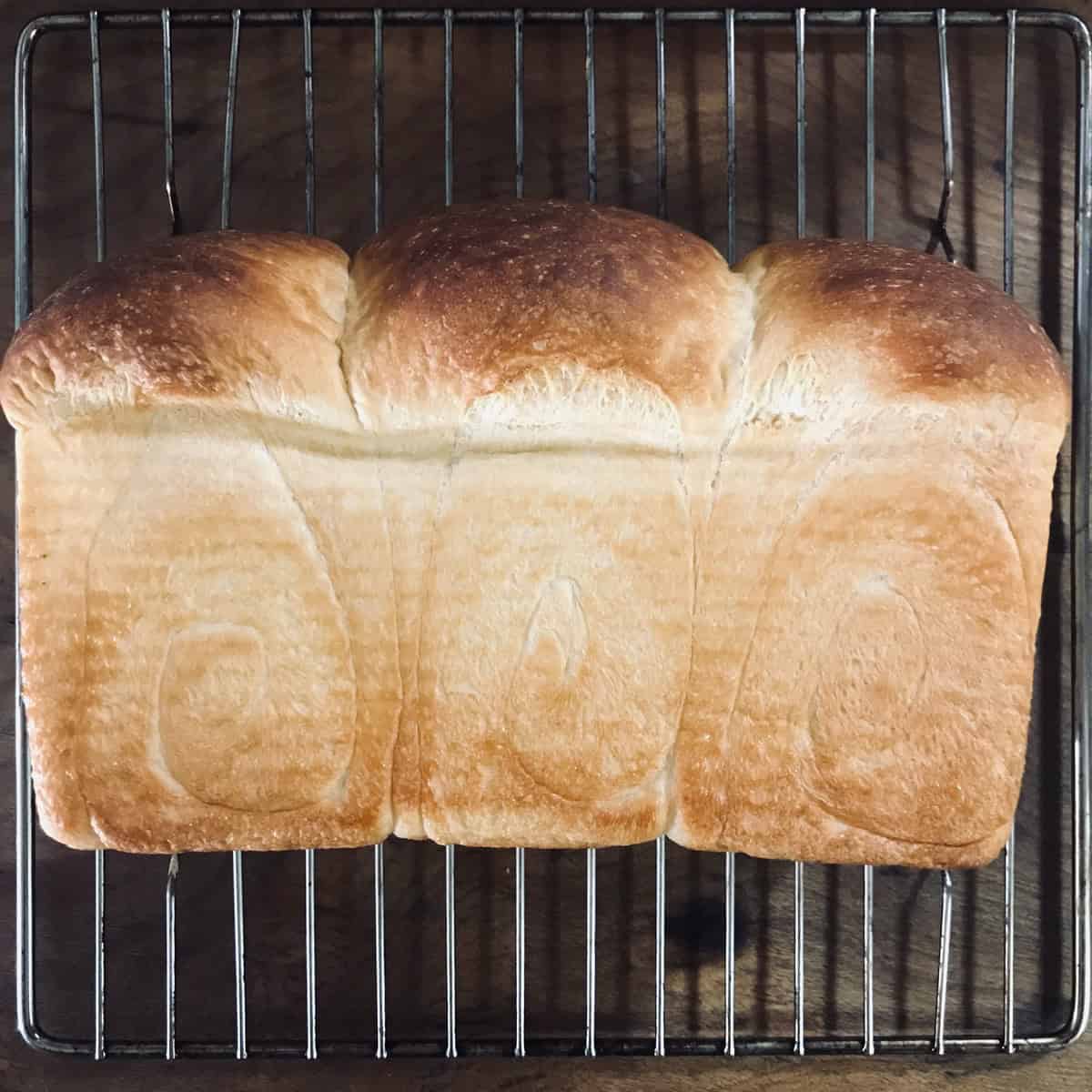
AKA the BEST sandwich bread ever. Pillowy soft and light as air, shokupan (commonly known as milk bread) is Japan's version of sandwich bread. With a basic understanding of bread making, and a little practice, you'll soon be making the best sandwiches, toast and dinner rolls you've ever had.
Jump to:
Recipe overview
For this shokupan recipe we will mix boiling water and flour together to make a yudane, one day prior to mixing the final dough. It isn't necessarily common practice to use a yudane to make shokupan in Japan, but here we use the technique because it allows us to achieve a soft, light texture even without access to Japanese flour.
This is an eggless recipe. Shokupan sold in Japan rarely, if ever, contains egg. There are many recipes on non-Japanese websites that contain egg, and although I'm sure the breads are delicious, they are not shokupan. The pure-white crumb distinctive of this milk bread comes from using the following ingredients: flour, milk or cream, butter, yeast, sugar or honey, salt, and in this case, yudane (flour + water).
To make shokupan, we'll use the straight dough mixing method. This is the simplest and most straight-forward bread making technique, which basically involves throwing everything into a KitchenAid and mixing until a windowpane is achieved.
Baker's Assistant:
For more in-depth information about topics covered on this page, follow the links
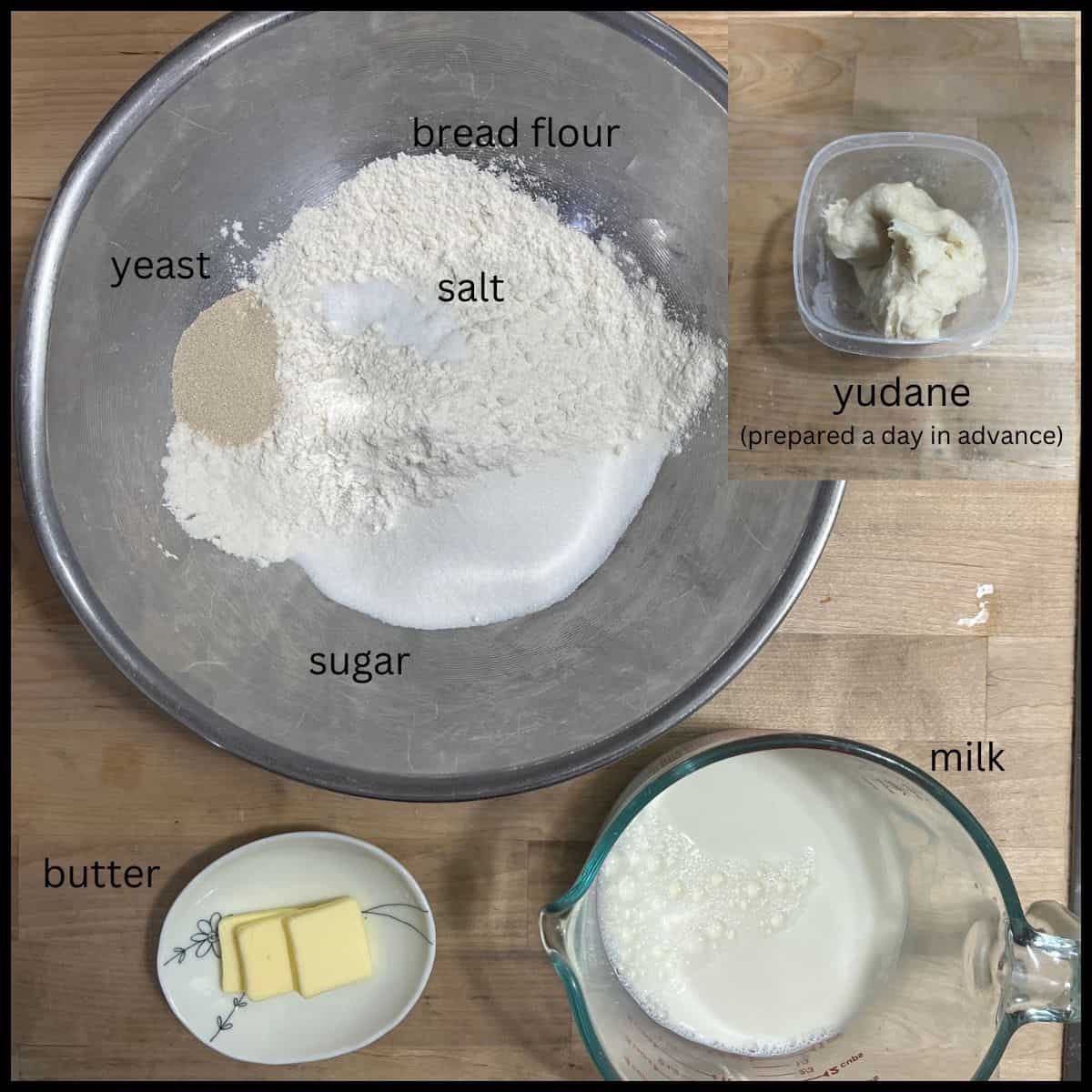
Mise en place for shokupan
Have ready in advance:
- Yudane - prepare the day before
- This recipe uses a KitchenAid mixer w/hook attachment
- Rolling pin
- Bread Pan
- Bench scraper
- A probe thermometer (not a must, but useful to have)
Ingredient Properties & Substitutions
Substituting ingredients in a recipe (especially when baking) will likely change the flavor and texture of the end product. I would suggest first following the recipe as written before making any alterations.
- Bread Flour - of all the American flours I've tested (and one Italian flour), King Arthur Artisan Bread Flour provided the most delicate crumb and produced a loaf closest in texture to Japanese shokupan. That said, any bread flour (protein 12-14%) will make a decent loaf of sandwich bread. I don't suggest using all purpose flour.
- Yudane - technically not an ingredient, but a component. Mix equal parts boiling water and bread flour, wrap and rest overnight
- Milk - whole milk. Contributes to softness and milky taste. Possible to substitute reduced fat or cow milk alternatives*
- Butter - unsalted and at room temperature. Contributes to softness and richness. Possible to substitute margarine*
- Yeast - I prefer instant yeast because it can be added directly to the flour (as-is) and doesn't need to be bloomed (or activated) prior to using. To substitute active dry or fresh yeast, see "notes" section of recipe card
- Sugar - Granulated, white. Adds a little sweetness and contributes to soft texture. Honey may be substituted
*I have not tested this substitution
Technique - Straight dough mixing method
Proper mixing, proofing, shaping and baking are all vital for making good bread. For more in-depth information please see: A Guide to Bread Making 12 Steps for the Home Baker.
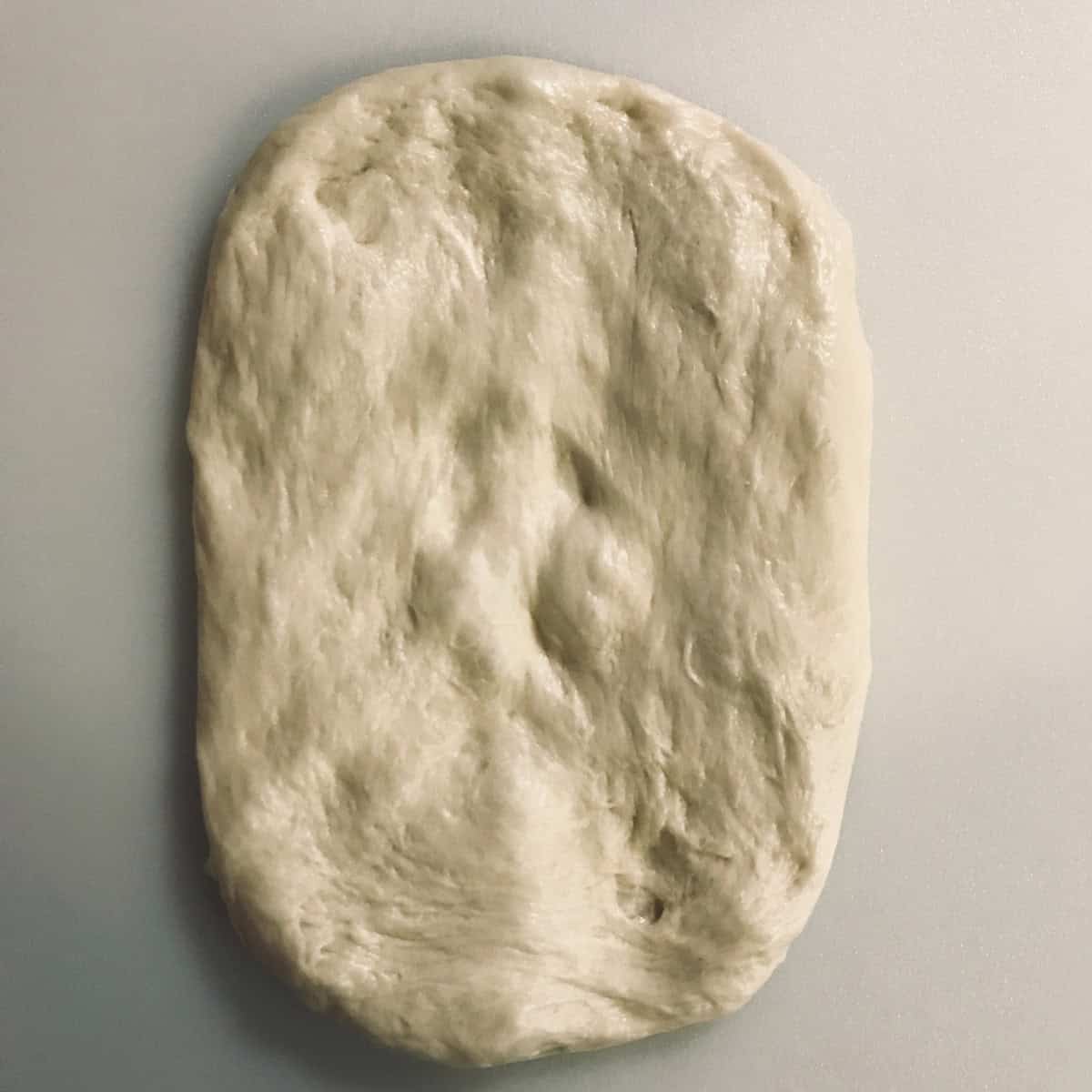
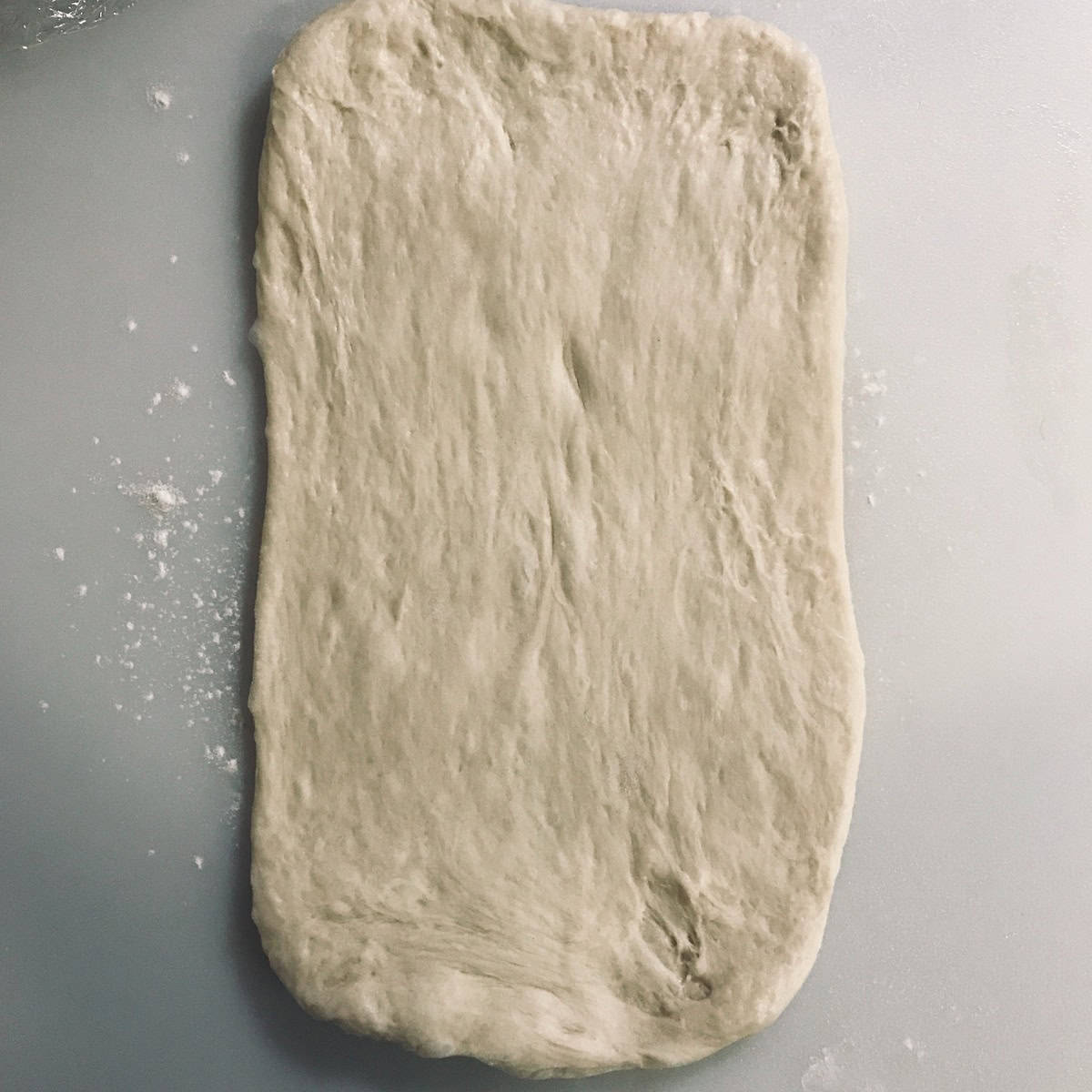
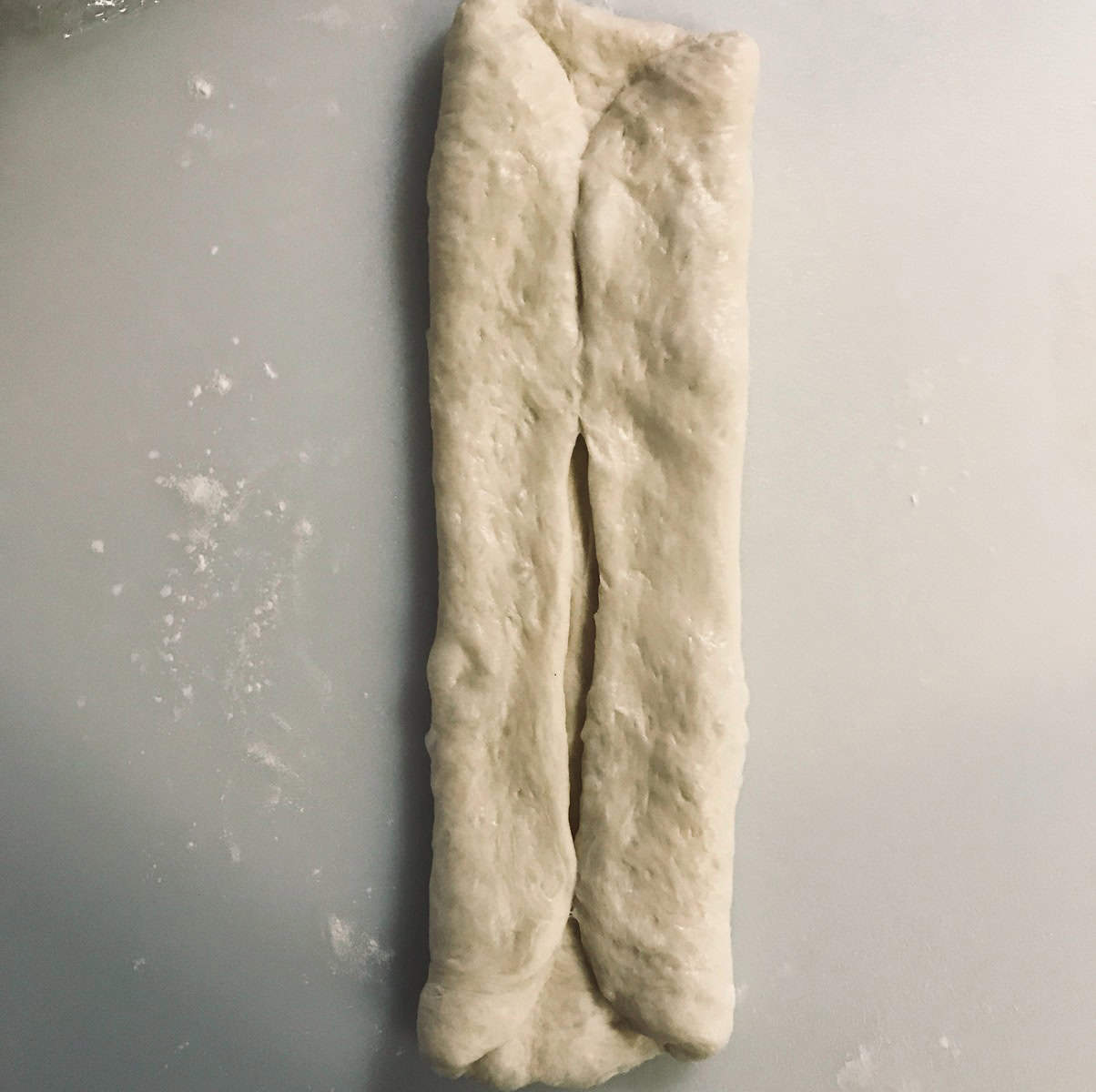
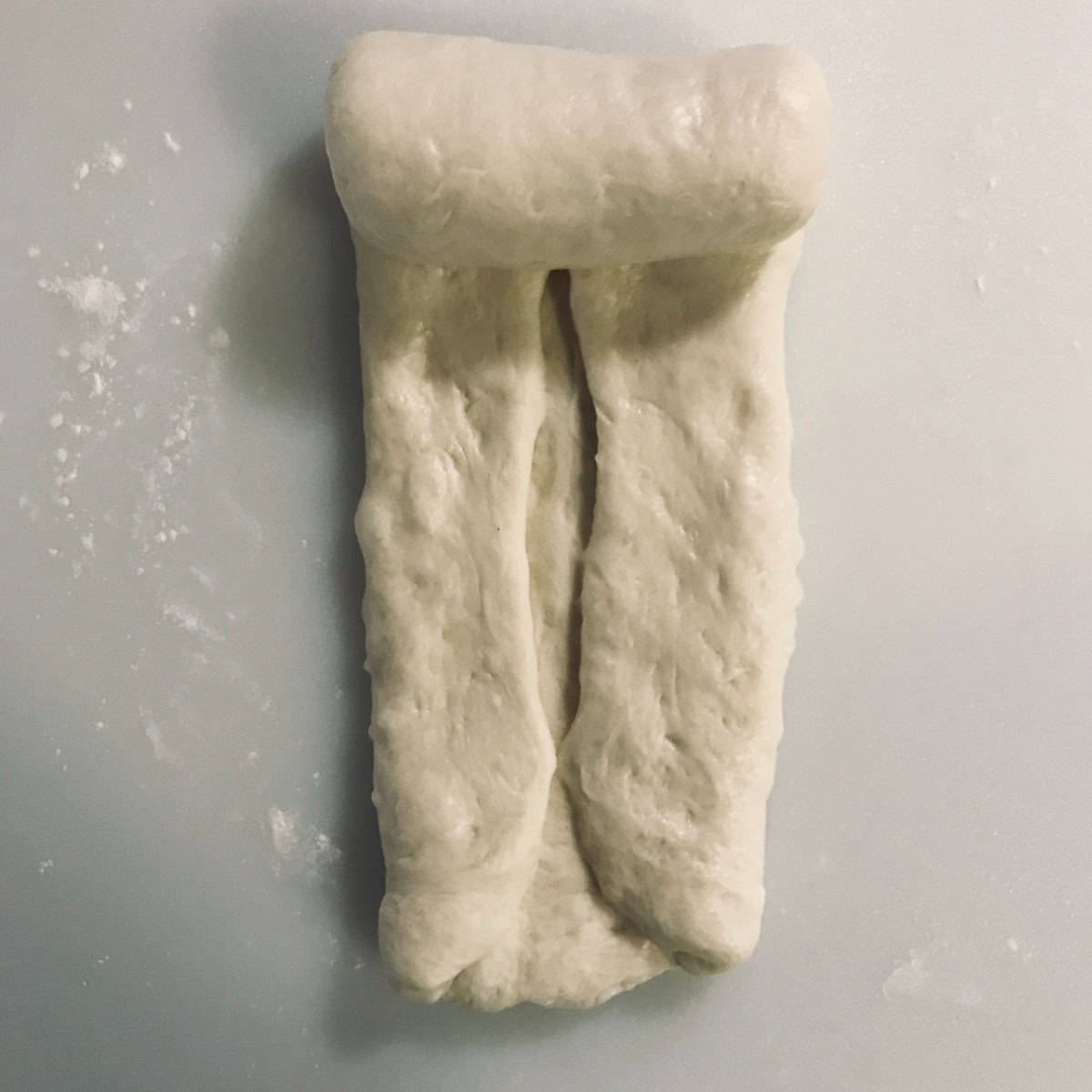
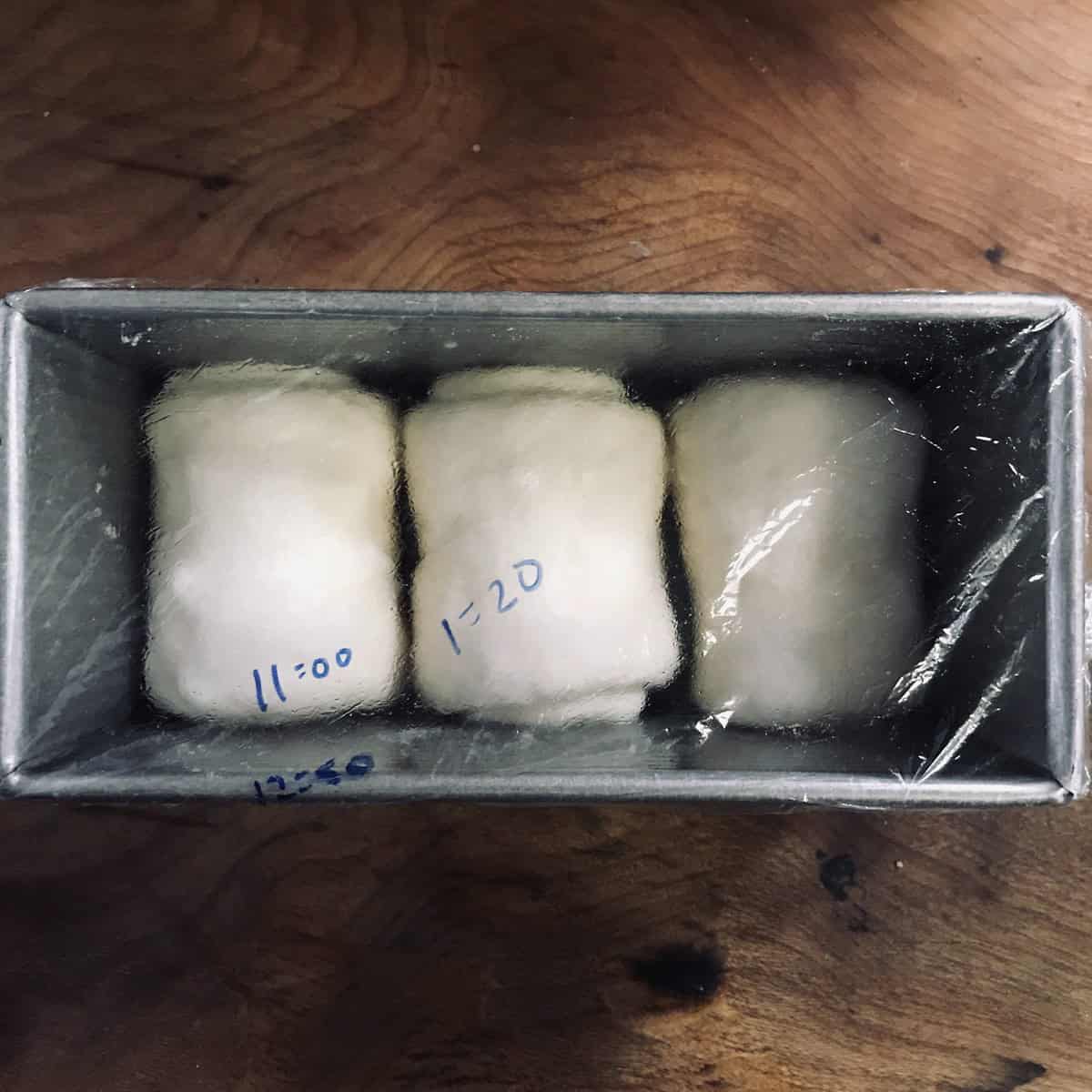
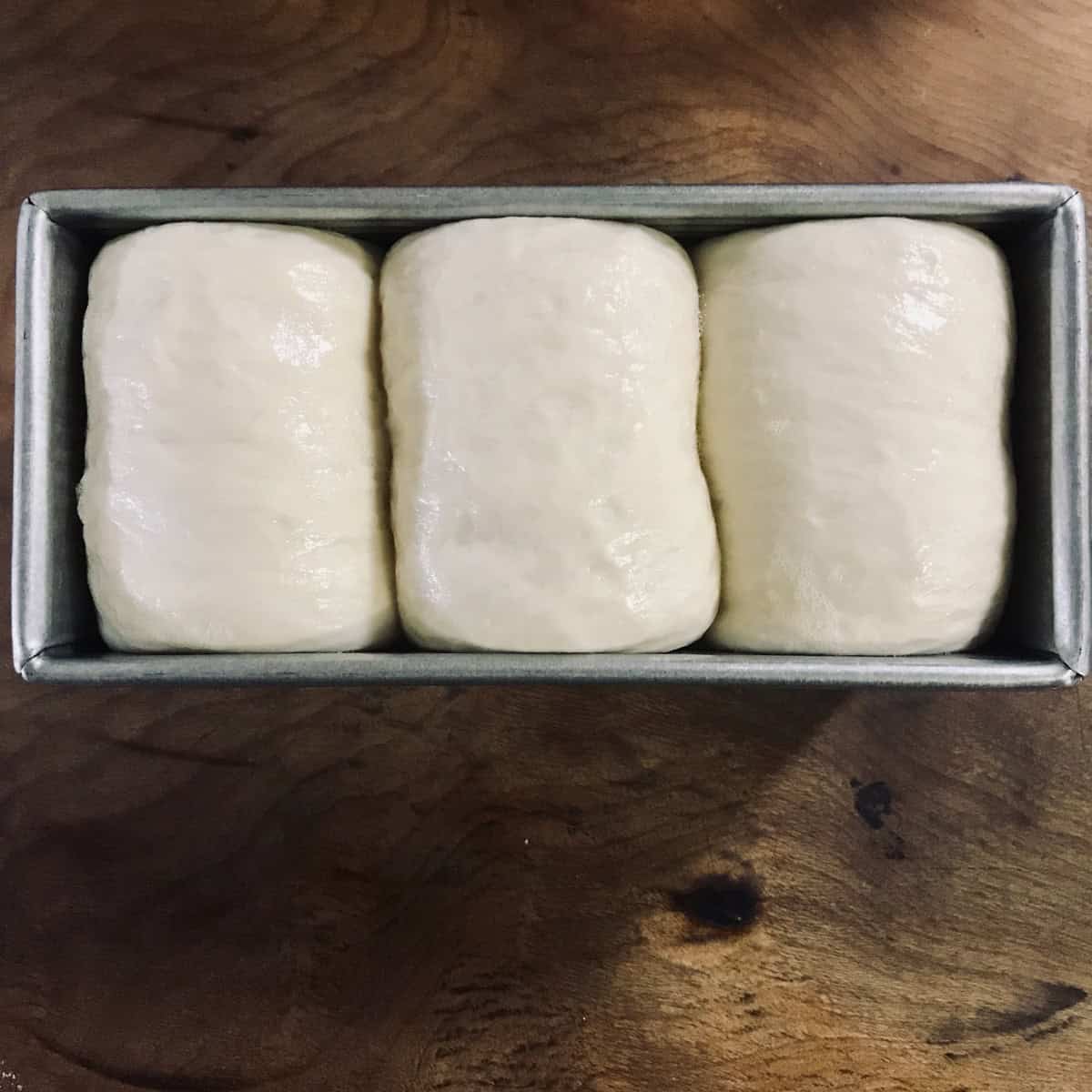
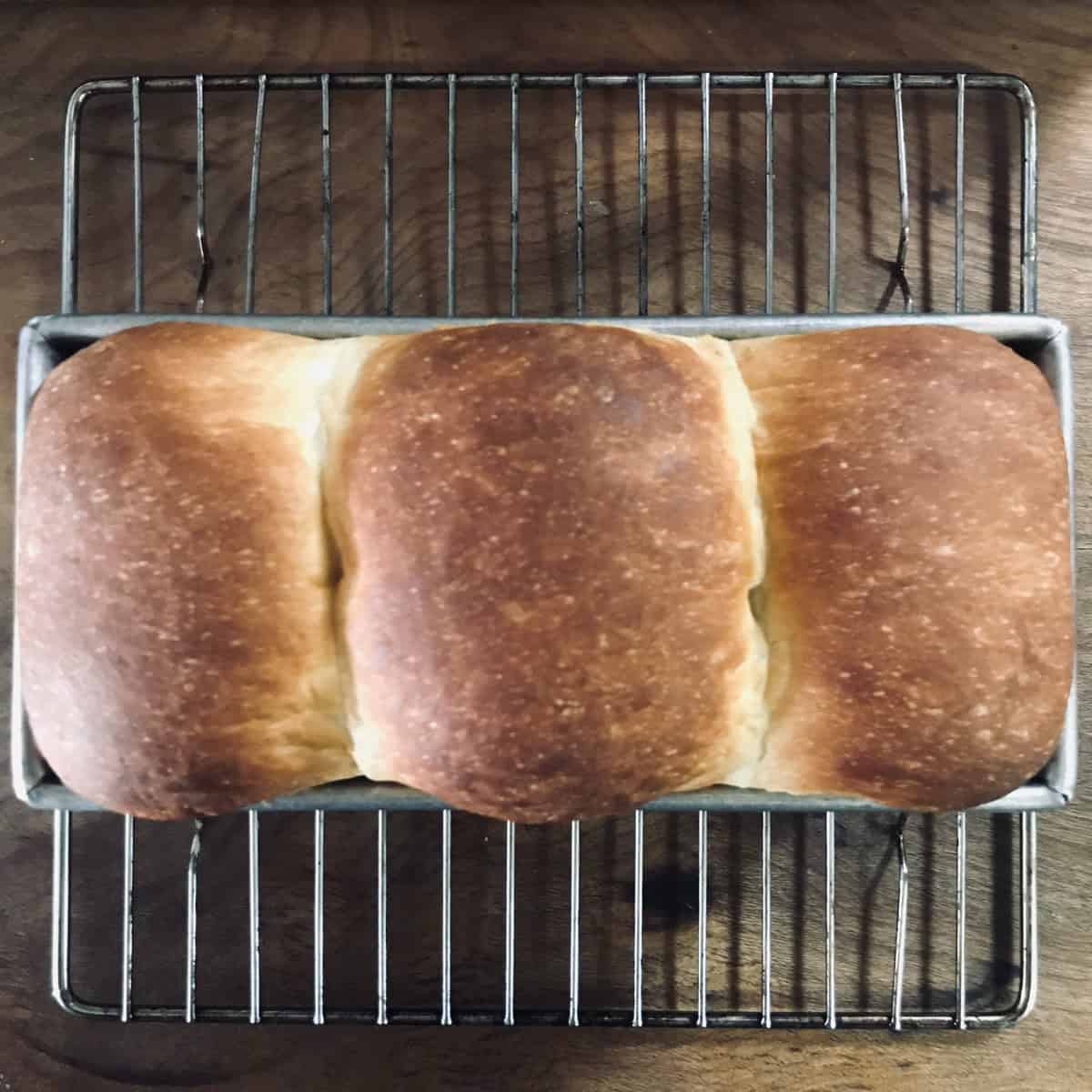
Bread Pans for shokupan
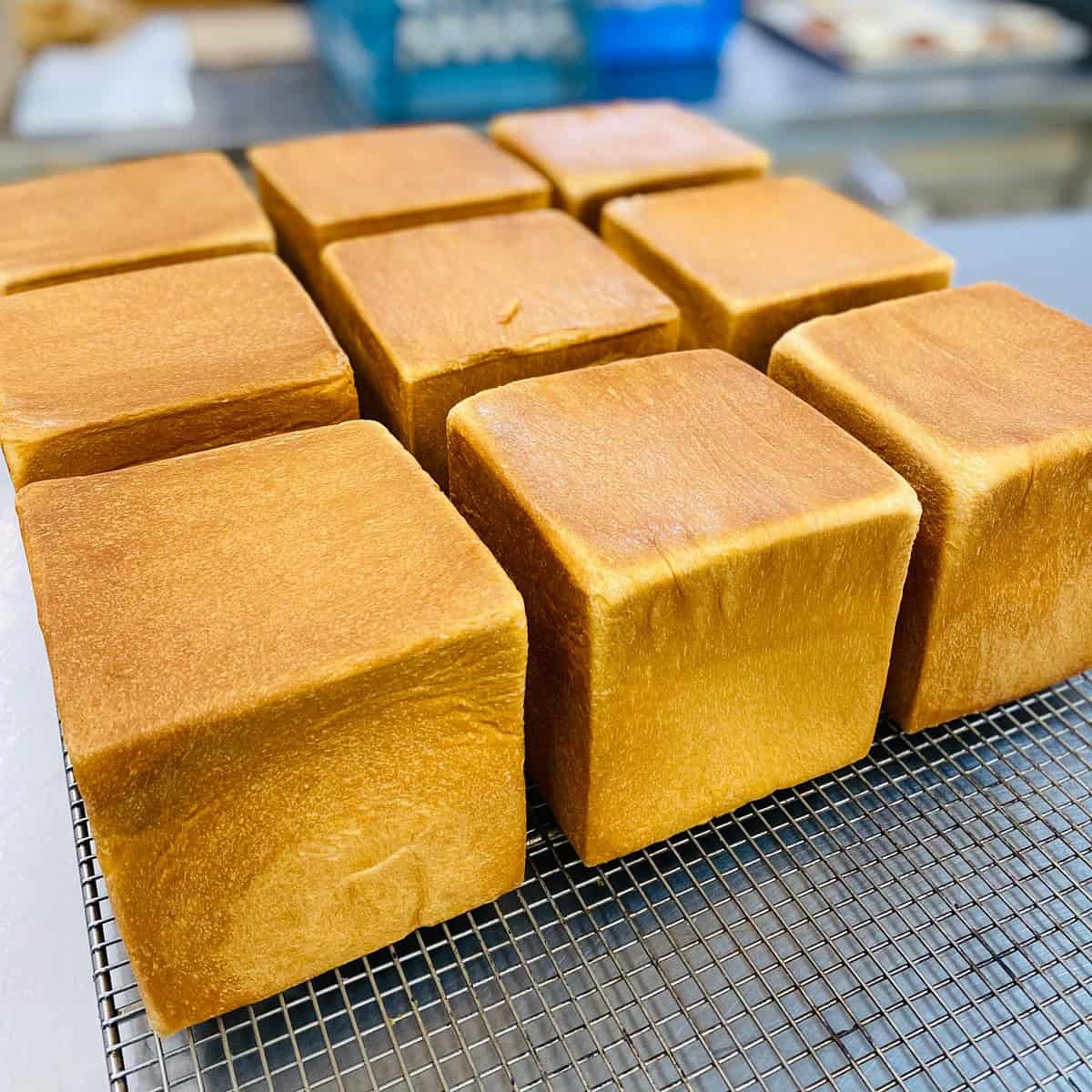
Shokupan is baked in bread pans wider and deeper than what you typically find in the United States and the loaves are often sold in perfect cubes. Because most people don't have shokupan pans at home, the recipe below is made to fit a standard one pound loaf pan (8.5 x 4.5 x 2.75).
- If you would like to make shokupan in cube form, like the ones in the photo below, you can purchase Tiger Crown Shokupan Pans (1 Litre size) on Amazon. The dough quantity needed for each pan is 450g - 460g.
Pay careful attention
Four points to pay attention to in order to create a well-structured, soft loaf.
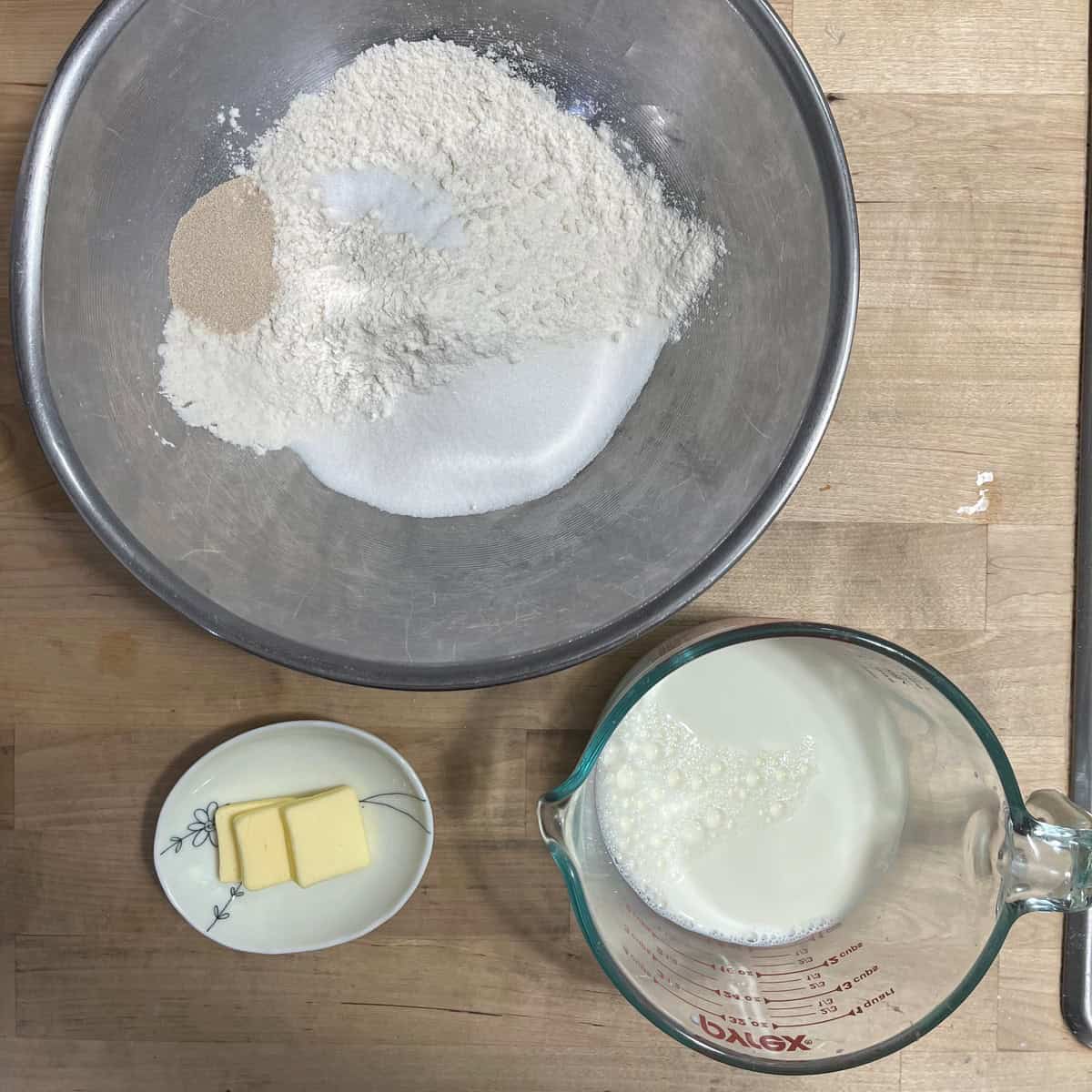
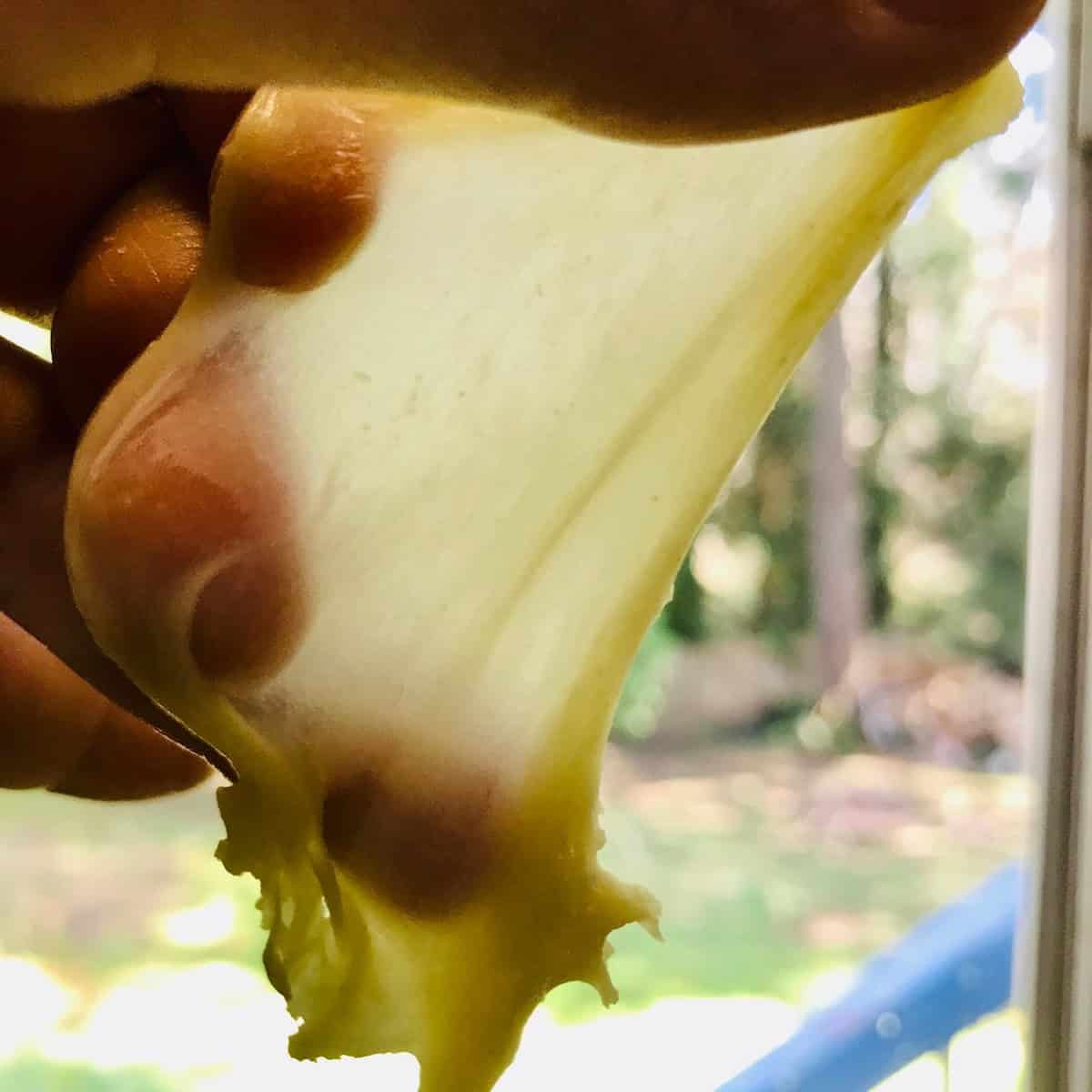
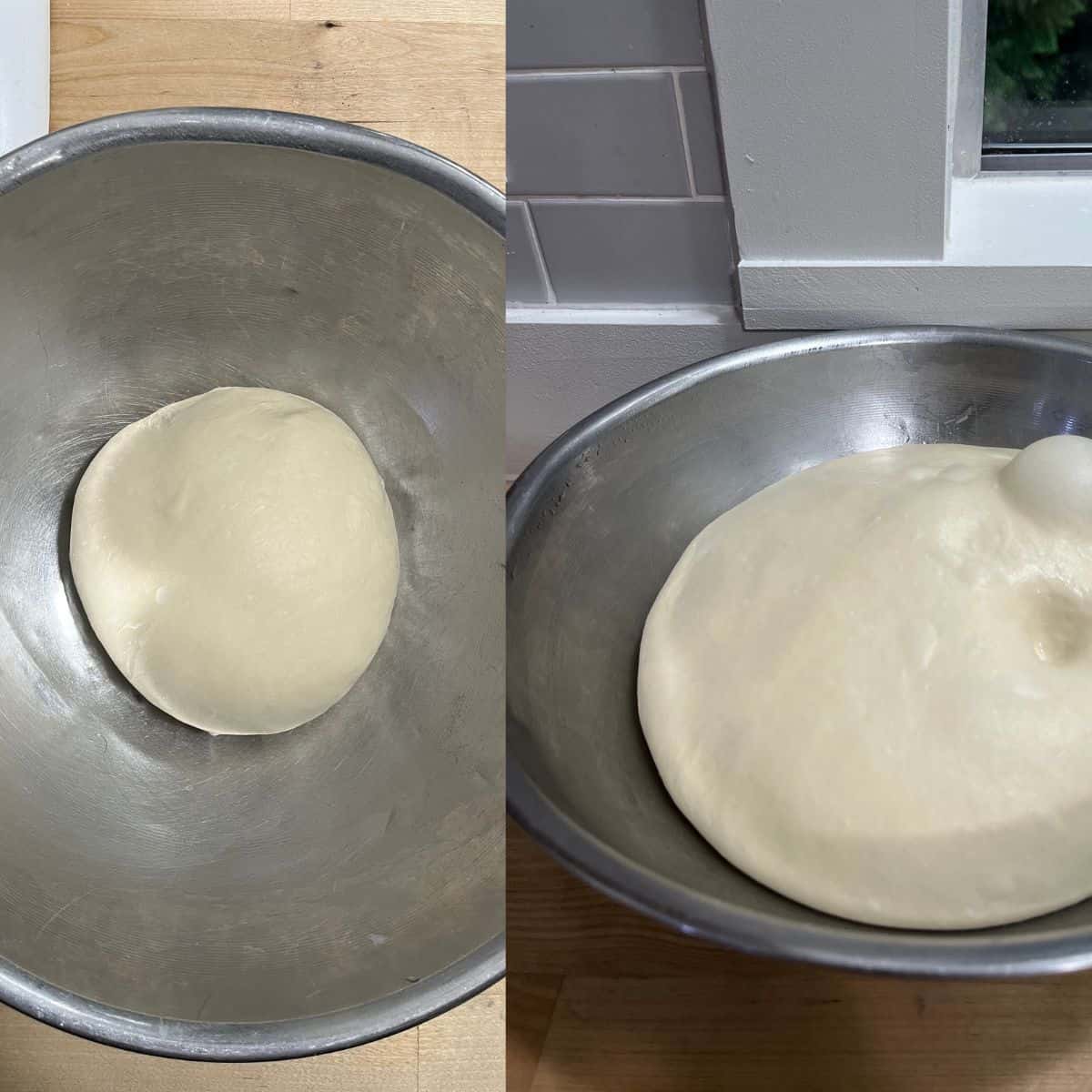
- Using a scale is the simplest way to achieve accurate and consistent results.
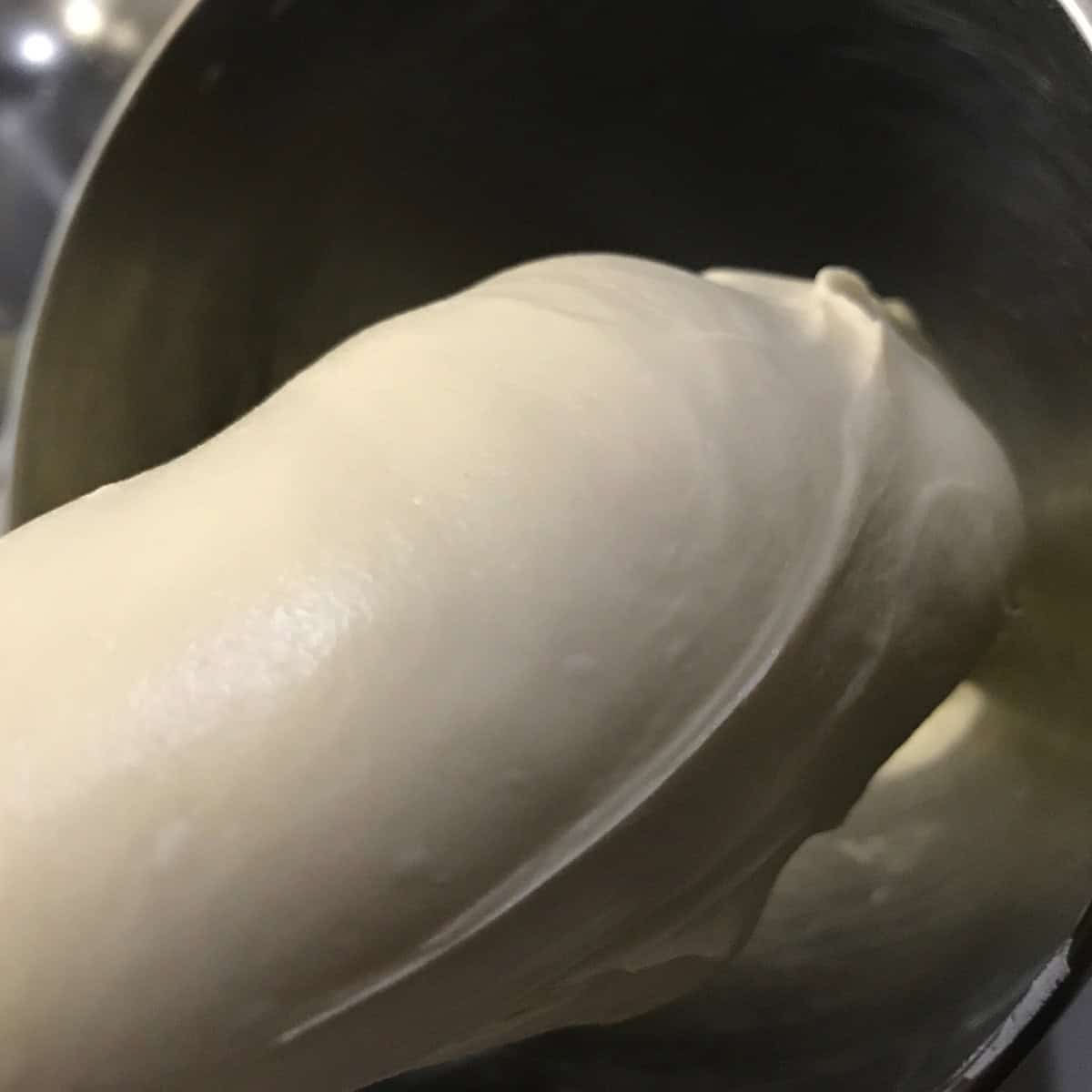
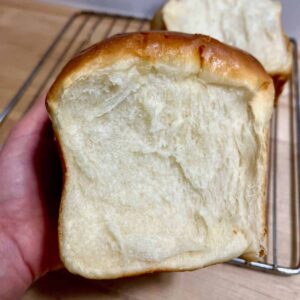
- Mix until full gluten development is achieved. A well-formed gluten network gives the dough the strength to trap air while rising and when baking. Failing to mix to the proper stage will result in a dense loaf.
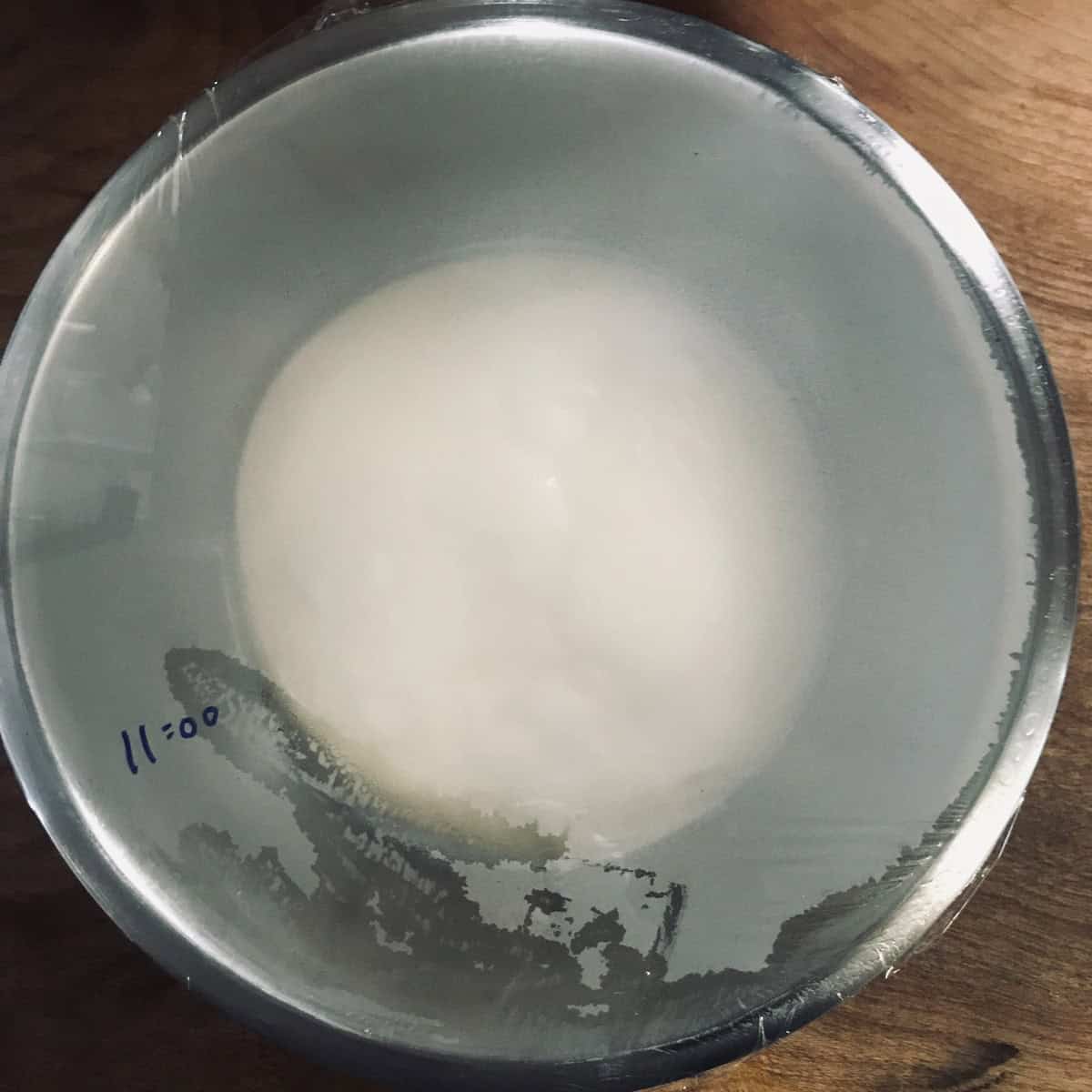
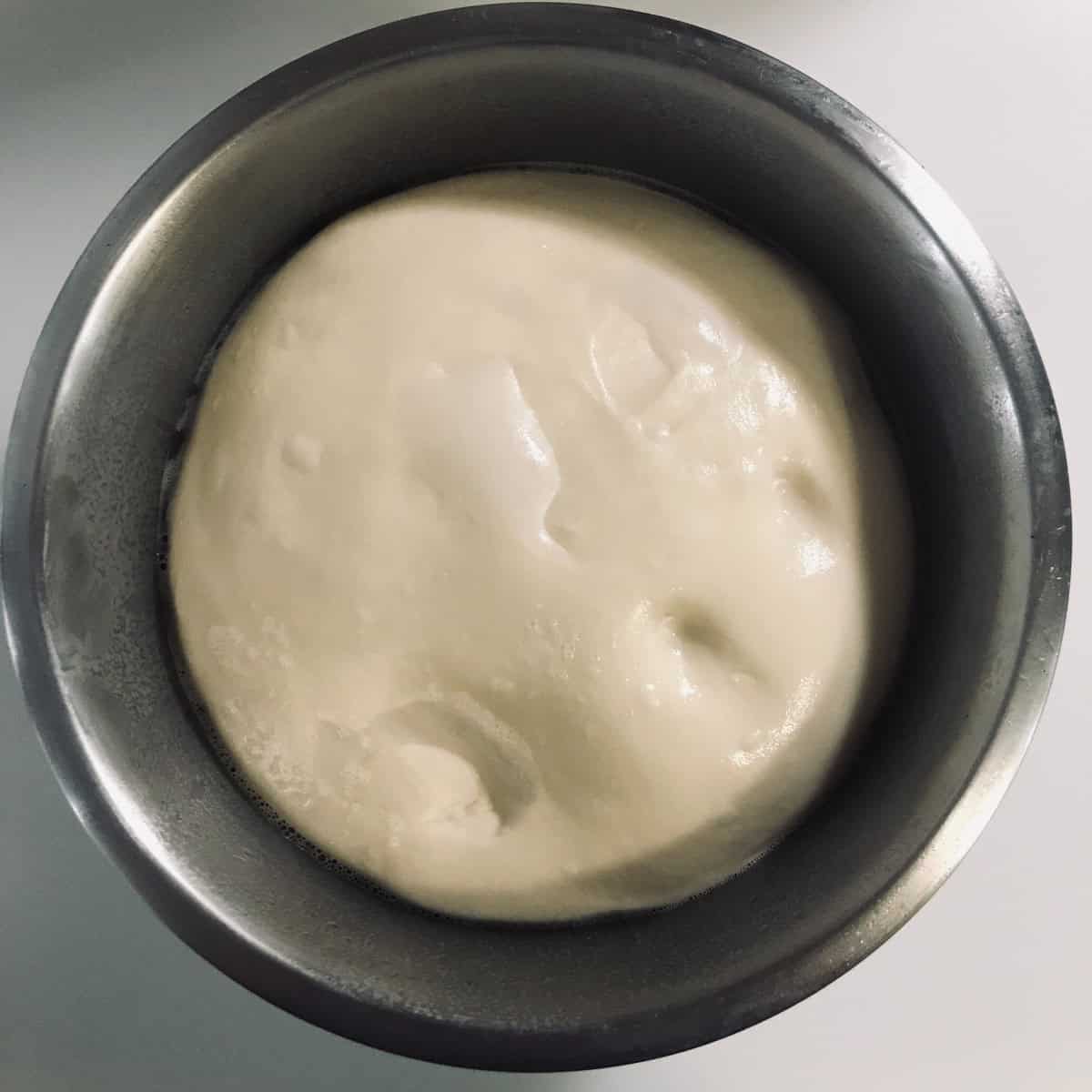
- Allow dough to bulk ferment (1st rise) until 2.5-3x size. The dough is building flavor and structure during this time. The poke test (see notes on recipe card) can help determine when the dough is sufficiently proofed.
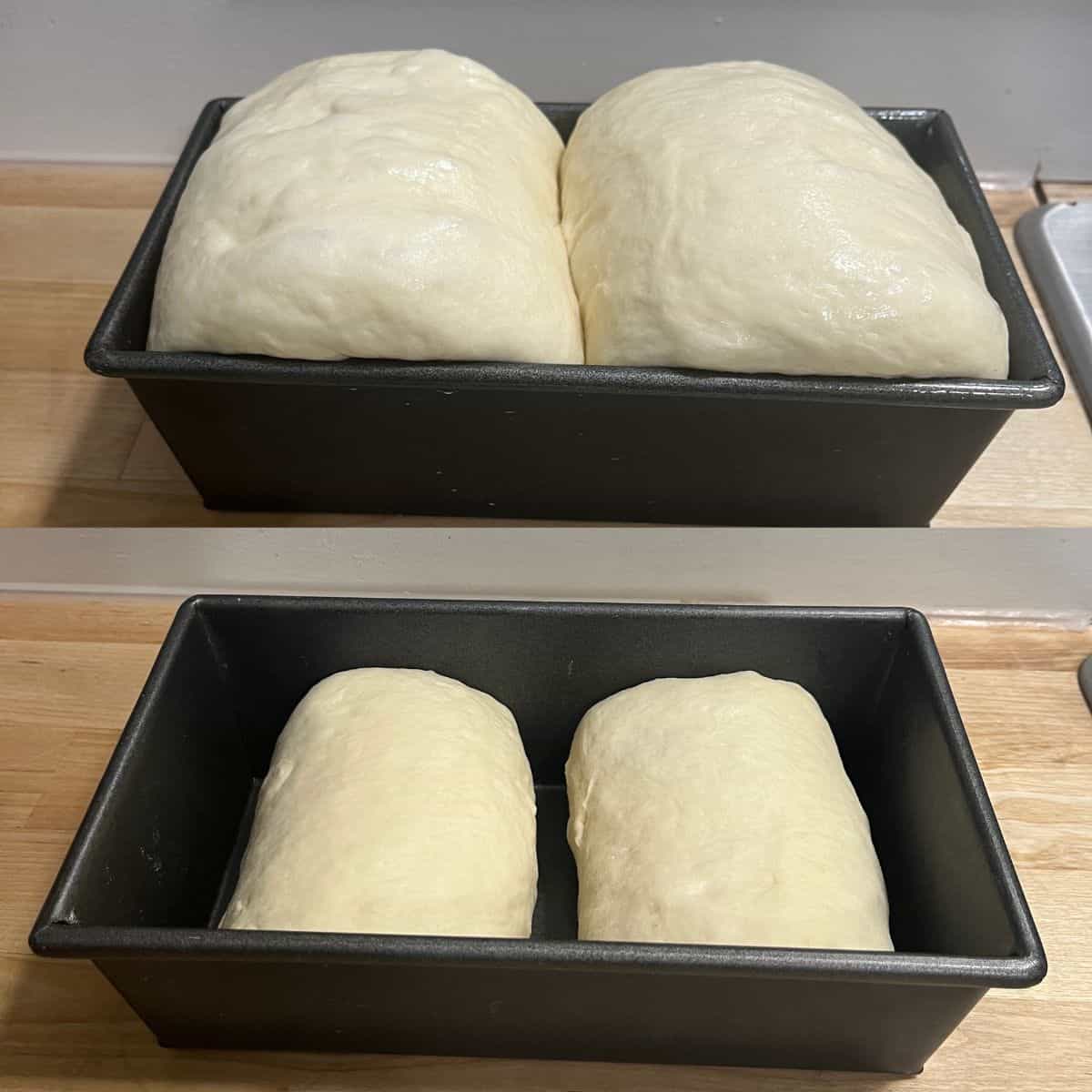
- Final fermentation (final proof) - For the 1 lb and 1.5 lb loaves, the dough will mound up past the edge of the pan (see photo). Use the poke test to determine when it's ready to go into the oven (see note on recipe card). For square pan (1 Litre size), close lid just before the top of the dough reaches the height of the pan.
Shokupan Japanese Milk Bread
Equipment
- Kitchen Scale
- KitchenAid Mixer + Hook Attachment
- Bench Scraper/Knife To cut dough (regular knife works)
- Rolling Pin
- Bread Pan size for this recipe: 8.5 x 4.5 x 2.75 (inches)
Ingredients
Yudane (Mix on Day 1)
- 65 g Bread Flour recommend: Bob's Red Mill Artisan Bread Flour
- 65 g Water Boiling
Dry Ingredients
- 260 g Bread Flour recommend: Bob's Red Mill Artisan Bread Flour
- 4 g Instant Yeast for active dry or fresh yeast, see note (1) below
- 36 g Granulated Sugar
- 5 g Salt
Liquid Ingredients
- 195 g Whole Milk
Fat
- 20 g Unsalted Butter soft
Instructions
Day 1. Make Yudane
- Measure flour for yudane (65g) in a small bowl
- Bring water to boil in a small pot or kettle. Add 65g boiling water to flour. Stir together with a spoon. Once it's cool enough to handle, knead dough for thirty seconds. Store in a small container, cover with plastic wrap and place in fridge.
Day 2. Make Shokupan
Combine dry ingredients
- In bowl, combine flour (260g), yeast, sugar and salt
Mix dough
- Heat milk to room temp using stovetop or microwave. Bring the milk to a temperature that feels neither hot or cold (somewhere near 80℉). Add milk and yudane to KitchenAid bowl. Place dry ingredients on top of milk and butter on top of dry ingredients.
- Mix on low speed until there are no visible traces of butter or flour. Increase speed to medium/medium-high.
- After a few minutes, stop mixer and scrape down sides of bowl. Continue to mix on medium/medium-high until the dough is no longer sticking to the sides and bottom of bowl. The dough should be smooth and pass the windowpane test (image #2 under "Pay Careful Attention" section).
Bulk Ferment (1st rise)
- Round dough to create a smooth top and place into a lightly oiled bowl. Cover and allow dough to rise to 2.5 - 3x it's original size. This could take 1 to 3 hours depending on the final temperature of the dough and temperature of the room. An hour-and-half is about average for a moderately warm room. Use visual cues and the poke test to determine if the dough is sufficiently proofed(2).
Divide & Preshape
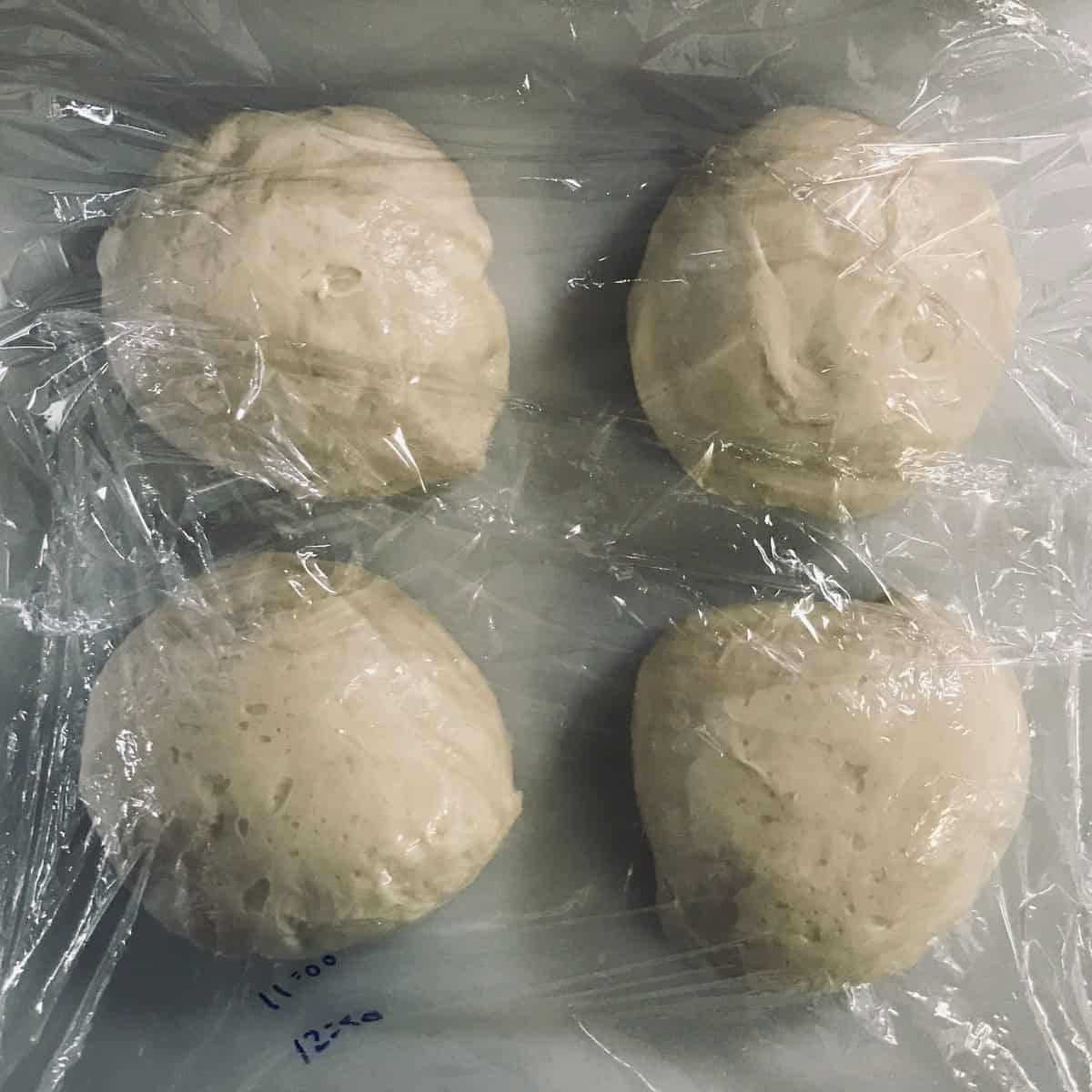
- Dust flour onto a clean surface and invert bowl, allowing dough to fall onto dusted area. Square off the dough then cut in half, each piece should weigh around 320g. Pre-shape each piece into a loose ball, cover and rest 15-20 minutes
Shape (please see "Technique" section for visuals)
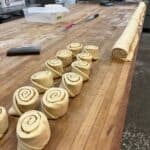
- Flour counter and, working with one dough at a time, flatten each piece into a rectangle.Using a rolling pin, roll the dough out until the length is roughly 2x the widthFold so the sides meet in the middleStarting at one end, roll the dough to the other endPinch the seam to sealPlace rolls in oiled pan, seam side down
Final Fermentation (2nd rise)
- Cover and allow dough to rise to about 2x it's original size. This could take 1 to 3 hours depending on the temperature of the dough and room. An hour-and-half is about average for a moderately warm room. Use visual cues and the poke test to determine if the dough is sufficiently proofed (2). If using a 1 lb loaf pan, the dough should dome up as pictured in image #4 under the "Pay Careful Attention" section.
Bake
- About 15 - 20 minutes before your your loaf is ready to go into the oven, turn on oven and heat to 350℉ (oven rack placed second spot from bottom). When the loaf and oven are both ready, place pan directly on oven rack and bake for 25-35 minutes (my loaf took 32 minutes). Careful not to remove from the oven too early or the bread will sink in on itself (internal temperature should read 195-200℉).
Cooling, Eating and Storing
- Remove shokupan from pan and allow to cool on wire rack.Shokupan is really good when still warm from the oven, especially with a little butter and jam. For sandwiches and toast, it's best to slice on the second day (it's very difficult to cut on day one because it's so soft).I like to slice shokupan the day after baking, place in a plastic bag and freeze for future toasts and sandwiches.
Notes
- When using commercial yeast, I always recommend using instant dry. That said, most people still use active dry yeast and there's no point in buying more yeast if that's what you have in your kitchen. If using active dry yeast, change the quantity to 5 grams. Active dry yeast needs to be "activated" - to do so, take about ¼ cup of milk from the recipe and warm it to about 105 degrees Fahrenheit. Sprinkle yeast on top, give a quick stir and leave it for about 15 minutes. Add to milk/yudane. If using fresh yeast, change the quantity to 12g. Crumble and add to milk. Proceed with recipe as instructed.
- How to tell when fermentation is complete. A well-proofed dough will look and feel a little like a balloon and still have a nice sheen to it. To do the poke test, dip your finger in flour and push it into the dough about ½" (halfway up your first knuckle). Under-proofed dough will resist and the dough will spring back. Properly proofed dough will hold an indentation but will still be springy. Over-proofed dough will look dull, will not spring back when poked and may even deflate. Please Note: There aren't only these three possibilities, where the dough is either under-proofed, perfectly proofed or over-proofed. Your dough can be somewhat under or over proofed, and still result in a nice loaf. The key is to stay in the range of acceptable parameters (don't under or over proof to the extreme) and, over time, learn to determine how far you can push the boundaries.
Nutrition
Credit, sources, shout outs (& sometimes ramblings)
Very few recipes are true originals. Here is where I share my inspiration and cite my sources.
During the pandemic, while everyone was learning how to make sourdough bread, I was trying to figure out how to make the shokupan I grew up eating in Japan. There are lots of recipes for shokupan out there, but most contained eggs or a tangzhong (neither of which is used for Japanese shokupan). There are many online recipes in Japanese, but without access to Japanese bread flour, the texture of the bread was just off. Finally, I came across Chopstick Chronicles website, where I learned about yudane. By incorporating a yudane and using King Arthur Artisan Bread Flour in my dough, I was finally able to achieve the texture I was searching for.
Why should you trust my recipes? You can read about me here.