









Introduction
Many home and cottage bakers eventually ask the same question:
How much should I charge for cupcakes?
If you’re unsure what to charge, there’s a good chance you’re underpricing.
Many bakers:
- don’t include labor
- underestimate overhead
- base prices on what others charge
👉 which often leads to prices that don’t support the business long-term
You’ll see everything from:
$24 per dozen
$3 per cupcake
“Charge what your time is worth”
But pricing cupcakes isn’t something you can solve from a quick comparison.
Size, decoration, ingredients, and labor all influence the final number.
That’s why crowd-sourced pricing advice is often inconsistent - and often misleading.
In professional kitchens, pricing starts with something much simpler:
👉 understanding the true cost of the product
If you want a number you can stand behind, the process starts with:
- your real cost
- a clear understanding of profit
Jump to:
- Introduction
- Quick Answer: How Much Should Cupcakes Cost?
- The Basic Bakery Pricing Formula (How Bakeries Price Cupcakes)
- Step 1: Calculate Your True Cost (Cupcakes)
- Step 2: Choose a Selling Price
- Step 3: Calculate Your Profit Margin
- When Cupcake Pricing Goes Beyond Cost
- What Increases the Value of Cupcakes
- Selling Cupcakes in Multiples
- So What Should You Actually Charge?
- Common Cupcake Pricing Questions
- Related Guides
- Final Thoughts
- Pocket Baker Perspective
Quick Answer: How Much Should Cupcakes Cost?
In many U.S. markets, cupcakes typically sell for:
- $3-$5 each for basic cupcakes
- $4-$6+ for decorated or specialty cupcakes
But the correct price always starts with calculating your true cost - including ingredients, labor, and overhead - and then choosing a selling price that leaves room for profit and reflects the value of your product.
The step-by-step method below shows exactly how to calculate it.
The Basic Bakery Pricing Formula (How Bakeries Price Cupcakes)
Most baked goods are priced using a simple framework:
Ingredients + Labor + Overhead = Total Cost
👉 How to Price Baked Goods (Start With Your Real Costs)
Once you understand your total cost, you can choose a selling price that leaves room for profit.
Step 1: Calculate Your True Cost (Cupcakes)
👉 What Is Food Cost in Baking?
Ingredient Cost (Per Batch - 16 Cupcakes)
Using a standard cupcake recipe with buttercream:
- Cake ingredients: ~$8.80
- Buttercream: ~$3.20
Total ingredient cost: $12.00
Batch size: 16 cupcakes
👉 $12.00 ÷ 16 = $0.75 per cupcake
Add Labor
👉 How to Calculate Labor Cost in Baking
Assuming:
- 1 hour total time (mixing, baking, frosting, cleanup)
- $20/hour
$20 ÷ 16 = $1.25 per cupcake
Running Total
$0.75 + $1.25 = $2.00 per cupcake
Add Overhead (25% Placeholder)
👉 What Is Overhead in a Baking Business?
Ingredients + Labor:
$12.00 + $20.00 = $32.00
25% overhead = $8.00 per batch
$8.00 ÷ 16 = $0.50 per cupcake
Your True Cost
Per batch:
$12.00 + $20.00 + $8.00 = $40.00
Per cupcake:
👉 $2.50
👉 This is your floor
If you sell below this, you are not covering your full cost.
Step 2: Choose a Selling Price
You’re not building your price from cost alone - you’re choosing a price and evaluating whether it works.
Let’s say you choose:
👉 $4.50 per cupcake
Step 3: Calculate Your Profit Margin
👉 What Is a Good Profit Margin for Baked Goods?
Per cupcake:
$4.50 - $2.50 = $2.00 profit
Margin:
$2.00 ÷ $4.50 = 44% profit margin
What This Means
- Your cost is ~56% of the price
- Your profit margin is ~44%
👉 This is strong for a standard decorated cupcake
When Cupcake Pricing Goes Beyond Cost
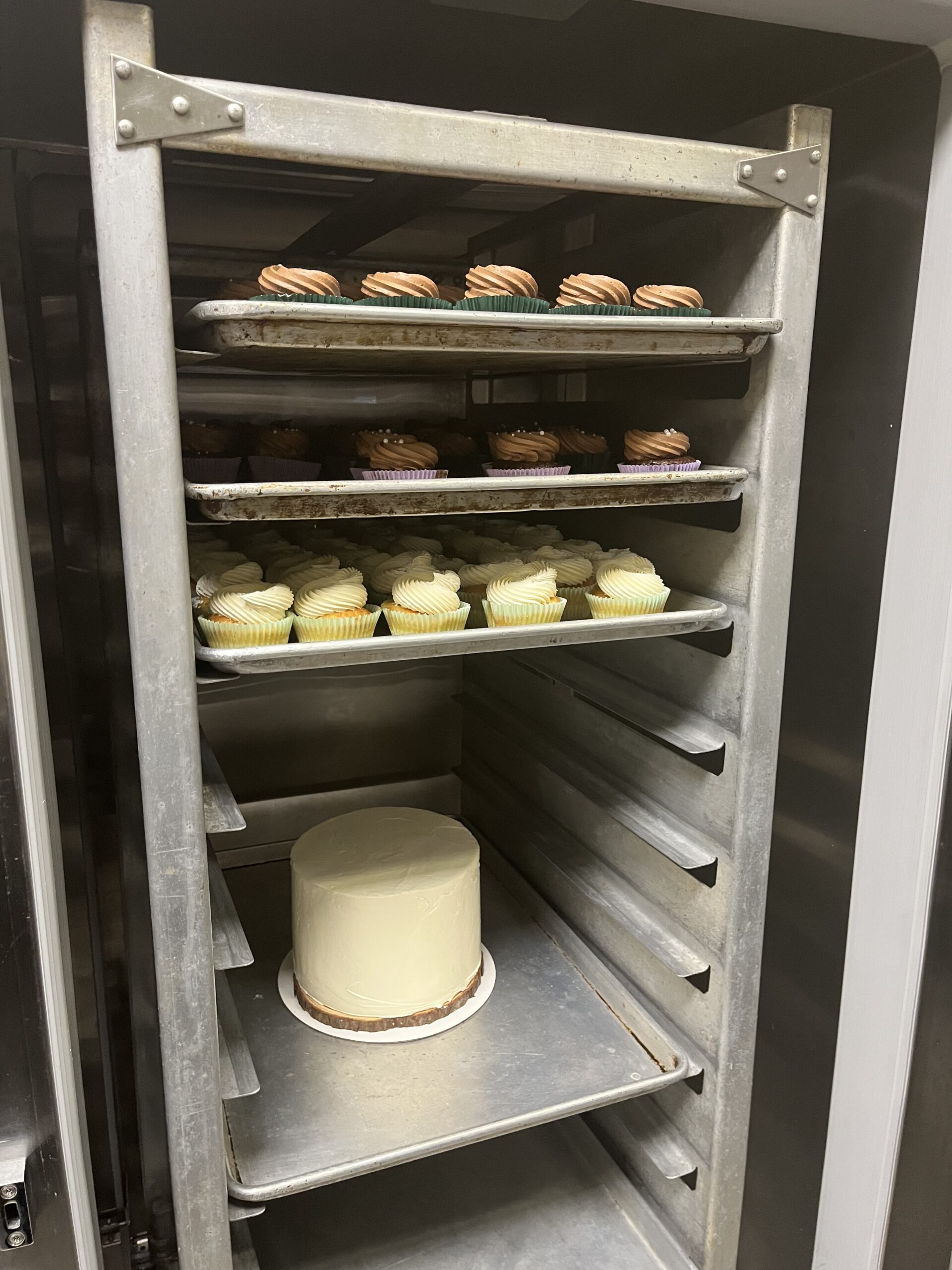
Cupcakes are often purchased for:
- birthdays
- events
- custom orders
This is where pricing shifts.
Two cupcakes with the same cost can sell at very different prices.
👉 Cost sets your minimum
👉 Value determines what customers are willing to pay
👉 Cost vs Value Pricing for Baked Goods
What Increases the Value of Cupcakes
1. Decorating Skill
Clean piping, detail work, and consistency increase perceived value.
Customers pay more for what they can’t easily replicate.
2. Specialty Orders & Customization
Custom designs increase:
- labor time
- complexity
👉 These should always be priced higher than standard cupcakes
3. Fillings & Specialty Flavors
Filled cupcakes or premium ingredients increase:
- cost
- perceived value
4. Presentation & Experience
Cupcakes are often purchased for display or gifting.
Packaging and presentation can significantly increase pricing flexibility.
👉 This is why cupcakes often have a wider price range than cookies
Selling Cupcakes in Multiples
Unlike cookies, cupcakes are rarely purchased one at a time.
They’re usually sold as:
- half dozens
- dozens
- event orders
Example Pricing Structure
- $4.50 each
- $26-$28 per half dozen
- $50-$54 per dozen
Why This Matters
Selling in multiples:
- improves efficiency
- increases order value
- reduces per-unit packaging time
So What Should You Actually Charge?
If your cost is $2.50 and you sell at $4.50:
👉 You are profitable
👉 You are pricing responsibly
Typical ranges:
- Basic cupcakes: $3-$5
- Decorated cupcakes: $4-$6+
Common Cupcake Pricing Questions
How much should I charge for cupcakes?
Start with your true cost, then choose a price that supports profit and reflects value.
Why are cupcakes priced higher than expected?
Because they include:
- labor
- decoration
- packaging
- customization
Should cupcakes be priced per dozen or per item?
Most bakers calculate per item, then sell in multiples.
Related Guides
👉 How to Price Baked Goods (Start With Your Real Costs)
👉 What Is Food Cost in Baking?
👉 How to Calculate Labor Cost in Baking
👉 What Is Overhead in a Baking Business?
👉 What Is a Good Profit Margin for Baked Goods?
👉 What Is Product Mix in Baking?
👉 Cost vs Value Pricing for Baked Goods
👉 How Much Should You Charge for Homemade Cookies?
👉 Why Your Baking Business Isn’t Making Money
Final Thoughts
Cost tells you your minimum.
Understanding your cost - and how value affects pricing - is what allows your cupcakes to be both profitable and sustainable.
Pocket Baker Perspective
In professional kitchens, pricing isn’t based on guesswork.
Bakers understand their costs first - then adjust based on value, skill, and customer expectations.
This is how you begin to build a system that supports your business over time.